
NFL Week 1 Quarterback Outlooks and Team Analysis
Explore NFL Week 1 quarterback outlooks with insights from coaches and analysts on team strategies and player readiness for the 2026 season opener.
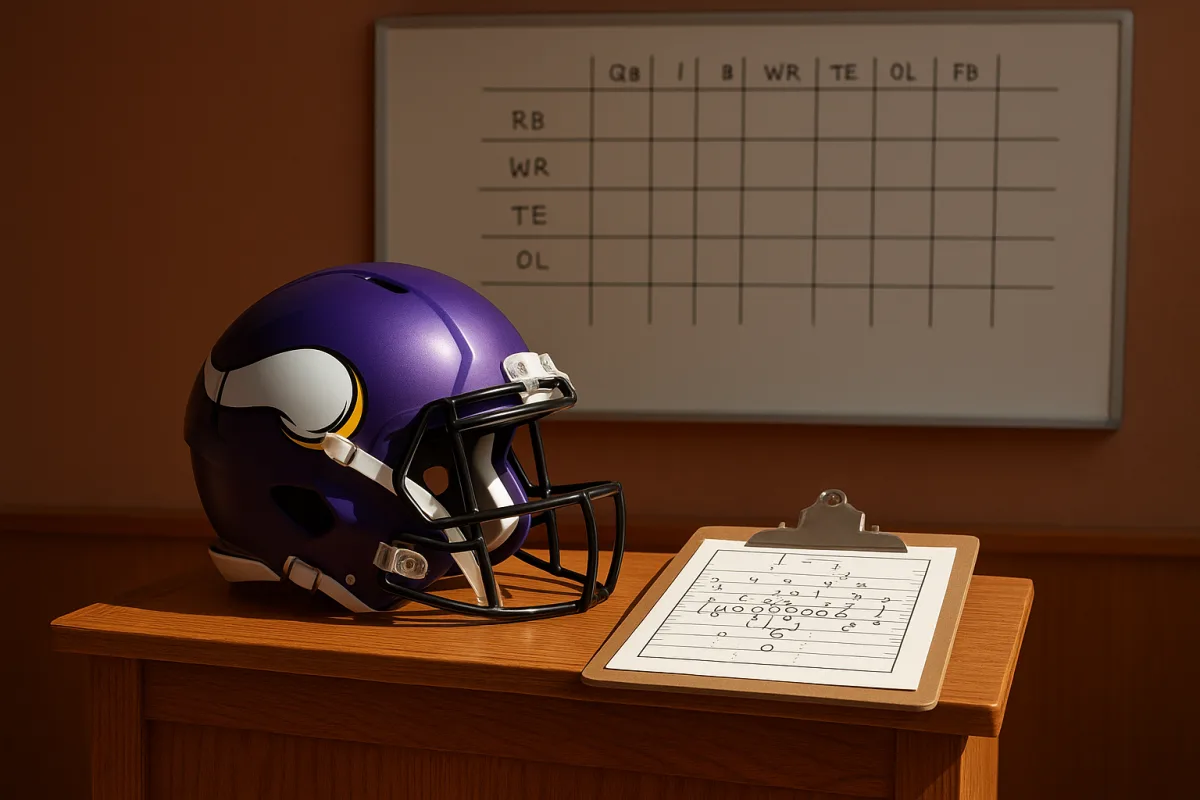
The Week 1 question is quarterback insulation
Every September brings the same quarterback discussion: Who took the leap, who looks more comfortable, who has a new coordinator, who is ready to carry a franchise? The more useful question is narrower. How often can the quarterback play on time without having to solve a bad situation himself?
That is quarterback insulation. It is not a soft term for surrounding a passer with talent. It is the practical work of giving him answers before the snap, during the drop and at the top of the route. It determines whether an offense lives in second-and-manageable or asks its quarterback to become a problem solver on every series.
The Washington Commanders’ in-house podcast, featuring former players Logan Paulsen, Fred Smoot and Santana Moss, made that point more clearly than the usual Week 1 optimism. Their discussion of Jayden Daniels centered on an offense that too often asked the quarterback to make difficult throws or create outside structure.
Smoot’s formulation was simple: an offense wants its quarterback to be “Superman” four or five times, not throughout the afternoon. That is not an argument against Daniels’ playmaking. It is an argument that a quarterback’s special plays should be the surplus, not the baseline requirement.
That distinction matters most in Week 1, when defensive coordinators have new personnel, altered tendencies and a limited regular-season tape library. A coordinator can prepare broad rules, but he cannot honestly claim to know every pressure adjustment or coverage check an opponent will reveal in its opener.
What an offense means by a “layup”
A layup is not merely a short pass. It is a completion designed so the quarterback has a clear read, a manageable throw and a reasonable protection picture. The receiver can still gain 20 yards, but the quarterback should not need a perfect throw or a heroic escape to start the play.
There are several ways to create one. The first is formation. Bunches, stacks and motion can force defenders to declare man or zone leverage, create natural traffic and prevent a cornerback from crowding a release. The quarterback gets information before the ball is snapped.
The second is route structure. A quick out paired with a flat route, a slant paired with a seam, or a crossing route under a deeper over route can place a single defender in conflict. If he drives on the shallow route, the intermediate window opens. If he sinks, the easy throw is available.
The third is protection. An offense can keep a tight end or running back in to help, use six or seven blockers, slide the line toward a likely pressure source, or build a quick answer into the concept. None of those choices eliminates risk. They simply define where the risk is being accepted.
There is always a cost. Keeping an extra protector reduces the number of receivers in the route. A seven-man protection may stop a blitz, but it also leaves fewer targets to stretch coverage. A quick throw protects the quarterback, but it may limit explosive opportunities if defenders tackle well.
That tradeoff is why protection is not just an offensive-line statistic. A sack can be caused by a missed block, but it can also come from a route concept that gives the passer no outlet, a late motion adjustment, a disguise that changes the post-snap read, or a quarterback holding the ball after the first answer disappears.
Paulsen used a revealing example from Washington’s recent film: a trips formation with a go route functioning as the hot answer against off coverage. That is a difficult answer by design. A hot route is supposed to replace a vacated blocker when a defense pressures. If the replacement is a deep throw outside, the quarterback still needs time, placement and receiver separation.
That is not the same as giving a passer a quick slant, sight adjustment or immediate flat throw. A vertical hot answer can punish a defense when it hits, but it is a low-percentage solution if the protection breaks down immediately. Calling it aggressive does not make it easy.
Why this matters for Jayden Daniels
The Commanders’ podcast rightly resisted treating Daniels’ earlier success as proof that the offense had reached its ceiling. A quarterback can post strong results while operating in difficult conditions. The relevant tape question is whether those results came from repeatable structure or from a player repeatedly fixing structural problems.
The podcast’s argument is that Daniels now has more ways to work the middle of the field and more route-running detail around him, especially with Terry McLaurin and Stefon Diggs. That can matter because route runners who vary stems and releases create separation without requiring the quarterback to wait for a scramble drill.
But Washington’s Week 1 matchup with Philadelphia has another layer. The Commanders have moved to Daronte Jones’ 3-4 base defense, with an aggressive blitz-oriented approach influenced by the Brian Flores coaching tree. [8] That change potentially helps the offense only if it produces more favorable field position and fewer extended opponent drives.
The risk is that Washington is installing that structure while turning over much of the lineup. Reporting entering the Eagles game identified as many as eight possible new starters, alongside concerns about an inexperienced secondary handling communication against Philadelphia’s passing game. [5] Blitzing is not simply sending more rushers. It changes the coverage math behind the rush.
A standard four-man rush allows seven defenders to cover. Send five, and the defense has six in coverage. Send six, and it has five. The pressure must arrive before the quarterback identifies the single-high safety, the man-to-man matchup, or the vacated zone. If it does not, the defense has fewer bodies available to correct a mistake.
That is the Week 1 tension against Jalen Hurts. Philadelphia’s offensive line can reduce the effect of pressure, and Washington’s new coverage rules must hold up when the rush does not win immediately. [5] The Commanders do not need to abandon pressure. They need to know which pressures they can execute without turning a protection win into a coverage bust.
Minnesota’s quarterback depth chart is a game-plan decision
The Minnesota Vikings enter Week 1 with a different version of quarterback insulation. Kevin O’Connell told the Vikings’ team channel that Carson Wentz would back up Kyler Murray against Green Bay, while J.J. McCarthy would be the third quarterback. O’Connell also described the backup decision as week to week.
That is significant, but it should not be inflated into a final verdict on McCarthy. Wentz brings veteran experience to an immediate contingency role, while Murray and Wentz both entered the week active with no injury designation. [1][2][3] In a single-game context, the backup must be ready to enter with limited practice repetitions and run the operational core of the game plan.
McCarthy’s situation is more complicated than either a comeback story or a finished judgment. He made Minnesota’s initial 53-man roster, and reports from camp included positive feedback from joint practices, but his preseason work was inconsistent, with modest production in two games and no appearance in the third. [4][7]
The responsible interpretation is that Minnesota has not yet made McCarthy the preferred emergency option for Week 1. It is not that he has been conclusively written off. O’Connell’s own explanation emphasized the value of Wentz’s experience while keeping the decision open as McCarthy continues to develop.
This is where snap counts matter more than rhetoric. A third quarterback receives fewer meaningful practice reps than the starter and primary backup. That can slow development in game-like command, but it can also lower the immediate pressure on a young passer to prepare as if he will enter after one injury.
The Vikings also have reason to prioritize stability around Murray. He is returning from a 2025 foot injury that ended his prior season early, while Wentz is back from shoulder surgery. [2][3] The correct Week 1 focus is not whether either quarterback has an inspirational recovery narrative.
It is whether Minnesota’s protections, early-down calls and contingency plan avoid forcing either player into a high-volume scramble-and-create offense.
One point requires restraint. O’Connell said veteran safety Harrison Smith was working back into the building and that the club would assess his readiness. But Smith is absent from the official Week 1 injury report, and there is no public confirmation of his game availability. [1] Anything more definitive would be speculation.
Why MVP forecasts are not quarterback evaluations
The NFL on NBC awards discussion offered another useful lens on the same issue. Chris Simms selected Denver quarterback Bo Nix as his MVP long shot, largely because he expects a strong team around him and a season that produces top-seed credibility. His colleague chose Dak Prescott on a similar team-success pathway.
That is how modern MVP analysis often works. The award is nominally about player value, but voters regularly reward elite quarterback production attached to a team near the top of its conference. Simms explicitly noted that playoff seed has become part of the informal MVP formula.
DraftKings’ Week 1 market reflected that framework: Buffalo’s Josh Allen was +600, Baltimore’s Lamar Jackson +800 and Cincinnati’s Joe Burrow +850, with Patrick Mahomes, Justin Herbert and Drake Maye at +1000. [6] Those are not measurements of who throws the prettiest ball or handles pressure best.
They are forecasts of production, availability, narrative and team wins. That makes them useful as a map of league expectations, but poor substitutes for tape. A quarterback can play efficiently in a protected structure without being asked to carry every down. Another can play well while his offense repeatedly leaves him in bad answers.
Week 1 will not settle any of those long-term arguments. It will reveal something more tangible: which offenses built enough routine solutions that their quarterbacks can play normal football before they are asked to play exceptional football.
Frequently Asked Questions
What factors influence NFL Week 1 quarterback performance?
Quarterback performance in Week 1 depends largely on how often the offense provides the quarterback with clear, manageable plays before the snap and during the drop. This includes formation, route structure, and protection schemes that create “layups”—easy completions with clear reads and reasonable protection. Defensive adjustments, new personnel, and limited game tape also affect the quarterback’s ability to operate comfortably.
How do NFL coaches evaluate quarterback readiness for Week 1?
Coaches assess whether a quarterback can consistently play on time without having to solve difficult problems on every play. They look for a balance where the quarterback’s special plays are a surplus rather than a baseline requirement. Preseason performance, practice feedback, and the structure of the offense in providing clear answers all factor into this evaluation.
What is quarterback insulation and why does it matter in Week 1?
Quarterback insulation refers to the offense’s ability to give the quarterback defined answers before and during plays, minimizing the need for improvisation under pressure. It matters most in Week 1 because defenses have new personnel and limited tape, making it harder for quarterbacks to anticipate pressure or coverage. Proper insulation helps quarterbacks avoid being forced into difficult decisions repeatedly.
How do team strategies affect quarterback outlooks in Week 1?
Team strategies like formation choices, route combinations, and protection schemes directly influence how often quarterbacks receive manageable throws. For example, using bunches or motion can clarify defensive coverages, while protection adjustments can mitigate pressure. However, these strategies involve tradeoffs, such as fewer receivers or limited explosive opportunities, which shape the quarterback’s opportunities and risks.
What are the key quarterback and team outlooks for NFL Week 1 2026?
The Vikings have chosen Kyler Murray as the starter with Carson Wentz as backup, while J.J. McCarthy’s role remains unsettled after mixed preseason results. Washington’s Jayden Daniels faces a test in an offense that must provide routine completions against Philadelphia’s strong defense, which has shifted to a 3-4 blitz-heavy scheme under Daronte Jones. MVP odds favor Josh Allen (+600) and Lamar Jackson (+800), reflecting both quarterback skill and expected team success.
How we researched this
This article was assembled from 4 video sources across 4 channels, 1 published article, 8 cited references.
Nothing here is based on hands-on testing. Where a figure or finding appears, it belongs to the source cited beside it, and the writing says so rather than implying otherwise. Every source is listed below so you can check it.
Sources
Kevin O'Connell Talks Quarterbacks, Harrison Smith's Return, Preparing for Home Opener vs. Packers — Minnesota Vikings
THE NFC EAST IS IN TROUBLE! Jayden Daniels WILL BALL OUT! 💪🏾 | Podcast | Washington Commanders | NFL — Washington Commanders
NFL Awards Picks: Chris Simms eyeing Bo Nix to win MVP | Chris Simms Unbuttoned | NFL on NBC — NFL on NBC
Todd Monken Press Conference | September 9th, 2026 — Cleveland Browns
Vikings name ex-top 10 pick J.J. McCarthy third quarterback for Week 1 vs. Packers; Carson Wentz backup — CBS Sports NFL
Official NFL Injury Report for Players - Week 1 of the 2026 Season | NFL.com
MN Vikings J.J. McCarthy, Carson Wentz battle; Jeshaun Jones suspended
Hurts Draws a Depleted Washington Defense in Eagles' Week 1 Opener | TurfSplit
How Daronte Jones Will Impact the Commanders Defense in 2026
Watch NFL Coaches and Analysts Discuss Quarterback and Team Outlooks for Week 1 on Youtube
Also from the sources
Related Articles
Week 5 NFL Game Previews and Injury Impact Analysis
Get detailed Week 5 NFL game previews with injury updates and tactical analysis to understand how player availability shapes matchups.

NFL Week 3 Quarterback Insights and Offensive Analysis
Explore NFL Week 3 quarterback insights and offensive strategies from media, including Bo Nix, Joe Burrow, and C.J. Stroud’s performances.
NFL Week 1 Player Leadership Insights and Media Availability
Explore NFL Week 1 player leadership insights and media availability, highlighting key veterans, captains, and roster readiness for the season opener.
Dallas Cowboys Team Updates and Media Insights for Week 6
Get the latest Dallas Cowboys team updates, injury status, and media insights ahead of Week 6 against Green Bay Packers.