
49ers vs Rams Australia Game Week 1 Preview and Travel
Preview the 49ers vs Rams Week 1 game in Australia with insights on travel strategies and team acclimation for optimal performance.
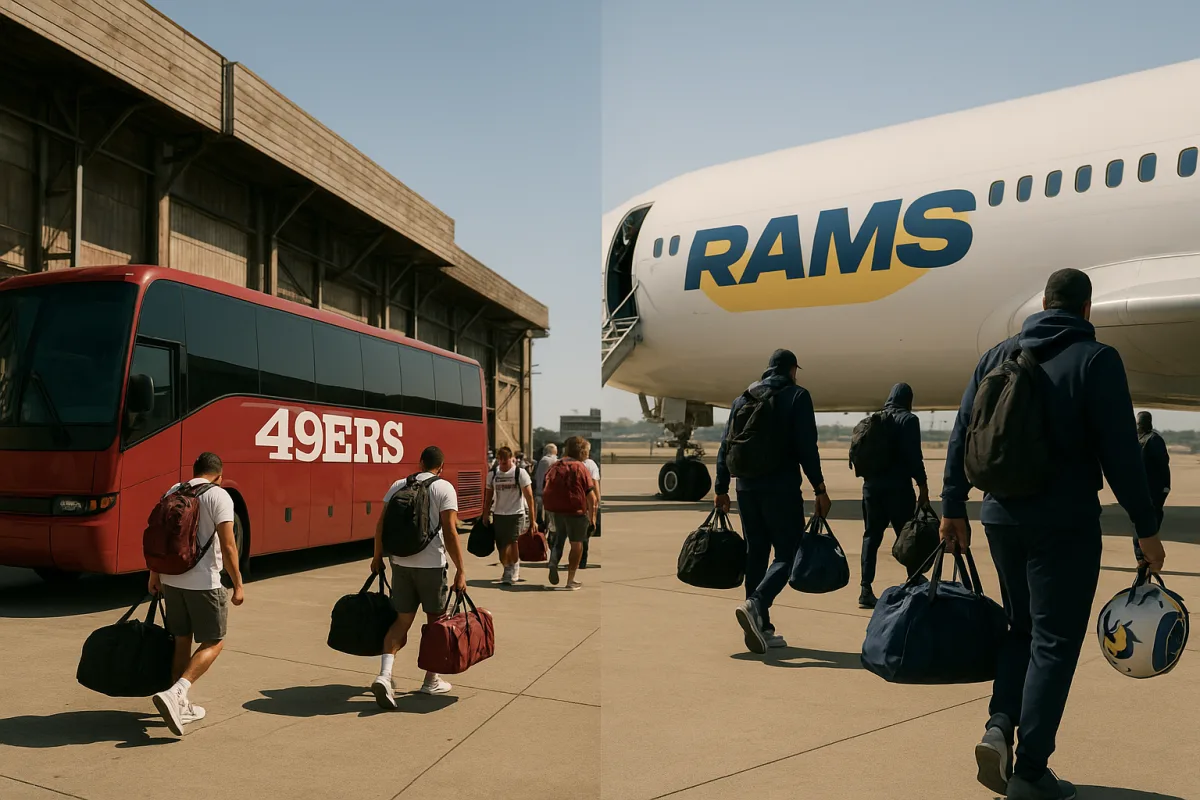
49ers vs. Rams in Melbourne: Week 1 Is a Travel Test Before It Is a Tape Test
The game is really an acclimation experiment
There is no Week 1 tape to argue over yet. The central football question is simpler and more consequential: which club gets its players closest to their ordinary Thursday-night physical and mental rhythm before the NFL’s first regular-season game in Australia? [3]
The 49ers and Rams are not treating that question the same way. San Francisco traveled early and has essentially built a full work week in Melbourne, while the Rams planned to leave Tuesday night for a Thursday-night U.S. kickoff, Friday locally.
That difference is not about toughness, and it is not about which coach is more serious. It is a decision about where each team wants to absorb the costs of a 9,000-mile trip, a flight of roughly 16 hours, and a 14-hour time change. [3]
Kyle Shanahan’s 49ers chose to take the disruption early. Speaking through the San Francisco 49ers’ official channel after arriving in Melbourne, Shanahan said it took a couple of days to adjust, but that he felt most normal on the third day.
Sean McVay’s Rams chose the opposite route. In comments carried on the Los Angeles Rams’ official channel and reported by Pro Football Talk, McVay described a late-arrival plan built around keeping players in their established weekly rhythm as long as possible.
That is the concept to watch in Melbourne. Not “jet lag” as a vague excuse, but the tradeoff between moving the body clock early and preserving the football calendar that players and coaches repeat almost automatically every week.
What a football acclimation plan actually changes
NFL game preparation is structured around repeated timing. Players sleep, eat, lift, meet, practice, receive treatment and wind down at familiar hours. Coordinators also install game plans in chunks, generally beginning with early-down concepts before moving through third down, red zone, short yardage and end-of-half situations.
McVay laid out that progression in his Rams availability. He described a three-day player work week that begins with normal down-and-distance material, expands into third down and short yardage, and finishes with red-zone and other situational work.
The Rams’ plan attempts to retain that sequence even when the calendar does not cooperate. McVay said the staff was framing the travel as a Friday-evening equivalent, then asking players to sleep through the night on the aircraft before arriving in Australia.
That matters because the goal is not simply to get players rested. It is to have them alert for meetings, able to practice with normal movement quality, and mentally sharp when the game plan starts demanding rapid recognition of formations, motions, pressure looks and coverage changes.
McVay’s emphasis on a “three-hour window” was revealing. A game itself lasts 60 minutes of clock time, but players must be ready through warmups, sideline adjustments, special-teams meetings, halftime and the long stretches of waiting that occur around a prime-time event.
The Rams have apparently arranged aircraft seating that allows players to lie flat, according to McVay’s remarks on the Los Angeles Rams channel. That is an important logistical detail, but it does not magically recreate normal sleep in a normal bed at a normal hour.
San Francisco has accepted more hotel nights and more local-time exposure to chase a different benefit. Shanahan said his message focused on hydration, recovery and getting accustomed to the time difference, with players given an off day to see some of Melbourne.
That early-arrival approach gives the 49ers several opportunities to practice, eat and sleep at local times. In theory, that reduces the disconnect between the time a player’s body expects rest and the time the game requires maximum output.
But early arrival has a cost that is easy to skip in the Week 1 discussion. The 49ers will have to reverse the process after the game, then return to the United States for a Week 2 matchup with Miami. Pro Football Talk correctly identified that re-acclimation as part of the equation.
The Rams face their own turnaround, hosting the Giants on Monday night in Week 2. Their shorter Melbourne stay means less time adjusted to Australia, but it may also mean less disruption when they return to Los Angeles.
Neither approach has a clean, public league-wide answer behind it. There is no official evidence establishing that a divisional opponent should arrive early or late, nor a definitive NFL finding that one method produces better Thursday performance.
So avoid reading Thursday as a referendum on travel science. One game has too much variance, especially in an NFC West matchup where quarterback play, protection calls, turnovers and fourth-down decisions will carry more explanatory weight than an internal sleep schedule.
Why the coordinators still care about routine
What McVay called “normal rhythm” is more than coach-speak. Offensive execution requires synchronized timing between the quarterback, the protection unit, the eligible receivers and the runner, particularly on the Rams’ play-action and motion-heavy concepts.
A half-step late on a split-zone action, a protection identification that takes too long, or a receiver whose depth is off by a yard can turn a designed intermediate throw into pressure or a contested target. Those are not errors a box score diagnoses cleanly.
The same applies on defense. McVay spoke about rushing four as one and pairing the rush with the back-seven coverage structure. That is coordinator language for spacing, lane integrity and coverage leverage, not merely asking four talented players to beat blocks individually.
For San Francisco, Shanahan’s routine matters because his offense also relies heavily on pre-snap information and post-snap precision. Motions force defenses to declare man or zone indicators, while condensed formations can create blocking angles and leverage advantages after the snap.
The physical cost of long travel can show up there before it shows up in total yardage. A defense may surrender only 20 points but miss two motion adjustments. An offense may gain 350 yards yet fail on short yardage because the timing of a critical exchange was off.
That is why postgame snap counts will be useful, but insufficient. If either staff rotates more heavily than usual, especially on the offensive line, defensive front or special teams, it may suggest workload management. It will not prove fatigue by itself.
The better evidence will be operational. Did either team use more no-huddle? Did substitutions arrive late? Did defensive fronts lose contain late in drives? Did the offense reduce motion or tempo because communication became unreliable? Those are the details worth charting.
Player availability is not settled by optimism
The most important 49ers player update remains George Kittle. General manager John Lynch said the veteran tight end had “absolutely crushed” recovery goals from his torn Achilles, according to 49ers Webzone, but Lynch did not set a firm return date. [1]
That distinction matters. A player returning to team drills is a meaningful step, but it is not the same as confirmation that he will handle a full game, play his normal snap share, or be available at all on opening night.
If Kittle plays, San Francisco gains more than a receiving target. He changes personnel math because he can align as an in-line tight end, move across the formation, lead on split-flow action and force defenses to choose between base size and nickel speed.
If he does not play, the 49ers can still run their offense, but the calls available from heavier personnel packages change. The absence would affect blocking surfaces and defensive matchups, not just the target count a replacement might receive.
There is more clarity on Odighizuwa. The 49ers’ official player log shows he played in all three preseason games, including the August 27 game against the Raiders, and there is no expected injury-related absence. [2]
That matters because interior defensive-line snaps tend to become high-value snaps against the Rams. Matthew Stafford’s offense is most dangerous when protection stays clean enough for route concepts to develop, particularly in the intermediate middle of the field.
Shanahan also disclosed through the 49ers’ official channel that a player he identified as “Sam O” suffered a broken plate in his foot after stepping on it during a bonus practice. Shanahan said surgery was required and hoped for a later-season return.
The immediate lesson is basic: do not build a preview around unofficial injury inference. Shanahan declined to offer broader Week 1 availability details in Melbourne, and the official injury process still controls what is actually known before kickoff.
A Rams home game that may not feel like one
Shanahan initially objected to exporting this matchup because the 49ers frequently draw a substantial contingent at SoFi Stadium. In Melbourne, he told the 49ers’ official channel that he still expected strong San Francisco support after seeing plenty of 49ers jerseys.
That expectation is plausible, but it remains an expectation. The MCG’s scale changes crowd dynamics, and a 100,000-seat stadium built primarily for cricket and Australian Rules football will not create the same geometry or sideline proximity as SoFi Stadium. [10]
Ticket prices also point to a broad event rather than a conventional local NFL crowd. Official Ticketmaster listings put standing-room tickets at AUD $95 and general seating at AUD $140, while premium hospitality packages run to AUD $1,600. [10]
TicketNews reported rapid early demand but also fan frustration involving access and resale restrictions. [4] That does not tell us whether red will outnumber blue, only that a sellout-level atmosphere should not be mistaken for evidence of one fan base owning the building.
The “home-field advantage” question also deserves restraint. NFL Analytics found home teams win 54.8 percent of divisional games, compared with 57.2 percent of non-divisional games, and the average winning margin is lower in division games. [5]
That does not mean home field is irrelevant. It means familiar opponents tend to reduce its effect, likely because each staff knows the other’s personnel, terminology tendencies and situational preferences better than an unfamiliar opponent would.
The league’s policy shift adds another layer. Teams can no longer protect two home games from international export, a change that gives the NFL greater scheduling flexibility but naturally weakens a club’s control over its home inventory. [8]
This Melbourne game is part of a larger international push. The NFL scheduled nine games across four continents in 2026, and owners have approved an expansion to as many as 10 international games per season beginning in 2027. [7][9]
For the 49ers and Rams, though, the global strategy is background. The immediate test is whether each team can install cleanly, communicate quickly and retain its fourth-quarter execution after radically different weeks. That will show up on the tape before it shows up in the narratives.
Frequently Asked Questions
How are the 49ers and Rams preparing for the Australia game?
The 49ers chose to arrive early in Melbourne, allowing more local sleep cycles, practice time, and acclimation to the 14-hour time difference. In contrast, the Rams opted for a later departure, preserving their usual weekly routine as long as possible and treating the travel as a late Friday-evening equivalent to limit time-zone adjustment.
What are the travel strategies for the 49ers vs Rams Week 1 game?
San Francisco’s strategy involves early arrival to adapt to local time and conditions, accepting the disruption upfront. Los Angeles maintains a compressed travel schedule, departing Tuesday night for a Thursday game, aiming to keep players in their normal weekly rhythm and minimize days spent on an inverted body clock.
How does jet lag affect NFL teams playing in Australia?
Jet lag challenges the teams by disrupting players’ usual sleep, practice, and meeting schedules, which are finely tuned to a weekly rhythm. The 49ers’ early arrival seeks to realign players’ body clocks with local time, while the Rams’ late arrival tries to preserve the weekly football calendar despite limited time for time-zone adjustment.
What impact does travel have on 49ers and Rams game readiness?
Travel affects mental sharpness, physical alertness, and the ability to practice effectively. The 49ers gain more opportunities to practice and recover in local time but face re-acclimation challenges for the following week’s game in the U.S. The Rams have less time to adjust to Australia but may face fewer disruptions returning home for Week 2.
Who are the key players to watch in the 49ers vs Rams Australia game?
George Kittle’s return from a torn Achilles is highly anticipated but not yet confirmed for the opener. Defensive tackle Osa Odighizuwa is healthy and expected to play, having participated fully in the preseason.
How we researched this
This article was assembled from 2 video sources across 2 channels, 8 published articles, 10 cited references.
Nothing here is based on hands-on testing. Where a figure or finding appears, it belongs to the source cited beside it, and the writing says so rather than implying otherwise. Every source is listed below so you can check it.
Sources
Sean McVay, Matthew Stafford & Davante Adams Talk Australia Preparation Ahead of Thursday’s Game — Los Angeles Rams
Shanahan Discusses Week 1 Preparation, Announces Captains | 49ers — San Francisco 49ers
Kyle Shanahan expects 49ers fan takeover vs. Rams in Melbourne — Pro Football Talk
Sean McVay confirms Rams will fly Tuesday night for Thursday night game in Australia — Pro Football Talk
Kyle Shanahan expects 49ers fan takeover vs. Rams in Melbourne — NBC Sports
Shanahan throws shade at Rams: NFL ‘let them off the hook’ — Yahoo Sports
Daniel Jeremiah Reveals Trinidad Chambliss' NFL Comparisons During Ole Miss vs. Louisville — Bleacher Report
49ers Reveal Team Captains Ahead of 2026 Season Opener in Melbourne — San Francisco 49ers
Kyle Shanahan expects 49ers fan takeover vs. Rams in Melbourne — NBC Sports
Shanahan throws shade at Rams: NFL ‘let them off the hook’ — Yahoo Sports
NFL removes teams' ability to protect home games from international export - NBC Sports
Watch 49ers vs Rams Australia Game Week 1 Preview on Youtube
Also from the sources
Related Articles
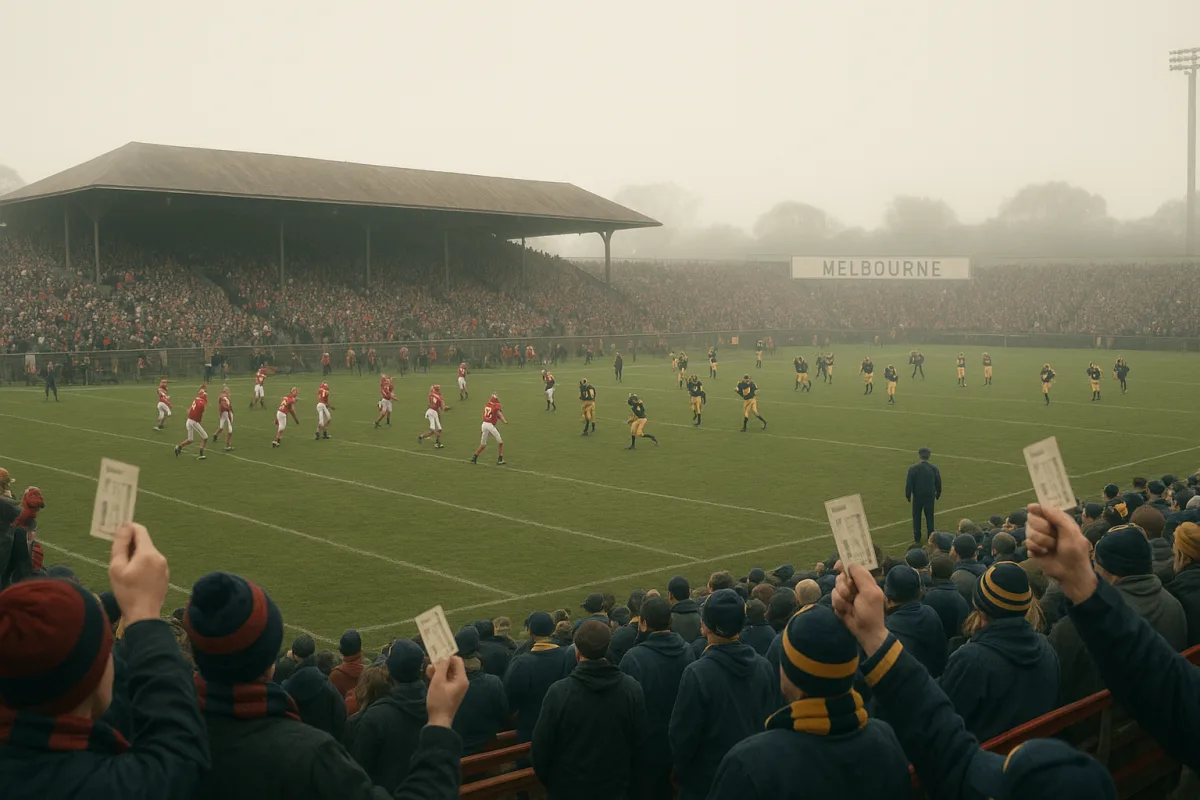
49ers Rams Australia Game Updates
Get the latest updates on the 49ers Rams Australia game, including player status, ticket info, and NFL's scheduling plans for Melbourne 2026.

NFL Global Expansion: Rams-49ers Game in Australia Analysis
Explore the NFL's global expansion with the Rams-49ers game in Australia, attendance, logistics, and its impact on the league's international growth.
San Francisco 49ers Week 4 Preview and Player Updates
Get the San Francisco 49ers Week 4 preview with injury updates and analysis on handling Denver's pressure defense.
Los Angeles Rams and Chargers Week 6 Outlook and Analysis
Get a detailed Week 6 outlook for the Los Angeles Rams and Chargers, including key challenges, player analysis, and game predictions.