
Los Angeles Rams and Chargers Week 6 Outlook and Analysis
Get a detailed Week 6 outlook for the Los Angeles Rams and Chargers, including key challenges, player analysis, and game predictions.
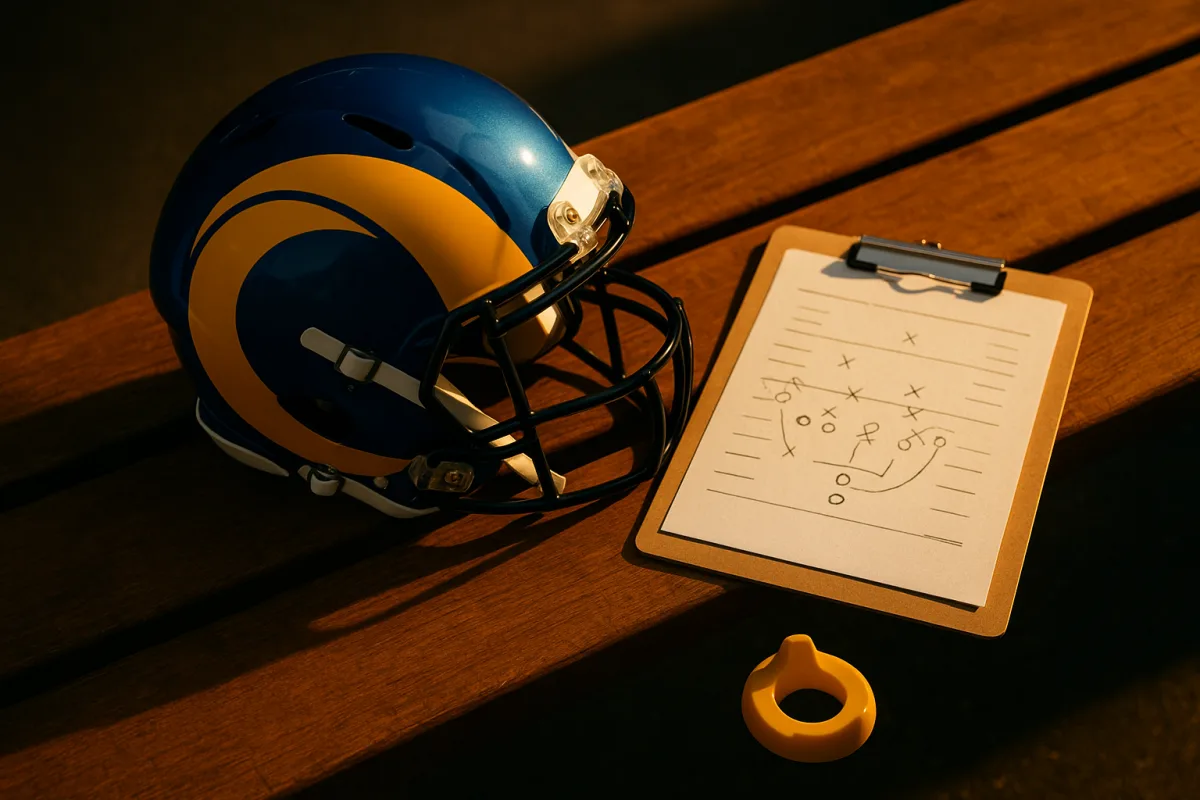
The shared issue is not quarterback play, it is possession quality
There is a tendency to diagnose every struggling Los Angeles team through its quarterback. Matthew Stafford has turnovers, Justin Herbert has not looked comfortable, therefore the quarterback must be the story. That is too tidy.
The more useful question is what each offense inherits when it takes the field. Is it getting manageable second downs, clean protection pictures and viable fourth-down choices? Or is it constantly asking its quarterback to rescue a possession already damaged by penalties, drops, failed runs or special-teams mistakes?
That distinction matters because both Los Angeles teams have enough quarterback talent to make a turnaround plausible. Neither has shown enough operational consistency to make one inevitable.
For the Rams, the disconnect is clear in the broad numbers. CBS Sports listed Los Angeles first in the league in total offense at 424.4 yards per game after Week 5, yet the team was scoring 23.8 points per game. [6] Yardage is valuable, but it does not itself close drives.
For the Chargers, the numbers point in the opposite direction. BBMI Sports ranked their offense 30th in EPA per play through Week 4 while putting the defense 10th. [8] That is a profile of a team whose defense is supplying opportunities that its offense is not converting often enough.
EPA, or expected points added, is worth unpacking here because it explains why the two clubs can look so different while sharing a related problem. It measures how a snap changes a team’s expected scoring value from that game situation.
A four-yard gain on first-and-10 can be useful because it improves the next play’s options. The same four-yard gain on third-and-12 does little. EPA accounts for that difference, while total yards mostly does not.
The Chargers have too often been operating in the second category. When an offense has a negative play, a protection loss, a drop or a run stuffed early in the series, it changes the coordinator’s call sheet immediately.
Second-and-12 and third-and-9 are not simply longer versions of second-and-5 and third-and-2. Defenses can use more aggressive coverage, rush more freely and reduce the quarterback’s access to play-action concepts and quick-game answers.
Why down and distance shapes a quarterback’s tape
A quarterback is never independent of the ten players around him, and that point from the ESPN panel was the most useful part of the Chargers discussion. Analyst Alex Smith noted the Chargers had used 12 offensive linemen and were again missing both starting tackles. [7]
That does not excuse every Herbert miss. It does explain why judging him solely by completion percentage, interception totals or highlight throws can miss the structure of the possession.
A depleted line narrows the offense in practical ways. The coordinator can keep tight ends and backs in protection, but that sends fewer receivers into routes. He can call faster throws, but that reduces route development and limits explosive-play opportunities.
He can lean on shotgun and spread formations to identify pressure, but that may reduce downhill run-game variety. He can call more play-action, but only if the defense still has reason to respect the run action.
That is the cost of a struggling offensive line. Protection help is not free. Every blocker retained is one less eligible receiver stressing coverage, and every quick throw is a throw that asks a receiver to create yards after the catch.
The FOX broadcast’s Chargers discussion cited nine drops and described an offense with four rookie linemen playing in Week 5. [7] Those are not interchangeable problems. A drop wastes a completed design, while a protection issue may prevent the design from functioning at all.
Still, the result is the same on the scoreboard. A team loses a down, faces a longer conversion and eventually asks Herbert to win against a defense that knows a pass is coming.
That is why the calls for the Chargers to simply return to “bully ball” need more detail. Jim Harbaugh’s preferred offenses have generally used physical run concepts and play-action to make defenders step forward, then punished them behind the linebackers.
But an offense cannot declare itself physical. It has to block the front in front of it, maintain combination blocks through the second level and avoid putting itself in obvious passing situations before its identity has a chance to matter.
The ESPN panel argued that the Chargers do not currently resemble the downhill, play-action offense associated with Harbaugh. [7] That is a fair observation, but the correction is not necessarily more runs. It is more successful early-down plays.
Against the Chiefs, that means the Chargers need to reduce the number of snaps where Kansas City can dictate protection and coverage. CBS Sports analyst R.J. White projected a double-digit Chiefs win, specifically citing the Chargers’ offensive-line issues. [7]
RotoWire’s Week 6 simulation also favored Kansas City, while AS.com offered the notable dissenting prediction of a Chargers upset. [6][7] The outlier is possible because Herbert’s talent gives Los Angeles a path, but it requires a cleaner offensive environment than the club has created through five games.
The Rams’ problem is the last play of the drive
The Rams’ issue is different, and more specific. Their offense is moving the ball well enough to suggest that a 2-3 record is not a full description of the team, but too many possessions have ended without the points those yards should produce.
The Buffalo loss is the cleanest example. Los Angeles lost 37-34 in overtime after a potential game-winning kick was blocked, a sequence that transformed a recoverable special-teams concern into a direct loss. [9]
Harrison Mevis had made only five of nine field-goal attempts before the Rams released him after that game. The Week 5 tape included a missed 50-yarder and the blocked 48-yard overtime attempt. Blake Grupe replaced him after arriving with an 11-for-11 career record from previous stops.
It would be convenient to frame that as a kicker problem. Sean McVay, speaking on the Rams’ official channel, laid out why that is incomplete: field-goal operations involve protection, snap, hold, placement, trajectory and the kicker’s strike.
That is the mechanics of a field goal. The long snapper must deliver a catchable ball at the right spot. The holder has to rotate the laces, place the ball at the correct depth and angle, and do it without disrupting the kicker’s timing.
The protection unit must account for interior push and edge leakage. A 48-yard field goal is not merely a 48-yard kick. The ball must rise quickly enough to clear the rush, travel on the intended line and still carry the required distance.
A low kick can be blocked even when the protection is sound. A good strike can miss if the hold is off. A protection breakdown can make an otherwise acceptable kick impossible. Replacing one player can help, but it does not erase the other ten assignments.
That is why Grupe’s prior 11-for-11 mark should be treated as encouraging rather than conclusive. It tells the Rams they have added a kicker with a record of converting opportunities. It does not tell them whether this specific snap-hold-protection operation will work under pressure.
McVay also said wide receiver Jordan Whittington provided a positive presence on special teams after the unit’s struggles. That is a small but relevant detail. Coverage and protection units depend heavily on reserve players and receivers who must execute precise, often unglamorous assignments.
The Rams’ response should therefore be judged drive by drive, not by whether Grupe makes his first attempt. If the operation is cleaner, the kickoff and coverage units are sound, and the team stops giving away hidden yardage, the offense’s yardage can begin to produce wins.
Why Arizona is a useful Rams test
Arizona arrives on a four-game losing streak, and CBS Sports reported that the Cardinals had allowed at least 30 points in each of those losses. [6] That makes the matchup favorable on paper for Stafford, Puka Nacua, Davante Adams and Kyren Williams.
The Rams won both meetings with Arizona last season, 45-17 on the road and 37-20 at home. [6] But those scores should not be treated as proof of what will happen Sunday. The teams have not played each other yet in 2026. [1]
What the matchup can reveal is whether the Rams can finish possessions. Arizona’s defense entered Week 6 allowing an NFL-high 32.4 points per game, according to CBS Sports. [6] A strong Rams performance should therefore include touchdowns in the red zone and routine points when drives stall.
The Rams’ injury report adds some uncertainty around the margins. Tight end Davis Allen was limited but trending upward, safety Kamren Curl was listed questionable with an ankle injury, and guard Tremayne Anchrum was questionable after feeling something in his groin during practice.
McVay described Byron Young and Tyler Higbee as veteran rest-day participants, not new injuries. He also said the team would be careful with Curl and Anchrum, which is the sensible approach in October when availability over the next month matters more than forcing one player through a single practice.
One correction is necessary because inaccurate injury chatter can travel quickly: Miles Sanders is not on the Rams’ roster as of October 18, and there is no Rams injury designation or return timeline to discuss for him.
The stakes are larger for the Rams, but more immediate for the Chargers
The Rams have more runway than the Chargers because they are 2-3 rather than 0-5, and their underlying offensive production remains strong. Greg Olsen made that point on FOX, arguing that close losses and a favorable upcoming stretch make a quick recovery plausible. [7]
Still, the Rams cannot assume the margin will remain forgiving. Turf Show Times noted that the club has 29 pending free agents before 2027, while other Rams coverage has highlighted the escalating cap costs and lost draft flexibility associated with the Myles Garrett trade. [2][3]
That is not a Week 6 reason to panic. It is a reason to understand that roster depth is not an unlimited resource. A special-teams flaw that costs a game now can have playoff-seeding consequences later, when the roster may be less flexible.
For the Chargers, the calculation is more basic. BBMI projected 6.1 wins, 26th in the league, after its early-season assessment. [8] At 0-5, a playoff push requires more than a single upset of Kansas City.
It requires the offense to stop losing first down, stop forcing Herbert into long-yardage answers and start giving its defense leads worth protecting. That is the actual turnaround mechanism, not a motivational speech or a change in the public conversation.
Frequently Asked Questions
What are the key challenges for the Los Angeles Rams in Week 6?
The Rams face challenges in converting offensive yardage into points, partly due to special teams issues, including a kicking operation that went 5-for-9 before releasing Harrison Mevis after Week 5. Stabilizing field-goal attempts with new kicker Blake Grupe is critical, but special teams performance involves the entire unit, not just the kicker. The Rams also contend with salary cap pressures and potential suspension of LT Alaric Jackson, which could affect roster stability.
How can the Chargers improve their offense for Week 6?
The Chargers need to improve possession quality by reducing negative plays and avoiding down-and-distance situations that limit quarterback Justin Herbert’s options. Protecting Herbert better by addressing offensive line issues and generating successful early-down plays will help create manageable situations for the offense. This improvement is essential to enable the Chargers to execute their preferred physical, play-action style effectively.
What impact do offensive line issues have on the Chargers' Week 6 game?
The Chargers’ offensive line struggles, including missing both starting tackles and using four rookie linemen in Week 5, have forced the offense into quick throws and limited route development. This reduces the number of eligible receivers and explosive-play opportunities, making it easier for defenses like Kansas City’s to pressure the quarterback and disrupt offensive rhythm. These protection problems contribute directly to the Chargers’ poor offensive efficiency.
Who are the key players to watch for the Rams and Chargers in Week 6?
For the Rams, kicker Blake Grupe is a key player to watch as he attempts to stabilize the special teams’ kicking game after replacing Harrison Mevis. On the Chargers’ side, quarterback Justin Herbert remains central, but his performance will heavily depend on the offensive line’s ability to provide protection against the Chiefs’ defense. No other specific players were highlighted in the article or research brief.
What are the predictions for the Rams vs Cardinals and Chargers vs Chiefs games in Week 6?
The Rams host the Arizona Cardinals at SoFi Stadium on October 18, 2026, but no detailed predictions or analysis of that matchup are available. For the Chargers vs. Chiefs game, expert consensus is mostly pessimistic, with CBS Sports predicting a double-digit Chiefs win due to the Chargers’ offensive line issues and overall offensive struggles. However, one dissenting opinion from AS.com favors a Chargers upset, though without detailed reasoning.
How we researched this
This article was assembled from 4 video sources across 4 channels, 2 published articles, 10 cited references.
Nothing here is based on hands-on testing. Where a figure or finding appears, it belongs to the source cited beside it, and the writing says so rather than implying otherwise. Every source is listed below so you can check it.
Sources
Sean McVay & Bubba Ventrone Discuss the Week 6 Injury Report, Updates to Special Teams & More — Los Angeles Rams
'I don't know about this!' 👀 Rex Ryan's thoughts on the Eagles without Jalen Hurts | NFL Countdown — NFL on ESPN
Cardinals Game Plan @ Rams: Wk 6 Storylines, Key Matchups & Keys To Victory | Arizona Cardinals 2026 — Arizona Cardinals
Rams in Trouble? Can Chargers Turn It Around? Greg Olsen on Whether It’s Time to PANIC in LA 😱 — NFL on FOX
Jets vs. Patriots odds, picks, prediction, spread: Start time, betting preview, best bets for NFL Week 6 — CBS Sports NFL
Cardinals vs. Rams odds, predictions: Kalshi promo code CBSSPORTS55 for $55 bonus on NFL Week 6 division game — CBS Sports NFL
Arizona Cardinals at Los Angeles Rams 2026 REG 6 - Game Center
Rams must be careful with who they end up paying extensions | Turf Show Times
Los Angeles Rams salary-cap strategy and star-player contracts risk? - RamsNews
Weekly NFL AI Projections: Biggest Winners and Closest Calls | RotoWire
NFL Week 6 Predictions: Expert Picks for Every Game - CBS Sports
Watch Los Angeles Rams and Chargers Week 6 Outlook on Youtube
Also from the sources
Related Articles
49ers vs Rams Australia Game Week 1 Preview and Travel
Preview the 49ers vs Rams Week 1 game in Australia with insights on travel strategies and team acclimation for optimal performance.
Dallas Cowboys Team Updates and Media Insights for Week 6
Get the latest Dallas Cowboys team updates, injury status, and media insights ahead of Week 6 against Green Bay Packers.
San Francisco 49ers Week 4 Preview and Player Updates
Get the San Francisco 49ers Week 4 preview with injury updates and analysis on handling Denver's pressure defense.

Broncos vs Chiefs Week 1 Preview: Key Matchups and Analysis
Get a detailed Broncos vs Chiefs Week 1 preview with key matchups, player updates, and game analysis for the 2026 NFL season opener.