
Denver Broncos Week 9 Analysis and Playing Surface Update
Get an in-depth Denver Broncos Week 9 analysis including game plan, player roles, and updates on the playing surface at Empower Field.
Denver Broncos Week 9 Focus: Control the Variables You Can
Denver is preparing for uncertainty, not a mystery scheme
The Broncos enter Week 9 against Carolina with an unusual preparation problem: the Panthers changed defensive coordinators on October 30, leaving Denver with limited evidence of what the new voice will emphasize on game day.
That does not mean Sean Payton is preparing for an entirely unknown defense. It means the Broncos must separate what Carolina can change quickly from what takes weeks of practice, roster reshuffling, and repetition to install.
Payton laid out that distinction while speaking with the Denver Broncos channel. Denver will study all available Panthers film, then use the opening quarter to determine whether Carolina’s calls, timing, or personnel usage have changed.
A coordinator can alter tendencies quickly. He can call more pressure on early downs, play more zone on third down, change when the defense substitutes, or disguise coverage differently before the snap.
He cannot easily replace the underlying structure. Defensive linemen still have assignments in the same fronts, linebackers must communicate checks, and defensive backs need shared rules to pass off receivers in coverage.
That is why Payton pointed to Carolina’s preferred base front and coverage, along with its sub package. The Broncos expect those foundational calls to remain available, then watch for different moments when the Panthers choose to deploy them.
For you watching at home, this is the first-quarter clue: Denver may call concepts that force Carolina to declare its coverage rules. Motion, condensed formations, empty sets, and play-action looks can expose whether defenders are following receivers or defending zones.
The result of a five-yard gain may not tell the full story. A completed pass can show Denver whether Carolina’s safety rotates down late, whether its nickel defender travels with motion, or whether the Panthers are bringing an extra rusher.
That information shapes the next three quarters. Football fans often describe a game plan as though it is fixed on Friday, but the better teams build it to collect information on Sunday.
Why first-quarter information changes the whole game plan
The central Week 9 concept is controlled adjustment. Denver wants to enter the game with answers based on film, but it also needs a process for finding the answers that Carolina’s recent change may have made outdated.
Payton’s point was measured: it is hard to change everything in a short period. That is particularly true defensively, where one new pressure package can be installed faster than a new identity.
A base front determines where the defensive line and linebackers align before the snap. A coverage determines how the secondary divides responsibility for receivers, deep zones, crossing routes, and the run-pass conflict created by play action.
A sub package enters when offenses use extra wide receivers or obvious passing situations. That package can put another defensive back on the field, alter the pass rush, and change which linebacker must cover in space.
What Denver needs to learn is not only what Carolina calls, but when Carolina calls it. A defense may still use the same Cover 3 structure, for example, while becoming far more aggressive with simulated pressure on third-and-medium.
Those timing choices decide whether a quarterback can play fast. If Bo Nix recognizes an expected coverage before the snap, the ball can come out on schedule and Denver can turn routine throws into yards after the catch.
If Carolina changes its disguise, Denver must adjust the protection and the quarterback’s progression. The offense may need to hold a back in, slide the line differently, or move the pocket to avoid asking one blocker to handle too much.
Payton has emphasized the value of a trustworthy left tackle in protection because an offense cannot chip every dangerous pass rusher. When the tackle can handle an edge player alone, backs and tight ends can release into routes.
That is the cost of uncertainty. Extra blockers create protection security, but they reduce the number of receiving options. A team that keeps a running back in to block has fewer routes attacking the coverage downfield.
Denver’s opening script can therefore reveal its confidence level. If the Broncos quickly release backs and use more receivers in the route pattern, they likely believe their protection calls match what Carolina is showing.
If they keep tight ends tight to the formation or use the running back as a check-release option, it may indicate the Panthers have created a rush problem Denver wants to solve before expanding the passing game.
The Panthers’ offense presents a different kind of stress
Payton called Carolina “an explosive team” and said the Panthers ranked seventh or eighth in explosive plays. He specifically identified Bryce Young’s comfort in the offense and Carolina’s mix of play action and RPO concepts.
An explosive play changes the math of a possession. Instead of requiring 10 or 12 clean snaps to reach scoring range, an offense can flip the field with one breakdown in leverage, tackling, or coverage communication.
Play action and RPOs attack defenses through different mechanisms, though both ask defenders to hesitate. Play action sells a run after the snap, hoping linebackers step forward and open throwing windows behind them.
An RPO, or run-pass option, leaves the quarterback with a post-snap choice. He reads a designated defender and either hands the ball off or throws quickly, depending on whether that defender commits to the run.
The defender being read is under pressure either way. If he crashes toward the running back, the throwing lane can open. If he stays wide to protect the pass, the offense may have a lighter box for the run.
Denver’s defense will not be judged only by sacks against Young. Payton made that point while discussing the Broncos’ pass rush: pressure can force mistakes and interceptions, while a sack ends the play without creating a turnover opportunity.
That is especially relevant against a quarterback operating a quick-game, play-action, and RPO-heavy offense. The pass rush must get close enough to affect Young while remaining disciplined enough not to open escape lanes or throw windows.
Against mobile quarterbacks, rush lanes matter. An edge rusher who takes an overly aggressive path upfield can create a clean interior escape route, turning apparent pressure into a scramble or an off-schedule completion.
Denver must also tackle after short completions. RPO and play-action systems often manufacture throws with room for the receiver, then ask that player to beat a defender in space. A missed tackle can become the explosive play Payton referenced.
The Broncos do not need a dramatic defensive reinvention here. They need defenders to identify the run-pass conflict quickly, preserve leverage, and make Carolina execute long drives without handing it hidden yards after the catch.
Dobbins’ workload is about roles, not a single snap total
J.K. Dobbins remains one of the more visible questions around Denver’s offense because his workload has fluctuated within a three-back rotation. Payton said Dobbins is “a huge part of what we’re doing.”
The coach also acknowledged that Denver is paying attention to Dobbins’ workload, while rejecting the idea that it has become an internal problem. He described the difficulty of distributing opportunities among three backs.
That distinction matters on Sunday. A low snap total can look alarming if viewed alone, but it may reflect game flow, down-and-distance assignments, or a different back’s role in protection and receiving.
Dobbins has been active and healthy in early November after a minor Week 2 hamstring issue, with no reported injury concerns since Week 4.[3][4] Denver has not publicly detailed a specific load-management protocol.
Payton’s comments point toward role-based rotation. A team may prefer one back on early-down runs, another on third-down protections, and another in two-minute offense, even if all three are capable runners.
The Panthers game could expose which role Denver values most. If Carolina creates obvious passing situations with pressure looks, the running back who recognizes blitz rules and can physically hold up in protection may get the call.
Payton praised rookie Jonah Coleman’s ability to handle advanced protection plans. He explained that recognizing whom to block is only half the job, because the back also must be strong enough to stop the blitzing defender.
That is a coaching point fans can see. Watch whether the running back scans inside-out for late pressure, whether he meets the blitzer squarely, and whether Nix has time to complete the throw without drifting off his launch point.
The hot-hand explanation also has limits. Coaches may ride a runner who is seeing cutback lanes well, but they will not leave a quarterback exposed merely to reward a productive first-half rushing performance.
We would avoid treating every Dobbins snap comparison as a referendum on his standing. The more revealing split is third down, where protection trust, route assignments, and the coordinator’s preferred personnel become visible.
Replacing the field is the same organizational habit
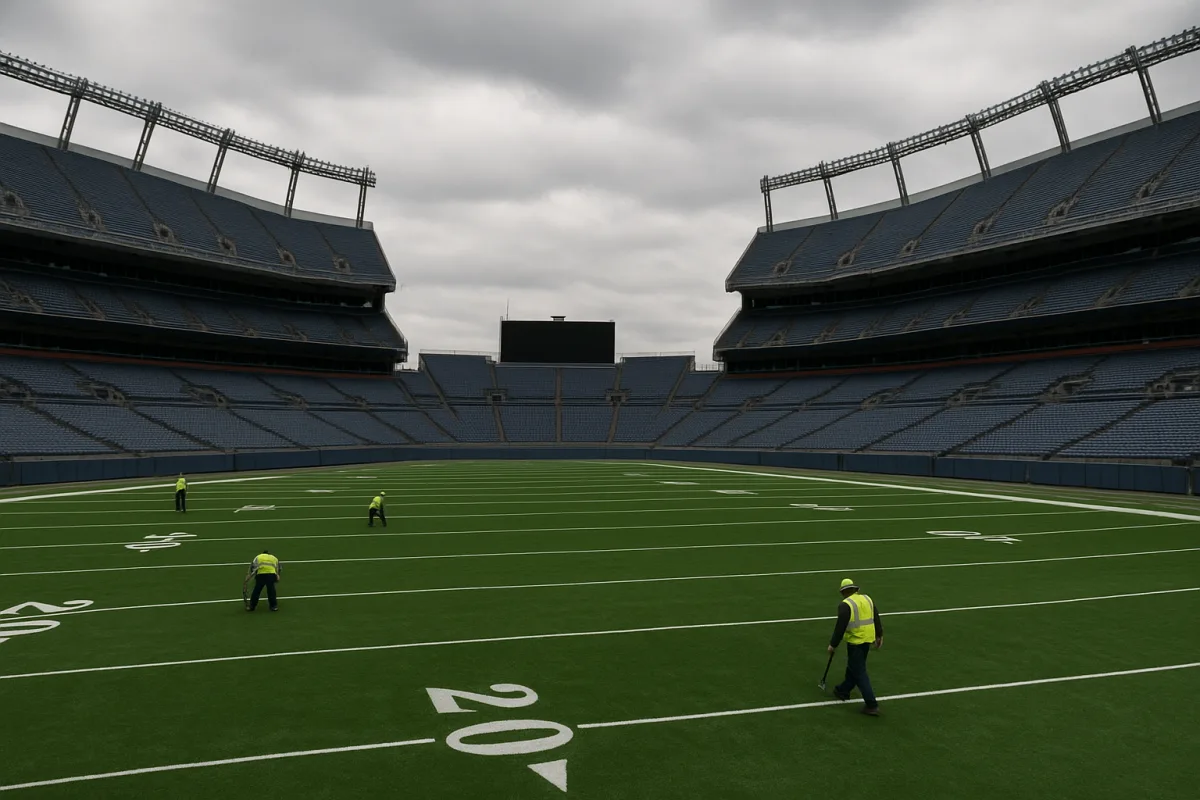
The Broncos’ decision to replace the entire playing surface at Empower Field at Mile High fits the same Week 9 theme: identify the variables you can control before they become game-day problems.
Pro Football Talk reported that Denver is replacing the field despite no public complaints about the grass quality. Available reporting has not linked player or coach complaints, or specific injuries, to the stadium surface during the past five years.[5]
That absence is important. Denver is not reacting to a publicly documented failure. The club is making a preventative decision before its remaining home games, rather than waiting for footing concerns to influence a game.
Natural grass changes through use, weather, maintenance, and the repeated stress of football cleats cutting and redirecting. Replacing the surface is designed to reset the field before those accumulated factors become a competitive or safety concern.
The Broncos have not published the 2026 replacement cost, the contractor, or detailed specifications for the new surface. You should be cautious with claims assigning a dollar figure or a particular turf supplier to this work.
The larger stadium renovation completed in 2024 exceeded $100 million, but that figure does not establish the cost of this field replacement. Stadium projects and playing-surface work are separate expenses with different scopes.
The NFL’s field-surface standards are becoming more formalized across the league. Clubs must follow the Field Surface Safety and Performance Committee’s mandatory maintenance practices for natural and synthetic fields, with leaguewide compliance required by the 2028 season.[1]
This is not a simple grass-versus-artificial-turf talking point. The condition, maintenance, drainage, stability, and consistency of the specific field under players’ feet all affect whether a surface performs as intended.
Denver’s choice is also roster protection. A team invests heavily in its quarterback, offensive line, pass rushers, and skill players. A high-quality playing surface cannot eliminate injury risk, but it can remove one avoidable concern.
That is why the field story belongs beside Payton’s preparation comments. The Broncos are trying to reduce the number of variables that can surprise them, from Carolina’s altered defensive tendencies to the footing beneath every cut.
What to watch against Carolina
Start with Denver’s first two offensive possessions. Motion before the snap, protection personnel, and the number of receivers released into routes will show how aggressively Payton wants to test Carolina’s new defensive operation.
Then watch whether Young is forced to hold the ball. Denver’s rush does not need an inflated sack total to win snaps, provided it compresses the pocket without losing the disciplined edges needed against Carolina’s explosive-play designs.
Finally, track the running back on third down. Dobbins’ total carries will matter, but the back Denver chooses when Carolina can pressure Nix will say more about the game plan and Denver’s trust hierarchy.
The fresh surface will receive less attention than a touchdown or turnover, as it should. But it is part of the same approach: handle the controllable detail early, so the football decisions decide the game.
Frequently Asked Questions
What is the Denver Broncos' game plan for Week 9?
The Broncos plan to use their first-quarter offense partly as a diagnostic tool to identify any changes in the Panthers' defense after their coordinator switch. They expect to adjust their approach throughout the game based on what they learn early, focusing on controlled adjustments rather than assuming a completely new defensive scheme.
How is the Denver Broncos' playing surface at Empower Field updated?
The Broncos replaced the playing surface at Empower Field at Mile High in November 2025 to ensure better footing and reduce weather-related variables late in the season. This update aligns with NFL standards for field safety and performance, aiming to provide a consistent playing environment.
How does the Broncos' offense plan to handle the Panthers' new defensive coordinator?
Denver expects the Panthers to maintain their base defensive fronts and coverages despite the coordinator change. The Broncos will watch for timing and situational adjustments in Carolina’s calls during the game and use formations and motion early on to reveal coverage tendencies before adapting their protection and route concepts accordingly.
What is the role of J.K. Dobbins in the Broncos' Week 9 offense?
The Broncos use a running back rotation that includes J.K. Dobbins, with snap distribution indicating which back the team trusts in specific situations. Dobbins is active and healthy, and his usage will be part of Denver’s broader strategy to balance protection and receiving options in the offense.
How we researched this
This article was assembled from 1 video source, 4 published articles, 5 cited references.
Nothing here is based on hands-on testing. Where a figure or finding appears, it belongs to the source cited beside it, and the writing says so rather than implying otherwise. Every source is listed below so you can check it.
Sources
HC Sean Payton on Broncos facing Panthers: ‘It’s an explosive team’, Denver Broncos
Saints WR Jordyn Tyson feels "more explosive than I ever have" in return from hamstring injury, Pro Football Talk
Lamar Jackson's latest injury raises obvious questions about his future in Baltimore, Pro Football Talk
Broncos proactively replace entire surface at Mile High Stadium, again, Pro Football Talk
Sean Payton says J.K. Dobbins remains "a huge part of what we're doing", Pro Football Talk
Sean Payton reclaims Broncos play-calling duties in a bid to jolt a sputtering offense | FOX Sports
Watch Denver Broncos Team Focus and Playing Surface Update on Youtube
Related Articles
Denver Broncos Upset Chiefs: AFC West Standings Impact
Detailed analysis of the Denver Broncos' upset over the Chiefs and its impact on the 2026 AFC West standings and playoff race.
San Francisco 49ers Week 4 Preview and Player Updates
Get the San Francisco 49ers Week 4 preview with injury updates and analysis on handling Denver's pressure defense.
Denver Broncos Week 2 Comeback Win Over Jaguars Analysis
Detailed analysis of the Denver Broncos' Week 2 comeback win over the Jaguars, focusing on offensive adjustments and key player performances.
Texans vs Chargers Week 9 Preview and Defensive Analysis
Detailed Texans vs Chargers Week 9 preview focusing on defensive strategies and injury impacts for an informed game outlook.