
Sean McVay on Rams' Controversial Pass Interference Call
Explore Sean McVay's response and analysis of the Rams' controversial pass interference call that impacted their loss to the Broncos.
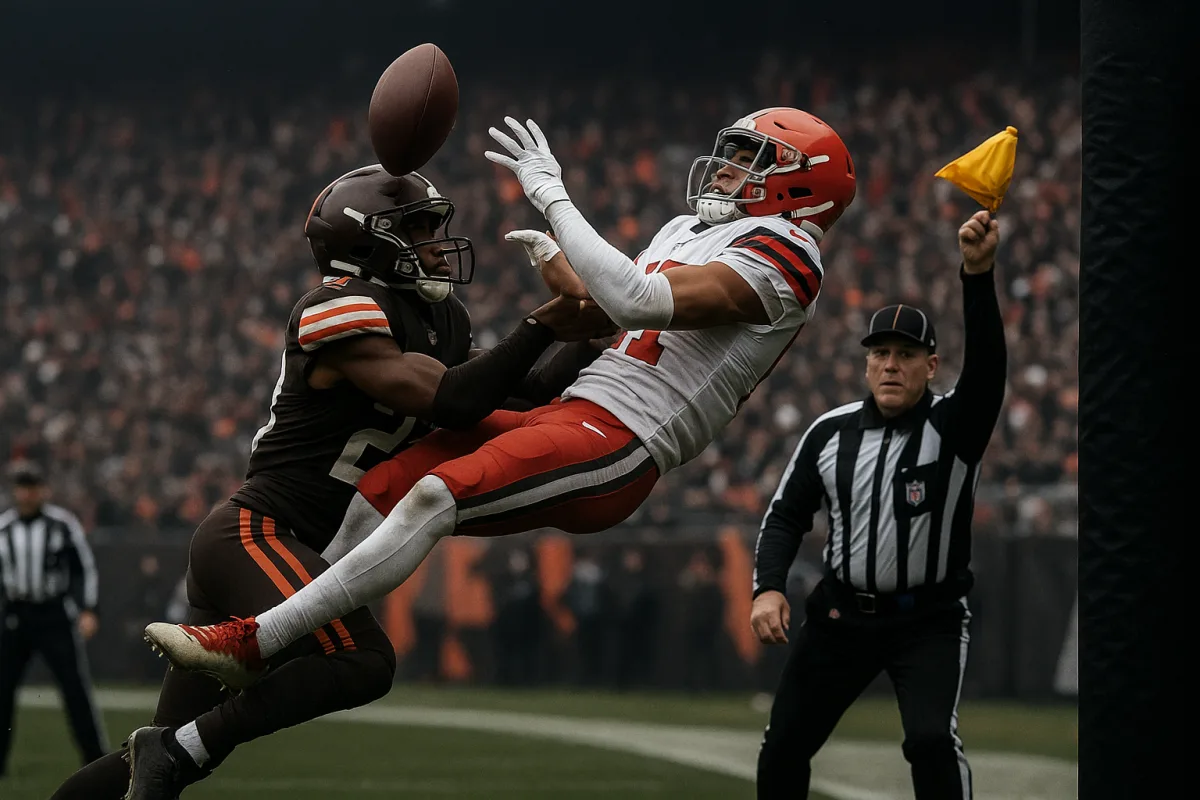
Sean McVay’s response to the Rams’ late DPI call was the right read of a bad moment
The call was consequential because DPI changes possession
The most useful way to examine the Rams’ loss in Denver is not through the familiar officiating debate. It is through what defensive pass interference actually does to a drive, particularly when it replaces an interception.
With 1:15 left, the Rams led 26-23 and Broncos quarterback Bo Nix threw toward receiver Pat Bryant. Rams cornerback Josh Wallace came away with what appeared to be a game-sealing interception, until an interference flag negated it. [5][9]
That is the difference between an ordinary late penalty and a defining one. If Wallace’s interception stands, Los Angeles takes possession while protecting a three-point lead, and Denver must either use timeouts, force a punt, or hope for another opportunity.
Instead, the ruling awarded Denver a first down at the Rams’ 7-yard line. The Broncos scored the winning touchdown five plays later with 47 seconds remaining, turning a potential defensive finish into a short-field goal-line sequence. [5]
That outcome is why “it was only one flag” misses the point. A DPI call does not simply add yardage. On a down where the defense has produced a turnover, it reverses who owns the ball and resets the offense’s chances.
What defensive pass interference is designed to police
Defensive pass interference applies when a defender illegally restricts an eligible receiver’s opportunity to catch a forward pass after the ball has been thrown. The relevant question is not whether there was contact, because football routes involve contact constantly.
Corners and receivers are allowed to hand-fight, jostle for position and compete for the ball. The official has to decide whether contact materially prevented the receiver from making a play, and whether the defender was playing the ball rather than simply playing through the receiver.
That judgment becomes difficult on vertical routes and late throws. A defender is taught to stay in phase, meaning he remains connected to the receiver’s hip and can turn to locate the football without losing leverage.
If the defender cannot find the ball, he has less margin for contact. Officials can interpret a grab, arm bar, early body collision, or a restriction of the receiver’s hands as preventing an opportunity, even if the ball is not ultimately catchable in a practical sense.
The cost is intentionally severe. Defensive pass interference is generally enforced at the spot of the foul, up to 15 yards, with an automatic first down. That structure discourages defenders from committing a tactical foul when beaten deep.
But the same rule creates the controversy here. The penalty is not calibrated to the quality of the throw, the likelihood of a catch, or the fact that the defense has intercepted the pass. Once DPI is called, the interception disappears.
Why the Wallace play remains hard to square with the broadcast view
The film-level argument is not that Bryant and Wallace had no contact. It is that the direction and source of the contact matter, especially when the receiver appears to create the collision.
NBC rules analyst Terry McAulay said during the broadcast that he could not explain the call, noting that Bryant appeared to initiate the contact. [4] Bryant subsequently acknowledged that he “sold” the play to draw the flag. [8]
That admission should be read carefully. Receivers are coached to show officials when their path, arms, or balance have been affected. Selling contact does not by itself prove a player manufactured illegal contact or prove the official made an incorrect call.
Still, it strengthens the objection to this particular ruling because it identifies the central issue. If the receiver initiates the decisive contact while the defender is competing through the route, a DPI call can reward the player creating the impediment.
McVay’s Monday assessment was notably narrow. He said he would not have additional coaching points for how Wallace played “through the cycle of the snap,” while declining to turn the ruling into an excuse. [5]
That phrase matters. Coaches review a coverage rep from alignment through release, route stem, ball arrival, finish, and the play after the catch or interception. McVay was saying Wallace’s technique did not require a corrective lecture simply because a flag was thrown.
It is possible to believe the call was wrong and still recognize why it was called. That is the uncomfortable reality of subjective fouls, where one official’s view of restriction can override what television angles and former officials interpret as mutual contact.
No public statement from the NFL or Vinovich’s crew has explained what contact triggered the penalty. That absence is important because it means nobody outside the officiating crew can state with authority whether the flag was based on an arm restriction, body positioning, or another element. [4]
McVay refused the easy version of the story
McVay’s “we aren’t going to play the victim card” response was not an acceptance that the call was correct. It was an effort to prevent the Rams from reducing a 60-minute loss to one judgment in the final 75 seconds. [5]
That distinction can sound like coach-speak, but the game record supports it. Los Angeles was penalized five times in the final two minutes, tying a 26-year record for the most penalties by one team in that window. [2]
The DPI was the most damaging flag because it wiped out a turnover. It was not, however, the Rams’ only chance to protect the lead, avoid a short field, or keep the Broncos out of the end zone.
The Denver Broncos’ team-produced Altitude Advantage show also framed the game around a broader shift. Denver trailed 16-0 at halftime, then scored 16 unanswered points in the third quarter and turned the Rams into a more pass-heavy offense late.
That matters because game state changes defensive play-calling. When Denver tied the game, the Rams could no longer rely on their run game and clock management. Matthew Stafford ultimately threw 55 passes, according to the Broncos’ postgame program.
The same Broncos program noted that Los Angeles had 45 offensive snaps in the first half but converted only one of four red-zone trips into touchdowns. That is not a defense of the DPI call. It is the reason McVay could point to missed chances without inventing them.
A team can play well enough to deserve a win and still leave enough unconverted plays for one officiating decision to become decisive. The Rams built a halftime lead, but they did not build the margin that would have made a late disputed call survivable.
The 2018 comparison explains the reaction, not the ruling
The emotional charge around this game came partly from the history. Vinovich was also the referee for the 2018 NFC Championship Game, when Rams cornerback Nickell Robey-Coleman was not flagged for a blatant late hit on Saints receiver Tommylee Lewis. [1][5]
That missed call became one of the defining officiating failures in modern NFL history. The league later acknowledged the error, and Robey-Coleman was fined, while the Rams advanced to the Super Bowl. [1]
It is understandable that observers immediately connected that game to Wallace’s penalty. Sean Payton coached the Saints in 2018 and now coaches the Broncos, while McVay remains the Rams’ coach. The names make the symmetry unavoidable.
But symmetry is not evidence. There is no comprehensive public database establishing a pattern of late defensive pass interference calls against the Rams since 2000, and the September 27 game should not be used to manufacture one.
What is documented is narrower: the Rams were flagged five times in the final two minutes against Denver, and the Wallace DPI was among those penalties. [2] That is a remarkable single-game sequence, not proof of a long-running officiating trend.
McVay’s refusal to revive 2018 as a public grievance was sensible. The Rams benefited from an infamous missed DPI eight years earlier, but that history does not make a questionable flag against Wallace correct, nor does it erase the impact of this one.
Accountability does not require pretending the flag was harmless
The worst version of the reaction would insist that McVay must choose between blaming the officials and saying nothing happened. He did neither. He acknowledged the call existed, defended his player’s process, and focused on the Rams’ own unfinished work. [5]
That is a better standard for evaluating late officiating than the victim narrative. The call changed the game, because it converted a likely interception into first-and-goal. It also did not force the Rams to commit every other late penalty or prevent them from closing earlier opportunities.
McVay’s brief Sunday media availability created a separate controversy, and he apologized Monday after saying a timing misunderstanding led him to leave before more reporters could ask questions, according to Pro Football Talk. The optics were poor after such a disputed finish.
Still, his substantive answer the next day was more revealing than the short postgame appearance. He did not say Wallace needed to play differently, and he did not claim the Rams lost only because of a flag.
That is the correct football reading. The Rams have a legitimate complaint about a high-leverage judgment that NBC’s rules analyst questioned and the receiver said he helped sell. [4][8] They also have a loss that cannot be honestly explained by one snap alone.
Frequently Asked Questions
What was Sean McVay's response to the Rams' controversial pass interference call?
Sean McVay did not endorse the late pass interference call against Josh Wallace but chose to separate the disputed ruling from the Rams’ failure to finish the game. He avoided playing the victim card and emphasized team accountability rather than blaming officiating for the loss.
How did the late DPI call affect the Rams' game against the Broncos?
The DPI call erased Josh Wallace’s interception with 1:15 left and gave the Broncos a first-and-goal at the 7-yard line. This possession-extending penalty allowed Denver to score the game-winning touchdown with 47 seconds remaining, turning what could have been a defensive victory into a loss for the Rams.
Why is defensive pass interference a possession-changing penalty?
Defensive pass interference is enforced at the spot of the foul with an automatic first down, which can erase a turnover like an interception. This rule discourages defenders from committing tactical fouls but means that a DPI call can completely reverse possession and reset the offense’s opportunity.
Did Sean McVay blame the DPI call for the Rams' loss?
No, McVay did not blame the DPI call for the loss. He acknowledged the call but focused on the Rams’ inability to close out the game, maintaining that the team must take responsibility rather than playing the victim.
What makes the Rams' DPI call controversial in the Broncos game?
The controversy stems from the fact that Broncos receiver Pat Bryant appeared to initiate the contact that led to the DPI call, and Bryant later admitted to exaggerating contact to draw the penalty. NBC rules analyst Terry McAulay questioned the call during the broadcast, and neither the NFL nor referee Bill Vinovich publicly explained the ruling.
How we researched this
This article was assembled from 1 video source, 3 published articles, 9 cited references.
Nothing here is based on hands-on testing. Where a figure or finding appears, it belongs to the source cited beside it, and the writing says so rather than implying otherwise. Every source is listed below so you can check it.
Sources
A closer look at the Broncos’ thrilling win over the Rams | Altitude Advantage — Denver Broncos
Sean McVay apologizes for Sunday night press conference cameo — Pro Football Talk
Nick Sirianni on Jalen Hurts medical check: "Doctors have to do their job" — Pro Football Talk
Sean McVay on DPI call late in loss: We aren't going to play the victim card — Pro Football Talk
Rams tie 26-year record for most penalties in final 2 minutes vs. Broncos - AOL
NBC rules analyst can't explain controversial penalty in Rams-Broncos game
Sean McVay on DPI call late in loss: We aren't going to play the victim card - NBC Sports
The Egregious Referee Call That Cost Rams in Week 3 Loss to Broncos
Broncos' Bryant admits he 'sold' late pass interference | theScore
Watch Sean McVay and Rams' Controversial Pass Interference Call on Youtube
Related Articles
Bo Nix Key Plays Fuel Broncos Comeback Over Rams
Explore how Bo Nix's key plays and Broncos' adjustments led to their comeback win over the Rams.
Denver Broncos Week 2 Comeback Win Over Jaguars Analysis
Detailed analysis of the Denver Broncos' Week 2 comeback win over the Jaguars, focusing on offensive adjustments and key player performances.
Los Angeles Rams and Chargers Week 6 Outlook and Analysis
Get a detailed Week 6 outlook for the Los Angeles Rams and Chargers, including key challenges, player analysis, and game predictions.
Dallas Cowboys Team Updates and Media Insights for Week 6
Get the latest Dallas Cowboys team updates, injury status, and media insights ahead of Week 6 against Green Bay Packers.