
Giants Roster Moves and Odell Beckham Jr. Status Explained
Explore the Giants' roster moves and Odell Beckham Jr.'s status, focusing on practice squad roles and special teams impact.
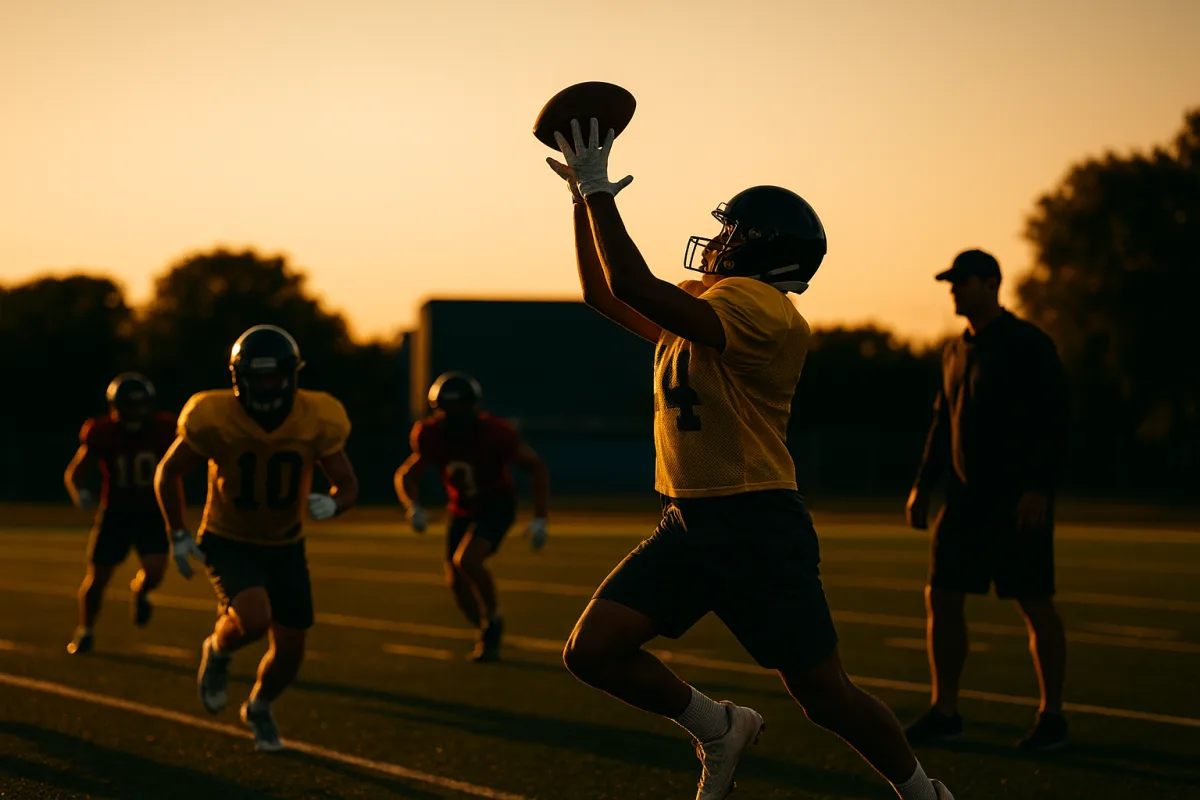
Giants’ Odell Beckham Jr. Decision Was About Practice Squad Function, Not Nostalgia
A practice squad spot has a job
The simplest reading of the Giants’ decision on Beckham is that the club ran out of reasons to carry a receiver whose game-day role was limited. The more useful explanation is that practice squad spots have specific football functions.
Pro Football Talk, citing ESPN’s Jordan Raanan, reported that the Giants do not plan to re-sign Beckham to their practice squad “at this time.” That wording matters because it leaves open a later reunion without suggesting one is likely.
Beckham’s return to New York carried obvious emotional weight. The Giants signed the former franchise centerpiece on June 4, and BigBlueInteractive reported a $1.3 million base salary for the one-year agreement. [1][2]
But the reunion produced little on-field volume. FOX Sports reported that Beckham was released after three games without a reception, having received only one target. [8] That is not enough information to judge every route he ran.
It is enough information to judge his place in the offensive plan. A receiver with one target over three games is not functioning as a designed answer within the passing game, whether that means outside isolation, slot work, motion packages, or red-zone concepts.
The Giants had previously indicated that they intended to expand Beckham’s role. The release contradicted that expectation, which is more meaningful than treating the zero-catch line as proof that the veteran could no longer play.
Stats tell readers what happened to the football. They do not automatically explain why. Beckham could have been limited by route participation, coverage rotations, quarterback reads, game scripts, protection issues, or a combination of all of them.
Still, roster construction eventually makes the explanation less complicated. If the coaching staff did not see enough offensive snaps for Beckham, the remaining path to an active game-day role was special teams. That is where the roster math turned.
Why receiver special teams work changes the calculation
Pro Football Talk framed the move plainly: Braxton Berrios and Charlie Jones joined the 53-man roster because they provide special-teams value that Beckham does not. That is not a minor distinction at the back end of an NFL roster.
A team does not dress every player on its 53-man roster. On game day, coaches need enough players to cover punts, protect on field goals, return kicks, block on returns, and replace injured contributors without exhausting starters.
For a reserve receiver, the question is rarely limited to whether he can run an NFL route tree. The question is whether he can handle multiple jobs across offense and special teams while accepting a smaller offensive snap share.
Berrios has a clear return-game résumé, while Jones has been used as a returner and coverage contributor. Those skill sets give a coaching staff ways to fill game-day roles without using starters on every special-teams unit.
That is the cost Beckham faced. If he was not receiving meaningful offensive targets and was not part of the special-teams core, carrying him required the Giants to pass on another player who could affect more phases.
This is why describing the decision as simply “the Giants chose younger receivers” misses the mechanism. Age may matter in future projection, but special-teams participation is what changes the weekly value equation immediately.
The Giants have a 16-player practice squad, plus an International Player Pathway exemption where applicable under the 2026 rules. [3][4] Those slots are limited, and they are not just reserved for players with name recognition or prior production.
They are used for developmental linemen, emergency depth at premium positions, special-team call-ups, young players learning the system, and veterans who can be elevated when a matchup or injury requires it.
A veteran like Beckham is eligible for that arrangement. NFL rules permit up to six practice-squad players with unlimited accrued seasons, removing the old assumption that practice squads are exclusively for rookies and second-year players. [3][5]
Eligibility, however, does not establish fit. The Giants could have signed Beckham to the practice squad and still elevated him on Sundays. The issue is whether his likely role justified allocating one of those limited spots.
The elevation rule explains the Giants’ choice
Practice-squad players may be elevated to the active roster for a game twice without requiring a standard 53-man roster transaction. A third elevation requires the club to sign that player to the active roster. [3][4]
That rule makes the practice squad especially useful for players with narrow but real weekly utility. A team might elevate a cornerback for a receiver-heavy opponent, a defensive lineman for a physical running game, or a returner after an injury.
For a receiver, the most practical elevation case often involves special teams. If a club loses a returner, needs another gunner, or wants a fifth or sixth wideout who can cover kicks, the practice squad can supply that player.
Beckham’s recent usage did not point in that direction. He had not earned a passing-game workload through three games, and Pro Football Talk’s accounting of the Berrios and Jones moves emphasized that special teams separated those players from Beckham.
That does not mean Beckham had no remaining football value. It means the Giants did not see enough value in the roles available to him right now. Those are different judgments, and the latter is the only one the transaction proves.
Practice-squad pay adds another layer, although it is not the primary cost for an NFL club operating under a $301.2 million 2026 salary cap. [11] Veterans on the squad earn between $18,350 and $22,850 weekly. [3][5]
Younger practice-squad players earn $13,750 per week. [3][5] The more important expense is opportunity cost: one roster-development slot cannot simultaneously belong to an emergency offensive tackle, a scout-team quarterback, and a veteran receiver.
The same principle applies to Beckham’s active-roster salary. His reported $1.3 million base salary does not establish his full cap charge because publicly available reports do not detail potential bonuses, incentives, or other contract terms. [2]
There is also no credible reporting that Beckham’s departure stemmed from locker-room problems. The available reporting centers on performance, offensive role, special teams, and the Giants’ need to maximize each roster spot after injuries.
That absence should not be turned into a claim about internal dynamics. It simply means the public evidence supports a football explanation, not a chemistry narrative.
McCarthy is a separate roster decision
The Giants’ trade for former Minnesota Vikings quarterback J.J. McCarthy should not be read as part of the Beckham decision, except in the broad sense that both moves show a team redistributing scarce roster resources after Jaxson Dart’s knee injury.
New York Giants’ Big Blue Kickoff Live described McCarthy as an addition to a quarterback room that needed depth, with Jameis Winston still positioned as the starter while McCarthy learns a new offense.
The Giants acquired McCarthy for a 2027 fifth-round pick. [12] That is meaningful but modest draft capital for a 23-year-old quarterback who entered the league as a first-round selection and remains under team-control value.
The trade is not evidence that the Giants believe McCarthy is ready to start immediately. It is evidence that they preferred his age, athletic profile, and developmental upside to the available alternatives at the price Minnesota accepted.
The Giants reportedly evaluated a wider group of quarterback possibilities after Dart’s injury, including Justin Fields, Jimmy Garoppolo, Gardner Minshew, Jake Haener, and Brandon Allen. [9][10] That broader search matters because it places McCarthy in context.
He was not the only conceivable backup. He was the option New York ultimately acquired, likely because he offers more theoretical long-term upside than a conventional veteran stopgap while costing only a future Day 3 pick.
McCarthy’s 2025 production explains why Minnesota was willing to move him. In 10 starts, he completed 57.6 percent of his passes for 1,632 yards, 11 touchdowns, and 12 interceptions, while the Vikings went 6-4 in his starts. [6]
The 6-4 record should not be used as a quarterback grade. Wins include defense, field position, opponent quality, rushing production, coaching decisions, and turnover margin. The completion rate and interception total better show why his evaluation remains unsettled.
Big Blue View’s film review found encouraging throws alongside significant flaws, which is the appropriate way to read McCarthy’s tape. The positive plays show he has NFL traits. The negative plays show why he is not yet a finished quarterback. [6]
His injury history adds risk to any immediate-starter narrative. McCarthy missed his entire 2024 rookie season with a torn meniscus, then missed five games in 2025 with a high ankle sprain and another with a concussion. [6]
The Giants also have to account for scheme fit. McCarthy is more mobile than Winston and can operate on boots, movement throws, quarterback keepers, and designed reads, but he is not a plug-and-play replica of Dart.
That matters in the weekly install. A coordinator cannot simply retain every Dart-based call and expect identical timing, ball handling, scramble responses, or coverage identification from McCarthy after a midseason trade.
Pro Football Talk noted that McCarthy will wear No. 18 because Giants tight end Isaiah Likely already has No. 9. The jersey switch is cosmetic, but it is a reminder that McCarthy is entering an established roster rather than inheriting one. [13]
The actual test will be how quickly he learns protections, route adjustments, cadence, terminology, and the quarterback-center communication system. Those details determine whether a backup can function on Sunday, not his draft slot or college reputation.
For now, the Giants’ roster logic is coherent. Beckham was not producing enough offensive or special-teams utility to command an active or practice-squad place, while McCarthy gives the club a developmental quarterback option after Dart’s injury.
Neither move promises a dramatic turnaround. Both are practical attempts to make every available roster slot answer a football question that exists this week.
Frequently Asked Questions
Why did the Giants release Odell Beckham Jr. in 2026?
The Giants released Odell Beckham Jr. after three games in which he had only one target and no receptions. The decision was based on football reasons related to his limited offensive role and lack of special-teams contribution, rather than locker-room issues. The team needed roster spots for players providing more immediate game-day value.
What role did special teams play in Giants' roster moves?
Special teams value was a key factor in roster decisions. Players like Braxton Berrios and Charlie Jones were retained because they contribute on return and coverage units, which is crucial for game-day roster flexibility. Beckham’s lack of special-teams involvement made it difficult to justify his roster spot given limited offensive usage.
Can Odell Beckham Jr. return to the Giants practice squad?
The Giants do not plan to re-sign Beckham to the practice squad “at this time,” but the wording leaves open the possibility of a future reunion. Practice squad spots are reserved for players who provide weekly game-day utility, so any return would depend on Beckham’s ability to fulfill that role.
How do NFL practice squad rules affect veteran players?
The 2026 NFL practice squad allows up to 16 players, including up to six veterans with unlimited accrued seasons. Veterans on the practice squad earn between $18,350 and $22,850 weekly and can be elevated to the active roster twice per game day, with a maximum of three elevations per season before requiring a full roster spot. This structure means veterans must still provide developmental or emergency value rather than serve as placeholders.
What impact do Giants roster changes have on their offense?
The release of Beckham and acquisition of J.J. McCarthy reflect a focus on developing younger players and expanding quarterback depth behind Jameis Winston. Beckham’s minimal involvement in the offense and McCarthy’s developmental status suggest the Giants are prioritizing roster flexibility and long-term growth over immediate veteran production.
How we researched this
This article was assembled from 1 video source, 3 published articles, 13 cited references.
Nothing here is based on hands-on testing. Where a figure or finding appears, it belongs to the source cited beside it, and the writing says so rather than implying otherwise. Every source is listed below so you can check it.
Sources
Giants Latest Roster Moves | Big Blue Kickoff Live | New York Giants — New York Giants
Giants don't plan to add Odell Beckham Jr. to the practice squad "at this time" — Pro Football Talk
In the offseason, Giants weren't interested in Joe Flacco — Pro Football Talk
With No. 9 taken in New York, J.J. McCarthy switches to No. 18 — Pro Football Talk
NFL Practice Squad Rules 2026: Size, Pay, Poaching — GiantsGator
What is the NFL Practice Squad? Rules, Salaries & 2026 Limits
NY Giants QB J.J. McCarthy: Film shows lots of good … and bad | Big Blue View
New York Giants Are Making a High-Stakes Bet on Their Backup Plan - Athlon
Giants release receiver Odell Beckham Jr. after three games and zero catches | FOX Sports
NFL 2026 Salary Cap Set at $301.2 Million; Where Do the Giants Currently Stand?
Watch Giants Roster Moves and Odell Beckham Jr. Status on Youtube
Related Articles
New York Giants Roster Cuts and Preseason Finale Analysis
Detailed analysis of the New York Giants' 2026 preseason finale and roster cuts, including key player evaluations and roster decisions.
NFL Roster Building Insights from Coaches and GMs
Explore NFL roster building insights from coaches and GMs on team construction, roster decisions, and managing the 53-man roster effectively.
NFL Roster Cuts 2026: Key Player Moves and Team Strategies
Explore NFL roster cuts 2026 with analysis of key player moves, team strategies, and impacts on depth charts and season outlooks.
Puka Nacua NFL Wide Receiver Status and 2026 Performance
Explore Puka Nacua's rising NFL wide receiver status with 2026 stats, strengths, and comparison to peers like Jaxon Smith-Njigba.