Bears vs Seahawks Week 8 Preview: NFC Contenders Showdown
Get a detailed Bears vs Seahawks Week 8 preview with key matchups, injury updates, and NFC playoff implications.
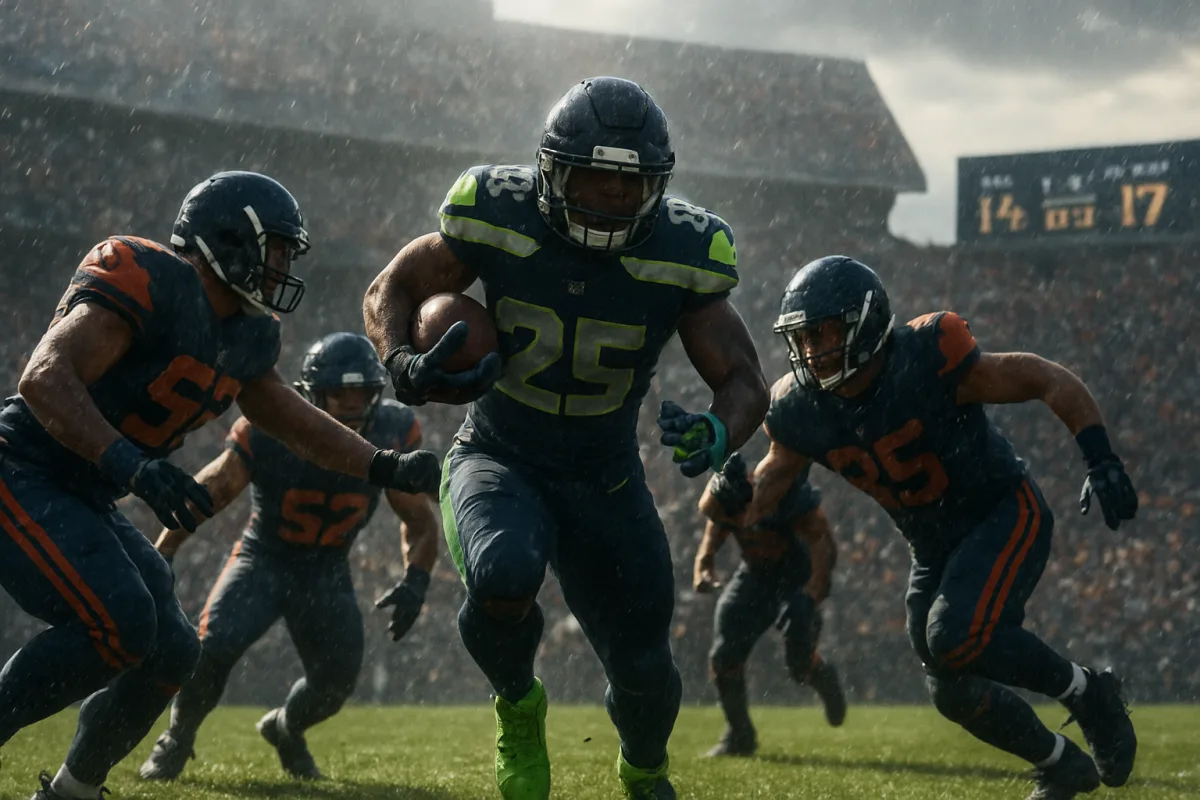
NFC Contenders Bears and Seahawks Showdown Preview
Start with the NFC stakes
You are not watching a novelty prime-time matchup. Chicago enters Week 8 at 5-2 and holds the NFC’s fifth seed, while Seattle is 4-3 and sits just outside the playoff bracket in eighth. [4]
A Bears win would give Chicago separation in the wild-card race and push Seattle closer to the group chasing the final spots. Seattle also has work to do inside its own division, where the Rams are 4-4 but own a better division record. [4]
The Seahawks are 1-2 in NFC West play, compared with the Rams’ 2-2 mark, and both clubs are 2-2 in conference games. [4] That puts added weight on every NFC matchup, including a non-division home game against Chicago.
For the Bears, the equation is simpler. Win on the road, get to 6-2, and make the conference chase behind the division leaders far more comfortable before the season’s second half tightens.
Identify the matchup that decides Chicago’s plan
Chicago has the better offensive résumé through seven games. The Bears rank third in total offense at 390.7 yards per game, first in rushing at 154.3 yards per game, and eighth in scoring at 25.7 points. [5]
Seattle presents the hardest counterweight Chicago has faced lately. The Seahawks lead the NFL by allowing only 233.9 yards per game and rank fourth in points allowed at 17.9 per game. [5]
That makes early-down efficiency the Bears’ central task. If Chicago stays ahead of the chains with its run game, Ben Johnson can keep Seattle’s coverage structure honest and give Caleb Williams manageable third downs.
If Seattle creates second-and-long, the matchup changes quickly. A defense allowing the fewest yards in football can keep safeties deep, challenge receivers at the catch point, and make a young quarterback solve crowded windows.
NFL on ESPN framed Chicago’s recent formula as a fast start followed by possession football. The panel pointed to a 12-minute, 21-second Bears advantage in fourth-quarter possession against New England, the kind of closing sequence Chicago wants again.
That formula fits Chicago’s profile. The Bears do not need Williams to chase a shootout if their run game produces third-and-short, their defense gets a stop, and their offense can end the game holding the ball.
Decide whether Seattle can run the ball
Seattle’s offense ranks 15th in total yards, 17th in rushing yards at 113.7 per game, and 13th in scoring at 24.0 points per game. [5] Those are capable numbers, but they do not leave much room for another inconsistent ground-game night.
The Seahawks traded for Colts guard Quenton Nelson, a four-time All-Pro, and he is expected to be available Monday. Nelson was a full participant in practice and carried no injury designation on the official Week 8 report. [3]
Chicago made an equally consequential move by acquiring Titans defensive lineman Jeffery Simmons on October 29. Simmons arrived after recording four sacks in seven games, and he also practiced fully without an injury designation. [1][3]
This is the snap-by-snap collision to track. Nelson gives Seattle a potential tone-setter on interior runs, while Simmons gives Chicago a disruptive presence against a unit still trying to settle its protection and short-yardage identity.
NFL on ESPN highlighted Seattle’s recent effort to correct its run-game issues, noting a 150-yard rushing performance against Kansas City. The panel’s larger point was sound: Seattle wants its ground game to reduce the hits on quarterback Sam Darnold.
That is where Chicago’s trade changes the game. The Bears rank eighth in yards allowed and ninth in points allowed, but only 12th with 19 sacks and 17th with four interceptions. [5] Simmons can help turn solid defense into negative plays.
Watch Seattle’s three-safety answers
Seattle’s defense has been built around adaptability, and the personnel tells you what Mike Macdonald wants. NFL on ESPN emphasized Seattle’s use of three safeties, a grouping designed to preserve coverage range without surrendering too much against the run.
The key for Chicago is to force Seattle to declare. If the Bears can run effectively from heavier formations, they may compel the Seahawks to substitute a linebacker for a defensive back and simplify the middle of the field.
If Chicago cannot do that, Seattle can keep versatile defensive backs on the field and disguise its intentions. That puts more pressure on Williams to identify coverage rotations before the snap and protect the ball after it.
The Seahawks’ eight interceptions rank fourth in the NFL, even though their 17 sacks rank only 17th. [5] That split suggests a defense winning with structure, coverage leverage, and quarterbacks being forced into bad decisions, not simply a relentless rush.
Chicago’s best answer is patience. Use the run game, take the available completion, and let Johnson create matchups with motion and personnel rather than asking Williams to repeatedly defeat Seattle’s deepest coverage looks in obvious passing situations.
Account for the tight-end and injury adjustments
Cole Kmet is out for the season, according to CBS Sports, and that removes a familiar target from Chicago’s offense. The Bears may need rookie tight end Colston Loveland to handle more of the underneath and red-zone workload.
CBS Sports noted that Johnson has designed opportunities for his second tight end, particularly with Kmet normally receiving multiple looks. Loveland’s role becomes especially relevant if Seattle’s coverage takes away Chicago’s primary perimeter options.
Seattle also has depth concerns that could shape its rotation. Tight end Elijah Arroyo is out for the season after shoulder surgery, while receiver Jake Bobo is on injured reserve, according to the Seahawks’ injury report. [6]
Left tackle Charles Cross and right guard Anthony Bradford are listed as questionable, along with several skill-position players. [6] If either lineman cannot play effectively, Simmons’ arrival becomes more than a headline and could determine Seattle’s offensive ceiling.
Chicago has injury questions at linebacker, cornerback, defensive line, and offensive line, including T.J. Edwards, Tyrique Stevenson, Luke Newman, Dominique Robinson, Ruben Hyppolite II, and Noah Sewell. [3] That makes depth and communication important against Seattle’s shifting personnel.
Set expectations for the quarterback battle
Williams has benefited from an offense built to give him defined answers, varied run looks, and aggressive scoring opportunities. Chicago’s 25.7 points per game show why it belongs in the NFC contender conversation, even against a high-end defense. [5]
Darnold’s job is different Monday night. Seattle needs him to avoid the mistakes that follow pressure, especially if Chicago can use Simmons and its front to win interior downs and turn the game into long-yardage football.
We would not expect either quarterback to have an easy path. The Bears have the more explosive statistical profile, but Seattle has the league’s top yardage defense and plays at home, where its coverage disguise can become more difficult to diagnose.
The winning quarterback may be the one who accepts the boring answers. Against these defenses, a checkdown on second-and-eight can be a better play than challenging a disguised safety rotation and handing the opponent the extra possession it wants.
Use the betting line as a close-game signal
Seattle is a three-point favorite, with a 46.5-point total, Seahawks moneyline odds of minus-175, and Bears moneyline odds of plus-145 at BetMGM. [8] The line reportedly remained stable after the Simmons and Nelson trades. [8]
That stability is telling. The market recognizes the trades, but it does not view either as enough to erase Seattle’s home-field edge or Chicago’s offensive production in one week.
CBS Sports also flagged the possibility of a higher-scoring game than Seattle’s defensive identity might suggest. Its reasoning centered on Chicago’s ability to push opponents into a back-and-forth game and Seattle’s need to keep feeding receiver Jaxon Smith-Njigba.
Smith-Njigba had cleared his referenced receiving-yard total in five of seven games and had 28 targets over his prior two games, according to CBS Sports. That makes him Seattle’s clearest volume player if Chicago’s front slows the run.
We would skip any assumption that this automatically becomes a shootout. The total is high because both offenses can score, but the cleaner path for each team is control: Chicago through rushing and time of possession, Seattle through coverage and field position.
Judge the result by the final quarter
The fourth quarter will reveal which contender has actually imposed its identity. Chicago wants a lead, manageable downs, and the ball in Williams’ hands with Seattle’s offense watching from the sideline.
Seattle wants the opposite sequence: early stops, a few disguised coverage wins, and enough productive carries to keep Darnold out of obvious passing situations. Nelson’s integration and Cross’ health could decide whether that plan is available.
If Chicago runs efficiently and avoids Seattle’s takeaway traps, it has the profile to leave with a defining road win. If Seattle makes Williams play from behind the sticks, the NFL’s best yardage defense can turn a promising Bears offense into a hesitant one.
This is a legitimate contender test because each team attacks the other’s unresolved issue. Chicago must prove its offense travels against elite defense, while Seattle must prove its revised offensive line can support the defense it already has.
Frequently Asked Questions
What are the key matchups in the Bears vs Seahawks Week 8 game?
The main matchup centers on Chicago’s rushing attack against Seattle’s top-ranked run defense. The Bears aim to stay ahead of the chains with their ground game to keep Seattle’s coverage honest and create manageable third downs for quarterback Caleb Williams. On the other side, Seattle’s defensive use of three safeties and coverage versatility will challenge Chicago’s passing game and force difficult decisions.
How will injuries impact the Bears and Seahawks in Week 8?
Both teams have key players expected to play despite some injury concerns. Bears defensive lineman Jeffery Simmons and Seahawks guard Quenton Nelson both practiced fully and have no injury designations, indicating availability. However, both teams face depth challenges, with the Bears missing several linebackers and defensive backs, and the Seahawks dealing with injuries to multiple offensive skill players and linemen.
Can the Seahawks improve their run game against the Bears?
Seattle’s run game has been inconsistent but showed improvement with a 150-yard rushing performance recently. The addition of All-Pro guard Quenton Nelson could bolster their interior blocking and short-yardage success. However, Chicago’s defense, strengthened by Simmons, ranks well against the run and could limit Seattle’s ground gains.
How does this game affect the NFC playoff race?
This game is crucial for both teams’ playoff positioning. A Bears win would give Chicago separation in the wild-card race and push Seattle further behind. Seattle, currently outside the playoff field, needs a conference win to climb back into contention. The matchup is a key tiebreaker swing rather than a division decider, with both teams aiming to improve their standing in the crowded NFC playoff chase.
How we researched this
This article was assembled from 1 video source, 3 published articles, 8 cited references.
Nothing here is based on hands-on testing. Where a figure or finding appears, it belongs to the source cited beside it, and the writing says so rather than implying otherwise. Every source is listed below so you can check it.
Sources
Bears-Seahawks Preview: Two Legitimate NFC Contenders?, NFL on ESPN
Bears vs. Seahawks odds, picks, player props: Expert's NFL Week 8 best bets for Monday Night Football, CBS Sports NFL
Bears can do Rams a favor on Monday Night Football, SB Nation
Ashton Jeanty is on the bust-train to trades-ville, SB Nation
Top photos from Week 8 of the NFL season as Chiefs and Broncos battle for AFC West lead
Official NFL Injury Report for Players - Week 8 of the 2026 Season | NFL.com
Seahawks Playoff Picture Week 8: Who to Root For | MockSlate
Seattle Seahawks Injury Reports | | Seattle Seahawks, Seahawks.com
Bears vs Seahawks Prediction, Odds & Best Prop Bets: NFL, Week 8
Watch NFC Contenders Bears and Seahawks Showdown Preview on Youtube
Related Articles
Ravens Week 8 Preview and Player Media Availability
Get the latest Ravens Week 8 preview, injury updates, and player media availability ahead of their game against the Bills.
San Francisco 49ers Week 4 Preview and Player Updates
Get the San Francisco 49ers Week 4 preview with injury updates and analysis on handling Denver's pressure defense.
Washington Commanders Upset Win Over Seattle Seahawks
Detailed analysis of the Washington Commanders' upset win over the Seattle Seahawks, focusing on quarterback performance and key game factors.
Broncos vs Chiefs Week 1 Preview: Key Matchups and Analysis
Get a detailed Broncos vs Chiefs Week 1 preview with key matchups, player updates, and game analysis for the 2026 NFL season opener.