Lamar Jackson Injury and Its Impact on Ravens' QB Future
Explore Lamar Jackson's thumb injury, recovery outlook, and how it shapes the Ravens' quarterback options and offensive strategy in 2026.
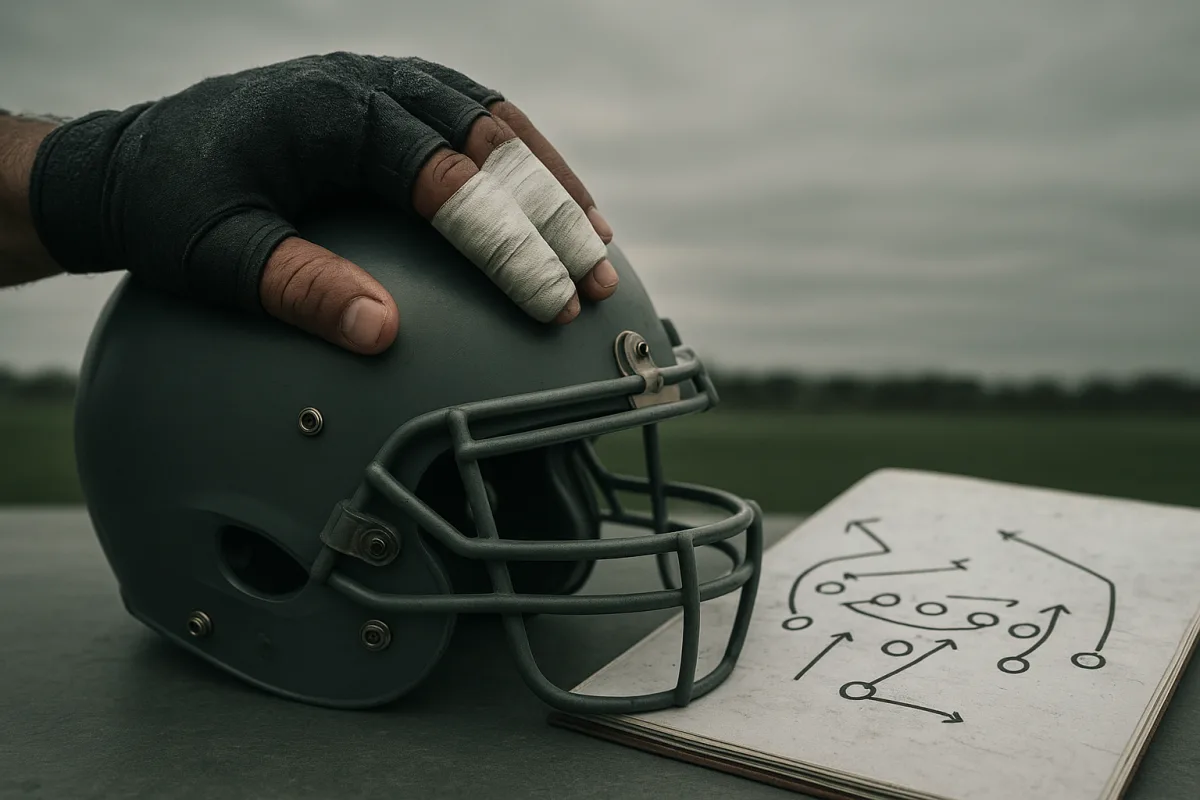
The injury changed the Ravens’ offensive math on one snap
Lamar Jackson’s first offensive play against Buffalo in Week 8 ended with him clutching his right thumb and walking off. Baltimore later placed its franchise quarterback on injured reserve, with surgery expected and a season-ending absence likely. [7][8]
That is a brutal injury for any quarterback. For Jackson, it removes the player who makes Baltimore’s entire offensive structure flexible, because defenses must prepare for a quarterback who can beat pressure with his arm, his legs, or an improvised escape.
The Ravens then lost backup Tyler Huntley to a toe injury in the same game. That forced undrafted rookie Joe Fagnano into action, turning a game that began as a major AFC matchup into an emergency test of Baltimore’s quarterback depth. [7][9]
Fagnano completed 10 of 21 passes for 91 yards, with one interception, one lost fumble, and three sacks in his debut. Those numbers are not an indictment of a rookie thrown into a broken depth chart, but they show the cost of operating without a prepared No. 1 or No. 2. [10]
The central issue is not finding a quarterback with Jackson’s traits. There is no available quarterback who can reproduce them. The Ravens must instead decide what parts of their offense can survive when the person making the post-snap decisions changes.
A quarterback offense is built around answers
Jackson’s value has always been larger than passing yards or rushing totals. He changes the defensive count before the ball is snapped, because an unblocked defender cannot freely chase the running back when the quarterback might keep the ball.
That is the core mechanic behind Baltimore’s quarterback run game. In a conventional handoff, the defense can account for the quarterback as a non-runner and commit another defender to the ball carrier.
With Jackson, the quarterback becomes a live runner. The offense can leave a backside edge defender unblocked, then force that player to choose between crashing toward Derrick Henry or staying outside to contain Jackson.
If the defender squeezes inside, Jackson keeps the ball. If the defender stays wide, Henry has a clearer lane. The Ravens gain a blocker without adding another offensive lineman, because Jackson’s threat occupies a defender.
That leverage also helps Baltimore’s play-action game. Linebackers and safeties cannot casually flow downhill toward Henry when Jackson can pull the ball and attack the perimeter, creating windows behind those second-level defenders.
NFL on NBC’s Mike Tomlin framed the task correctly after Jackson’s injury: Baltimore cannot hand the offense to the next quarterback and expect a normal week. It must pivot, identifying strengths that remain and rebuilding the unit around them.
That pivot costs plays. The Ravens can still run downhill with Henry, use motion to reveal coverages, and build throws off play-action. They cannot assume opponents will devote the same resources to defending the quarterback keeper.
Why the thumb is different from a routine absence
A thumb injury reaches into every part of quarterback play. The throwing hand controls grip on the football, touch on short throws, velocity on outside-breaking routes, and security when a pass rusher reaches the quarterback.
It also affects exchanges. A quarterback has to receive the snap cleanly, secure the ball through play-action fakes, and transfer it without hesitation on handoffs. Those are repetitive movements, not occasional demands.
The Ravens’ concern is not only whether Jackson can physically return. It is whether he can return with the hand function needed to throw accurately in bad weather, survive contact in the pocket, and run an offense that asks him to carry the ball.
The best concrete benchmark comes from a 2018 study of NFL players who underwent thumb ulnar collateral ligament surgery. Quarterbacks in that group returned to play at a 100 percent rate, averaging 5.6 months to return. [1]
That is encouraging for Jackson’s longer-term outlook, but it does not rescue Baltimore’s current season. The study is based on an older sample, and an average recovery timeline is not a prediction for one player’s surgery, rehab, or throwing-hand demands.
The same study found an 87 percent one-year career survival rate after surgery across the relevant NFL sample. [1] For the Ravens, that supports a patient approach with Jackson, not a rushed return to solve an immediate standings problem.
CBS Sports accurately characterized the injury as a complication for looming contract questions, but the football decision comes first. Baltimore needs to protect a quarterback whose on-field value remains difficult to replace and whose hand will be central to any future decision.
Huntley’s injury makes the short week a roster crisis
Huntley was supposed to be Baltimore’s bridge. He has previous experience in the Ravens’ system and offers enough mobility to preserve some read-option and movement-pocket concepts, even if he cannot replicate Jackson’s complete impact.
Then Huntley suffered turf toe against Buffalo. The injury was still awaiting MRI clarity, and reports did not establish a timetable for his return before Baltimore’s Thursday game against Jacksonville. [7][9]
That matters because the quarterback’s back foot is the engine of the throwing motion. A compromised toe can limit the plant, reduce lower-body drive, and make a passer reluctant to step into throws when pressure arrives.
Baltimore therefore cannot build its plan around Huntley returning by Thursday. A short practice week already limits installation. Waiting until game day to learn whether the backup can push off his foot would make the entire offensive plan unstable.
Fagnano becomes the immediate fallback, but the Ravens should not ask him to run the entire Jackson offense. Baltimore needs a smaller call sheet: early-down runs, quick throws, designed movement, and protection structures that prevent obvious passing situations.
That means the defense and special teams must share more of the burden. The Ravens cannot afford repeated three-and-outs, short fields after turnovers, or long-yardage snaps that expose an inexperienced quarterback to disguised pressure.
Why a Tyson Bagent trade makes football sense
Chicago Bears third-string quarterback Tyson Bagent is the cleanest reported trade fit because Baltimore offensive coordinator Dean Doyle previously worked in Chicago. NFL on NBC’s Pro Football Talk identified that connection while noting the Ravens’ need to explore outside quarterback options. [4]
The attraction is not that Bagent would become Jackson. It is that he could arrive with some familiarity around the coaches and a profile better suited to learning an adjusted game plan quickly than a quarterback entering a completely foreign language.
A midseason quarterback acquisition needs to process terminology, protections, route adjustments, cadence, and checks at the line of scrimmage. Those details decide whether an offense gets lined up correctly before the defense changes the picture.
Bagent’s contract also makes him more plausible than an expensive veteran starter. He is scheduled to earn $4 million in 2026 and $4.25 million in 2027, though Baltimore would still need to fit his remaining salary and surrender draft compensation. [4]
The Bears hold leverage because Baltimore’s need is obvious. Chicago also has to consider its own depth, since trading a third quarterback can become painful if the starter or primary backup gets injured later in the season.
That is why we would make the call on Bagent, but we would not pay a premium pick simply to quiet the panic. A quarterback arriving days before a game is not buying Baltimore a full offense. He is buying it a better chance to run a limited one.
The cap is the constraint that decides every option
Baltimore’s quarterback problem is not solved by making a phone call. The Ravens have about $2.2 million in cap space, ranking near the bottom of the league, while carrying $19.6 million in dead money. [6][11]
Jackson’s 2026 cap charge is $34.4 million, including $24.34 million in prorated bonus money. Baltimore restructured his contract in March to create cap room, but that earlier maneuver does not mean the club has easy room available now. [6][11]
Every added quarterback creates a second decision: whom do the Ravens release, whose contract do they restructure, or what future cap burden do they accept? The quarterback price is never only the salary listed on the transaction wire.
Baltimore has already seen how expensive in-season markets can become. The Associated Press reported that NFL teams have become more willing to trade two first-round picks for elite defensive players, raising the broader cost of obtaining impact help during the season. [2]
A quarterback should not command that sort of package in this circumstance, but the market principle carries over. Teams know that an injury creates urgency, and urgency usually strips the buyer of leverage.
Veteran free agents may offer a cheaper transaction cost than a trade, but they bring a different cost: less familiarity, fewer practice reps, and a smaller chance of running Baltimore’s timing and protection system cleanly right away.
Baltimore should change the offense before it chases a headline
The Ravens averaged three fewer yards per play and scored 63 fewer points over the three games after Jackson’s injury than they did before it. [10] That is the result of losing the quarterback who makes the offense’s answers work.
Baltimore’s best route is to run the ball with intent, use Henry to create manageable down-and-distance situations, and protect whichever quarterback starts from needing to make high-volume third-and-long throws.
That does not mean becoming predictable. The Ravens can use condensed formations, motion, boot action, screens, and play-action shots. The goal is to make the defense defend width and misdirection without requiring the quarterback to be Jackson on every snap.
We would pursue Bagent only at a disciplined price, retain a veteran contingency, and build the next game plan around reducing quarterback exposure. Baltimore’s season now depends less on a miracle replacement than on how honestly it adjusts to the quarterback it has.
Frequently Asked Questions
How does Lamar Jackson's thumb injury affect the Ravens' quarterback options?
Lamar Jackson’s thumb injury removes the Ravens’ primary quarterback who shapes their entire offensive structure with his dual-threat ability. The team cannot expect any replacement to replicate his style, forcing Baltimore to simplify the offense, protect the new starter, and accept a less dynamic passing game. Backup options are limited, and the injury has exposed the depth issues at quarterback.
What is the expected recovery timeline for Lamar Jackson's thumb surgery?
Based on a 2018 study of NFL players who underwent thumb ulnar collateral ligament surgery, quarterbacks returned to play at a 100 percent rate, averaging about 5.6 months for recovery. However, this is an average from older data and does not guarantee Jackson’s individual timeline, especially given the high demands on his throwing hand.
Who are the potential quarterback replacements for Lamar Jackson on the Ravens?
Tyson Bagent is the trade target that fits Baltimore’s offensive scheme best, but salary cap constraints make acquiring him or other quarterbacks difficult. Tyler Huntley remains an option if his turf toe injury heals, while undrafted rookie Joe Fagnano has been pressed into action despite limited experience.
How will Lamar Jackson's injury change the Ravens' offensive strategy?
Without Jackson’s threat as a runner and playmaker, the Ravens must reduce their playbook and rely more on downhill running and simpler passing concepts. The offense loses the leverage created by Jackson’s ability to keep defenders occupied, which affects play-action effectiveness and forces the team to accept a lower ceiling in passing production.
What challenges do the Ravens face with Tyler Huntley's turf toe injury?
Turf toe can limit a quarterback’s ability to plant and push off, critical movements for throwing and mobility. The Ravens have not established a return timeline for Huntley, and his availability depends on MRI results. His injury adds uncertainty to an already thin quarterback depth chart.
How we researched this
This article was assembled from 4 video sources across 2 channels, 5 published articles, 11 cited references.
Nothing here is based on hands-on testing. Where a figure or finding appears, it belongs to the source cited beside it, and the writing says so rather than implying otherwise. Every source is listed below so you can check it.
Sources
NFL Week 8 recap: Ravens lose Lamar; Vikings go down at last, Broncos rally | FNIA, NFL on NBC
END OF AN ERA for Lamar Jackson and the Baltimore Ravens ⁉️ | Get Up, NFL on ESPN
Does Lamar Jackson injury trigger a Baltimore Ravens selloff? | Pro Football Talk, NFL on NBC
Lamar Jackson's thumb injury derails Baltimore Ravens season | Pro Football Talk, NFL on NBC
Lamar Jackson injury throws huge wrench into looming contract talks with Ravens, CBS Sports
Cousins, Flacco, Daniel Jones Trades Pitched by NFL Insider After Lamar Jackson's Injury for Ravens, Bleacher Report
10 quarterbacks Ravens could target after Lamar Jackson’s injury, Ravens Wire
Ravens’ immediate QB options after Lamar Jackson, Tyler Huntley injuries, SB Nation
Saquon Barkley Addresses NFL Trade Rumors and Eagles Future in New Video After Loss to Commanders, Bleacher Report
NFL teams are becoming more willing to trade two first-round picks for elite defensive players
Ravens’ top QB options after Lamar Jackson, Tyler Huntley injuries | Baltimore Beatdown
Baltimore Ravens: cap space, contracts and roster | PlainStats
Baltimore Ravens lose QBs Jackson and Huntley to injuries, fall in Buffalo 36-10 - CBS Baltimore
Watch Lamar Jackson Injury and Ravens' Quarterback Future on Youtube
Also from the sources
Related Articles
Ravens Week 8 Preview and Player Media Availability
Get the latest Ravens Week 8 preview, injury updates, and player media availability ahead of their game against the Bills.
Baltimore Ravens Offense 2026: Lamar Jackson’s New Look
Explore the Baltimore Ravens offense in 2026 and how Lamar Jackson’s new look and pre-snap motion shape their strategy.
Baltimore Ravens Lamar Jackson and Rashod Bateman Updates
Get the latest Baltimore Ravens updates on Lamar Jackson's offense and the ongoing Rashod Bateman NFL investigation.
Commanders vs 49ers Monday Night Football Preview
Get a detailed Commanders vs 49ers Monday Night Football preview with key matchups, injury updates, and tactical analysis for the October 19, 2026 game.