
Washington Commanders Upset Win Over Seattle Seahawks
Detailed analysis of the Washington Commanders' upset win over the Seattle Seahawks, focusing on quarterback performance and key game factors.
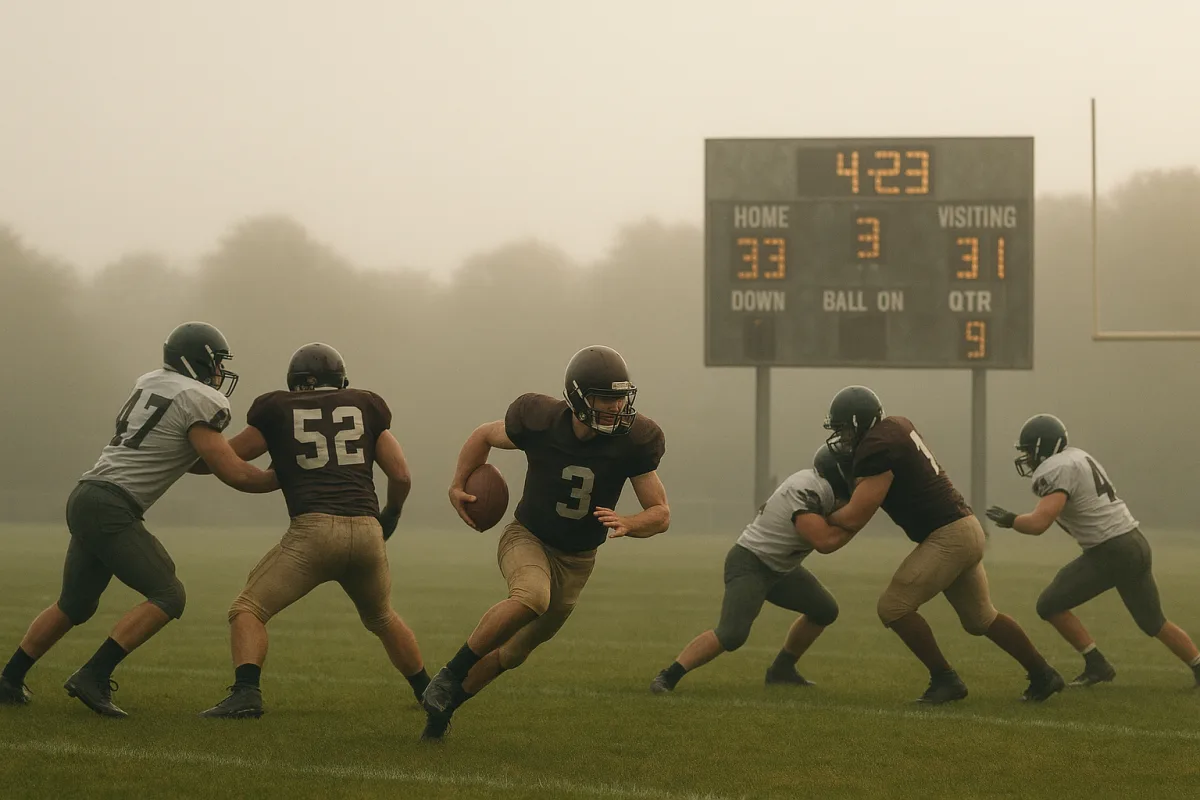
The shift was from quarterback dependence to quarterback contingency
The plain change is this: Washington entered Week 3 looking as though Jayden Daniels’ injury might collapse its offensive structure. It left with a 33-31 win over a 2-0 Seattle club because the structure held for Marcus Mariota. [11]
That does not mean Mariota became Daniels, nor did Washington suddenly find a second franchise quarterback. It means the Commanders had enough continuity in their calls, route adjustments and situational football to let a veteran backup operate without reducing the offense to survival mode.
The pregame evidence pointed toward a difficult assignment. Seattle was favored by roughly seven to 7.5 points, with the total set around 40.5, a market signal that expected Washington’s injured-quarterback offense to struggle against a team that had opened 2-0. [9][10]
Mariota had reason to be viewed as a stabilizer rather than an automatic difference-maker. NFL.com’s 2026 game logs showed limited recent regular-season work entering this start, while outside Week 3 previews stressed the uncertainty created by Daniels’ absence. [3][4][12]
That is why the result matters. Washington did not merely get a competent emergency appearance. Mariota completed 19 of 31 passes for 183 yards, three touchdowns and no interceptions, then converted a nine-yard third-and-7 run with 1:15 remaining to close the game. [11]
The passing yardage is modest, and it should be treated that way. A 183-yard game does not establish that Washington can replace Daniels’ downfield creation or designed-run stress over a month of football. The important number is the zero in the interception column.
Seattle quarterback Sam Darnold completed 31 of 45 attempts for 379 yards and four touchdowns. That meant Washington could not afford the common backup-quarterback failure mode, a short field created by a late interception, a sack-fumble or a forced throw while protecting a lead.
Mariota did not give Seattle that gift. He also provided enough movement value to alter third-down math. The final scramble was not a decorative quarterback rushing statistic. It prevented Seattle from getting the ball back with time to mount the drive that would have decided the game.
Why the offense did not have to be reinvented
Washington’s own pregame messaging helps explain why the transition was smoother than expected, even if it should not be mistaken for independent film confirmation. Head coach Dan Quinn said Mariota’s experience showed up in how he called out alerts and communicated adjustments before the snap. [5]
That matters because backup quarterbacks usually fail before the throw. They misidentify pressure, get the protection pointed incorrectly, hold the ball against a disguised coverage or fail to recognize that a receiver saw leverage differently than the quarterback did.
Quinn also described regular quarterback-receiver work, including post-practice review of passing plays. [5] Coaches say versions of that often, but Washington’s result gave the claim some practical support: Mariota played within an offense that appeared to retain its usual communication rather than operate from a stripped-down call sheet.
The distinction is important for evaluating what happened against Seattle. Washington did not need Mariota to replicate Daniels’ athletic profile snap for snap. It needed him to identify the right answer, distribute the ball efficiently and retain enough mobility to punish a defense when a late down demanded it.
The three touchdown passes matter in that context. They indicate Washington finished possessions, which is different from moving between the 20s. A backup can complete checkdowns all afternoon and still leave an offense unable to keep pace in a game where the opponent scores 31 points.
Quinn had also pointed before the game to the receiver group’s developing roles and its accumulated work with both quarterbacks. [5] That is the kind of boring operational detail that becomes decisive when the starter goes down, especially in September, before an offense has fully defined its identity.
Still, the evidence has limits. There is no verified snap-count data in the available reporting showing how Washington altered personnel usage, how often it used motion, or whether it materially changed its designed-run rate with Mariota. Those are the details needed to make a stronger schematic claim.
There is also no published postgame tape breakdown establishing whether Seattle’s coverage choices changed after its injuries. The sensible conclusion is narrower: Washington’s continuity was good enough for one high-leverage game, not that it has solved every problem created by Daniels’ second dislocated left elbow. [1]
The Seattle injuries qualify the passing-game takeaway
Washington deserves credit for executing against the opponent available, which is all any team can do. But the Seahawks’ personnel situation has to be included when projecting this performance forward, because the secondary was not intact for the full game.
Seattle had already ruled safety Julian Love out with a calf injury entering the matchup, according to its injury listing. [8] During the game, safety Nick Emmanwori was designated questionable to return with a hamstring injury. [7]
That does not erase Mariota’s decision-making or Washington’s red-zone execution. It does mean analysts should be cautious about taking three touchdown passes as direct evidence that the Commanders have unlocked a consistently explosive passing attack without Daniels.
Injury effects are often overstated because they offer a neat explanation for an upset. The available reporting does not quantify how many snaps Seattle played without Emmanwori, which coverages it avoided, or whether the lost personnel directly caused any particular Washington score.
The right formulation is simpler. Seattle’s injuries likely reduced depth and flexibility in the secondary, but the degree of their effect is unknown. That makes the Commanders’ performance encouraging, while making sweeping claims about offensive transformation premature.
Washington’s defense made enough plays, not all the plays
The defensive narrative needs the same restraint. Washington won despite Darnold’s 379 passing yards and four touchdown passes, and Jaxon Smith-Njigba posted 10 catches, 128 yards and two touchdowns. Those are not the numbers of a defense that controlled the game snap after snap.
They are the numbers of a game in which Washington’s defense found enough high-leverage answers to survive. Two Darnold interceptions were central to that outcome, because they created the turnover margin Washington needed in a one-score game. [11]
That is where the phrase “key defensive plays” belongs. The interceptions were clearly consequential. Beyond that, the available material does not identify the defenders involved, the coverage shells used, pressure designs, down-and-distance context or the specific plays that forced Darnold’s mistakes.
So it would be irresponsible to declare that Washington solved its coverage problems, unveiled a new pressure package or discovered a permanent personnel answer. The evidence does not support any of those claims, and the yardage allowed actively argues against the first one.
Quinn’s pregame comments did point to an ongoing search for defensive roles, particularly among pass rushers and in the secondary. [5] That is consistent with what the score suggests: a unit capable of producing a decisive moment, but not yet one producing clean, repeatable control.
Linebacker Leo Chenal’s neck injury also removes any reason to project Washington’s Week 4 defensive deployment with confidence. NBC Sports reported that Chenal was carted off on a stretcher, and subsequent reporting had not established a formal severity or recovery timetable. [6]
The positive signs reported after the injury should not be turned into a diagnosis. Until Washington provides an official update, his availability is unknown, and any replacement would affect both the defense’s personnel menu and its special-teams workload.
What the result means for Washington’s next decisions
The takeaway for the Commanders is not to treat Mariota as a placeholder who merely survived. His Week 3 performance showed why experienced backups matter: they can preserve the offense’s language, manage the clock and make the one late play that turns a close game into a win.
It also does not create a quarterback controversy. Daniels remains the player around whom Washington’s higher-ceiling offense is built, and his injury history makes the medical question more important than a single replacement-level comparison. [1]
For the coaching staff, the practical next step is to identify what traveled from this game. Was it Mariota’s pre-snap identification, a particular red-zone package, better early-down efficiency, or simply a clean turnover margin? Those answers require film and snap data not yet publicly documented.
For an outside team planning its own roster and offensive project, Washington offers a clearer lesson. Do not build the No. 2 quarterback plan around a reduced playbook alone. Build it around repeated communication, shared receiver adjustments and enough quarterback mobility to solve broken-pocket third downs.
That model works because it reduces the number of new variables introduced by an injury. A backup does not need to create the starter’s entire production profile. He needs to keep the operation stable long enough for the rest of the roster to make the game winnable.
Washington did that against Seattle. The upset was real, the late execution was real, and the circumstances were favorable in some ways. The trend worth monitoring is whether the Commanders can reproduce the process, not whether one 33-31 result has rewritten their season.
Frequently Asked Questions
How did the Washington Commanders upset the Seattle Seahawks in 2026?
The Commanders won 33-31 despite Seattle being favored by about seven points. Washington’s offense functioned effectively with backup quarterback Marcus Mariota, who avoided turnovers and threw three touchdown passes. The team maintained continuity in calls and adjustments, allowing Mariota to operate without reducing the offense to survival mode. Timely disruption on defense also helped, even though Seattle’s quarterback threw for 379 yards and four touchdowns.
What role did Marcus Mariota play in the Commanders' win over the Seahawks?
Mariota started due to Jayden Daniels’ injury and completed 19 of 31 passes for 183 yards, three touchdowns, and no interceptions. His value was in efficient ball distribution and avoiding turnovers rather than high volume passing. He also made a crucial nine-yard scramble on third down late in the game to help close out the win, demonstrating mobility and situational awareness.
How did Seattle Seahawks injuries affect the game against the Commanders?
Seattle’s secondary was weakened by injuries, with safety Julian Love out and Nick Emmanwori leaving the game with a hamstring issue. These absences likely limited the Seahawks’ ability to defend Washington’s passing game fully. While the Seahawks still scored 31 points, their depleted secondary was a factor in the close outcome.
What offensive adjustments did the Commanders make without Jayden Daniels?
The Commanders retained much of their usual communication, calls, and route adjustments, allowing Mariota to operate within a familiar structure. Head coach Dan Quinn noted Mariota’s experience helped with pre-snap alerts and protection calls, preventing common backup quarterback mistakes. The offense did not need to be reinvented but relied on practiced answers and shared terminology.
Why was the Commanders' backup quarterback plan effective against Seattle?
The plan was effective because Mariota was able to identify the right plays, distribute the ball efficiently, and use his mobility when necessary. The team’s preparation included regular quarterback-receiver work and post-practice review of plays, which helped maintain offensive continuity. Mariota’s avoidance of turnovers and ability to finish drives with touchdowns were key to the success of the contingency plan.
How we researched this
This article was assembled from 1 video source, 6 published articles, 12 cited references.
Nothing here is based on hands-on testing. Where a figure or finding appears, it belongs to the source cited beside it, and the writing says so rather than implying otherwise. Every source is listed below so you can check it.
Sources
HC Dan Quinn Previews Seahawks Vs. Commanders | Washington Commanders | The Gameplan | NFL — Washington Commanders
Marcus Mariota and the Commanders stun the Seahawks 33-31 — Pro Football Talk
Commanders’ Leo Chenal carted off on stretcher with neck injury — NBC Sports
Seahawks at Commanders In-Game Injury Updates: Nick Emmanwori (Hamstring) Questionable To Return — Seahawks.com
Kenyon Sadiq injury update: Latest news on Jets TE's status in Week 3 game — Yahoo Sports
Marcus Mariota and the Commanders stun the Seahawks 33-31 — ProFootball Talk on NBC Sports
Key takeaways from Washington Commanders Week 3 win over Seattle Seahawks — SB Nation
Jayden Daniels is hurt again, and optimism is in short supply
Seahawks pick off Drake Maye 3 times to beat Patriots 13-10 in Super Bowl rematch
Marcus Mariota Week 3 Outlook - Seahawks at Commanders (2026) - Derek Brown (FantasyPros)
Commanders vs. Seahawks preview | Hosting the Super Bowl champs for the home opener
Seahawks vs Commanders - NFL Week 3 Odds, Line and Team Stats | Phins Up
Seattle Seahawks at Washington Commanders 2026 REG 3 - Game Center
Watch Washington Commanders Upset Win Over Seattle Seahawks on Youtube
Related Articles
Washington Commanders Offensive Line Analysis and Season
In-depth Washington Commanders offensive line analysis and 2026 season prep, covering injuries, depth, and run game strategy.
Giants vs Rams Injury Impact
Analyze the Giants vs Rams injury impact in Week 2 and how key injuries changed offensive performance and game outcomes.

NFL Week 3 Quarterback Insights and Offensive Analysis
Explore NFL Week 3 quarterback insights and offensive strategies from media, including Bo Nix, Joe Burrow, and C.J. Stroud’s performances.
Buffalo Bills Week 1 Defensive Highlights and Team Outlook
Explore Buffalo Bills Week 1 defensive highlights, player insights, and the impact of the new stadium on their 2026 season opener.