
NFL Week 3 Key Player Injury Analysis and Confirmed Status
Get an in-depth NFL Week 3 key player injury analysis with confirmed statuses and impact on team roles for Brian Burns, Breece Hall, and De'Von Achane.
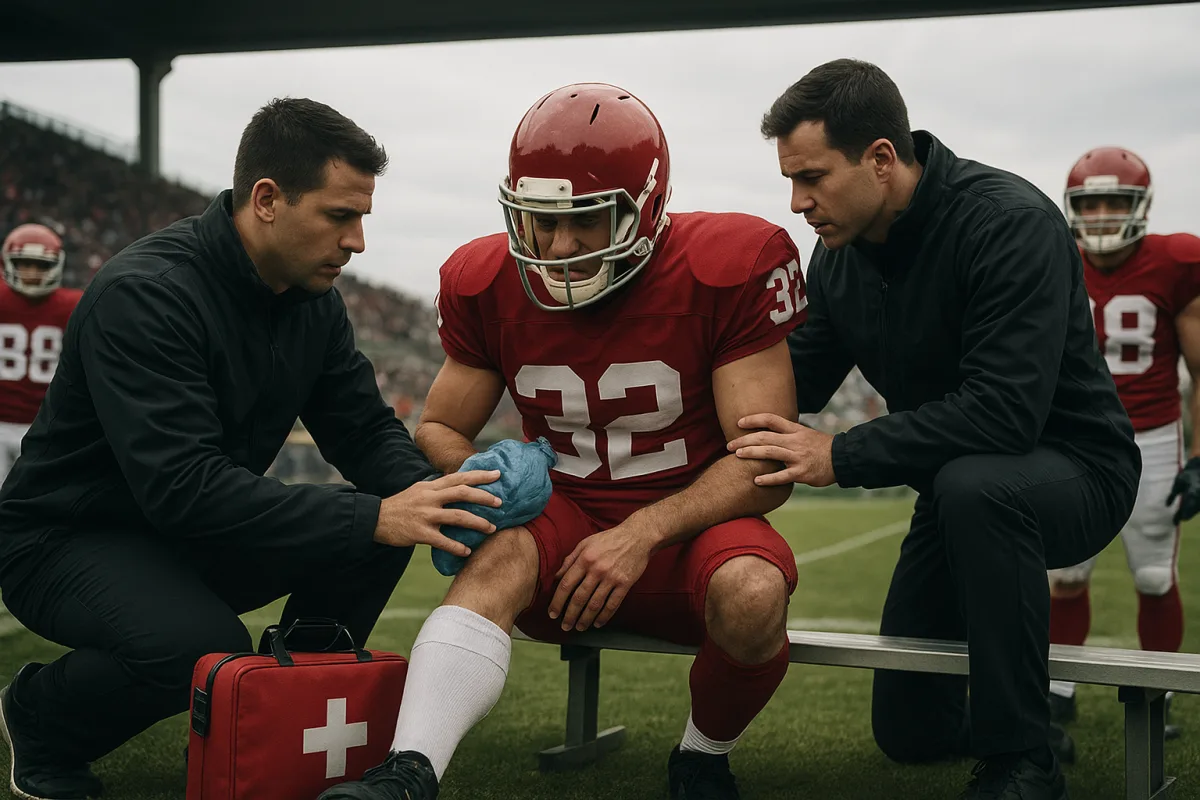
NFL Week 3 injury impact: separating confirmed absences from noise around Breece Hall, Brian Burns and De'Von Achane
The quick list
- Best overall certainty: New York Jets running back Breece Hall, for readers deciding whether his Week 3 availability should alter expectations, because the evidence points to no injury limitation. [1][5]
- Most consequential unresolved case: New York Giants edge defender Brian Burns, for readers tracking a defense that may need to redistribute pass-rush snaps if the knee injury lingers. [2][4]
- Best value in skepticism: Miami Dolphins running back De'Von Achane, for readers who saw an injury alert but need to know that the available official reporting does not substantiate it. [1]
The useful Week 3 injury question is not which player generated the most alarming social-media clip. It is whether a player was unavailable, how the coordinator had to replace his role, and whether the reporting establishes an injury at all.
That framework matters here because the three biggest names attached to this roundup do not belong in the same category. Hall had no reported Week 3 setback. Burns left a game and has an unresolved knee status. Achane has been linked to an injury claim that the official reporting does not support.
There is no literal price, size or layout comparison to make with NFL injuries, despite the consumer-guide language often applied to these roundups. The football equivalents are roster cost, role size and deployment layout, and the supplied reporting does not provide contract figures, snap counts or formation splits for these cases.
| Player | Team and role | Confirmed Week 3 status | What is actually known | “Price” or roster-cost data supplied | Role size and deployment evidence supplied | Immediate team trade-off |
|---|---|---|---|---|---|---|
| Breece Hall | Jets running back | Active, no reported injury | Not on the Week 3 injury report; had previously logged 16 carries and five catches in the prior game. [[1]](https://www.nfl.com/injuries/league/2026/reg3?utm_source=openai "Official NFL Injury Report for Players - Week 3 of the 2026 Season | NFL.com")[[5]](https://www.fantasypros.com/nfl/myplaybook/are-they-playing/breece-hall?utm_source=openai "Is Breece Hall Playing This Week? | Are They Playing? (2026) | FantasyPros") |
| Brian Burns | Giants edge defender | Left Week 3 with right knee injury, did not return | Had played through a minor low ankle sprain from Week 2; public prognosis remains unknown. [[2]](https://www.rotowire.com/football/headlines/brian-burns-injury-exits-mondays-game-638596?utm_source=openai "Brian Burns Injury: Exits Monday's game | RotoWire")[4] | Not supplied | No replacement snap totals or front structure data supplied |
| De'Von Achane | Dolphins running back | No verified Week 3 injury | Official Week 3 report does not list him; no reputable corroboration was identified. [[1]](https://www.nfl.com/injuries/league/2026/reg3?utm_source=openai "Official NFL Injury Report for Players - Week 3 of the 2026 Season | NFL.com") | Not supplied | No injury-related usage change established |
Breece Hall: the injury narrative does not fit the evidence
Hall is the cleanest case, because there is no indication that he entered Week 3 with an injury designation or suffered a documented setback during the week. The official NFL Week 3 injury report does not list the Jets running back. [1]
That does not mean Hall’s production should be immune from criticism or analysis. It means an injury explanation is not supported by the available record. Those are different questions, and injury reporting is often used to blur them.
The most recent measurable workload cited for Hall was 16 rushes for 29 yards and five receptions for 63 yards in the Jets’ previous game. [5] The contrast between the rushing and receiving lines is important, even if it does not establish a cause.
A 1.8-yard rushing average can reflect a back’s performance, but it can also reflect early-down box counts, missed interior blocks, poor down-and-distance situations or an offense repeatedly running into unfavorable fronts. Without play-level evidence, it is not an injury diagnosis.
The five catches for 63 yards also caution against treating Hall as a player whose role disappeared. A running back can be inefficient as a ball carrier while still functioning as a viable outlet, matchup player or answer to pressure.
The supplied reporting does not include Hall’s Week 3 snap total, route participation, target share, short-yardage usage or personnel splits. Those numbers would be necessary before claiming that the Jets scaled him back, protected him physically or altered the offense around him.
That is particularly relevant after the Jets’ 31-24 loss to Detroit, a game Yahoo Sports described as ending with a late Chuck Clark sack after Detroit had struggled defensively against Jets quarterback Geno Smith. The game result alone does not establish that Hall’s role was reduced. [5]
For a reader making a practical Week 3 decision, Hall belongs in the normal performance-evaluation bucket, not the injury-risk bucket. Watch workload and offensive design, but do not manufacture a medical explanation where none has been reported.
Brian Burns: the only confirmed new injury event in this group
Burns is different because there is a documented in-game event. The Giants edge defender left the Week 3 game with a right knee injury with 11:02 remaining in the fourth quarter and did not return. [2][4]
That development came after Burns had been managing a low ankle sprain suffered in Week 2. The ankle issue was characterized as minor, and he played in Week 3 after missing some practice work. The knee, not the ankle, is the important new question.
The temptation will be to combine those two injuries into one dramatic storyline. The reporting does not justify that. An ankle sprain that allowed Burns to play and a later knee injury are separate events unless the Giants or medical reporting connects them.
The information gap is equally important. One report said Burns would undergo an MRI, while another framed the issue as avoiding a major setback. [3][4] Neither provides a confirmed diagnosis, treatment plan or return timetable.
The disciplined position is therefore simple: Burns’ Week 3 availability beyond the game is uncertain. Anything more specific, including claims of ligament damage, a multi-week absence or a minor bruise, goes beyond what has been publicly established.
His potential football impact is clear in role terms, even if it is not yet quantifiable. An edge defender of Burns’ stature affects a front’s rush menu, especially the ability to win four-man rushes without committing extra defenders.
If he cannot play, the Giants may have to replace more than a listed depth-chart position. They could need to change who sets the edge against the run, which side handles a premier tackle, and how often the coordinator sends a fifth rusher.
But that is a roster-and-scheme possibility, not a verified Week 3 efficiency result. The supplied material does not give Burns’ snap count before his exit, the identity and snap total of his replacement, or the Giants’ pressure rate before and after the injury.
It also does not establish whether New York changed fronts, blitz rates or coverage calls once Burns left. A team can replace an edge player by asking a reserve to play the same job, or by changing the structure to protect that reserve.
Those are dramatically different tactical responses. Until the snap data and subsequent Giants injury reporting arrive, Burns should be described as a consequential unresolved absence, not as proof that New York’s defense will collapse.
De'Von Achane: do not report an injury that has not been confirmed
Achane requires the strongest correction because the available reports conflict. CBS Sports published an account saying he suffered a non-contact knee injury against Kansas City, left early and did not return, including a postgame quote suggesting concern.
The independent reporting brief directly contradicts that account. It found no evidence of an Achane knee injury in Week 3, identified no reputable corroborating report and notes that the official NFL Week 3 injury report does not list Achane. [1]
When an official report and the broader verified record do not support a specific injury claim, the correct move is not to average the accounts. It is to state the conflict plainly and avoid presenting the injury as established fact.
That matters because the CBS account also proposed a downstream offensive story. It suggested Miami had to lean on Ollie Gordon II and that the offense lacked established running-back depth without Achane. That narrative cannot be carried forward as Week 3 injury analysis without corroboration.
It may be true that Miami’s offensive structure depends heavily on Achane’s speed, receiving value and ability to create explosive plays on wide-zone or perimeter concepts. But general importance is not proof that he was hurt or unavailable in this specific week.
Nor can 17 yards on three carries, a number reported by CBS before its asserted injury sequence, establish anything about the Dolphins’ broader rushing efficiency. [1] Three carries are not enough volume to distinguish blocking, defensive front structure and random game flow.
The proper Week 3 ruling on Achane is therefore no confirmed injury impact. Readers should wait for an official Dolphins designation, transaction, practice-participation report or credible follow-up reporting before treating his role as medically limited.
Why the new reporting rules make discipline more important
The NFL’s 2026 reporting structure changes how quickly readers can expect clarity. Practice reports use Did Not Participate, Limited Participation and Full Participation, while the old practice-report “Out” category is gone. [1]
Game-status reports now use Questionable, Doubtful and Out, with “Probable” eliminated. Players who are certain to play can appear on practice reports but do not necessarily appear on the final game-status report. [1]
That system can reduce some ambiguity around final availability, but it does not create instant public diagnoses for injuries suffered during games. Burns is the example: the game exit is known, while the medical severity and return horizon are not.
It also explains why a clean official listing matters for Hall and Achane. Absence from a report is not proof that a player feels perfect, but it is far stronger evidence than rumor, recycled clips or fantasy-driven speculation.
What not to infer from Week 3 defensive context
There are broader defensive injury clusters around the league, including reported concerns on the San Francisco 49ers’ defensive line. [7] There are also weekly defense rankings and EPA-based discussions that can identify teams playing well or poorly. [6]
Those facts should not be pasted onto Burns, Hall or Achane. A league-wide defensive trend does not explain a Giants edge injury, a Jets running back’s workload or a Dolphins player’s unverified medical status.
Likewise, Yahoo Sports’ account of Pittsburgh forcing a late Joe Burrow fumble confirms a consequential defensive finish in a back-and-forth Bengals-Steelers game. It does not provide evidence about any of the three players examined here.
Who each option suits
Breece Hall suits readers looking for availability clarity. The correct read is that he was active and uninjured in the available Week 3 reporting. Evaluate his production through usage, blocking and offensive design, not a presumed health limitation. [1][5]
Brian Burns suits readers monitoring the next official update. His knee injury is real enough to change the Giants’ edge-depth outlook, but there is not enough information to project missed games or declare a specific defensive decline. [2][4]
De'Von Achane suits readers trying to filter a bad injury alert. The available official record does not verify a Week 3 knee injury. Until that changes, any claim that Miami’s offense was reshaped by an Achane injury should be treated as unsupported. [1]
Frequently Asked Questions
Which key NFL players had confirmed injuries in Week 3?
The most notable confirmed injury in Week 3 was New York Giants edge defender Brian Burns, who left the game with a right knee injury and did not return. There were no confirmed injuries reported for New York Jets running back Breece Hall or Miami Dolphins running back De'Von Achane in Week 3.
What is Brian Burns' injury status after Week 3?
Brian Burns sustained a right knee injury during the Week 3 game, forcing him off the field with about 11 minutes left in the fourth quarter. However, the Giants have not publicly disclosed the severity or recovery timeline for this injury, leaving his status unresolved.
Did Breece Hall have any injury concerns in Week 3?
No, Breece Hall was active and not listed on the Week 3 injury report. There is no evidence of any injury setback affecting his availability or workload during Week 3.
Is there any verified injury report on De'Von Achane for Week 3?
No verified injury report exists for De'Von Achane in Week 3. Despite some reports claiming a knee injury, the official NFL Week 3 injury report does not list him as injured, and no reputable sources corroborate such an injury.
How do confirmed injuries affect team roles and snap counts in NFL Week 3?
The article notes that without snap counts, replacement usage data, or follow-up medical reports, it is speculative to assess how injuries affect team roles or snap counts. For example, Brian Burns’ knee injury could lead to a redistribution of pass-rush snaps, but no measurable data is yet available to confirm such changes.
How we researched this
This article was assembled from 6 published articles, 7 cited references.
Nothing here is based on hands-on testing. Where a figure or finding appears, it belongs to the source cited beside it, and the writing says so rather than implying otherwise. Every source is listed below so you can check it.
Sources
Use FanDuel promo code to get $250 in bonus bets by targeting Ravens vs. Cowboys in NFL Week 3 — CBS Sports NFL
De'Von Achane won't return after suffering non-contact knee injury vs. Chiefs — CBS Sports NFL
Brian Burns injury: Star defender goes down with right leg injury, to have MRI — SB Nation
Steelers defense comes up big against Joe Burrow, forces game-winning fumble in final minute — Yahoo Sports
Carolina Panthers vs. Cleveland Browns recap: Deshaun Watson, defense play complete game to win home opener — SB Nation
Lions escape Jets with 31-24 win on Jahmyr Gibbs TD, Chuck Clark sack in final minutes — Yahoo Sports
Official NFL Injury Report for Players - Week 3 of the 2026 Season | NFL.com
Brian Burns Injury: Giants DE Avoids Major Setback | Vulius | Vulius.com
Brian Burns questionable to return with knee injury - NBC Sports
Is Breece Hall Playing This Week? | Are They Playing? (2026) | FantasyPros
NFL Injury Report Week 3 2026 — Defensive Injury Clusters by Team
Related Articles
NFL Week 2 Injury Status Meanings
Understand NFL Week 2 injury status meanings and what 'questionable' really means for players like Puka Nacua and RJ Harvey.
NFL Week 2 Injury Updates
Get the latest NFL Week 2 injury updates including Sam Darnold’s status and how injuries impact teams and roster decisions.
Arizona Cardinals Week 2 Injury Updates and Preparations
Get the latest Arizona Cardinals Week 2 injury updates and player news as they prepare for their game against the Seahawks.
Dallas Cowboys Team Updates and Media Insights for Week 6
Get the latest Dallas Cowboys team updates, injury status, and media insights ahead of Week 6 against Green Bay Packers.