San Francisco 49ers Early Season Performance and Injury
Get insights on the San Francisco 49ers' early season performance and key injury updates including Brock Purdy's accuracy and Nick Bosa's status.
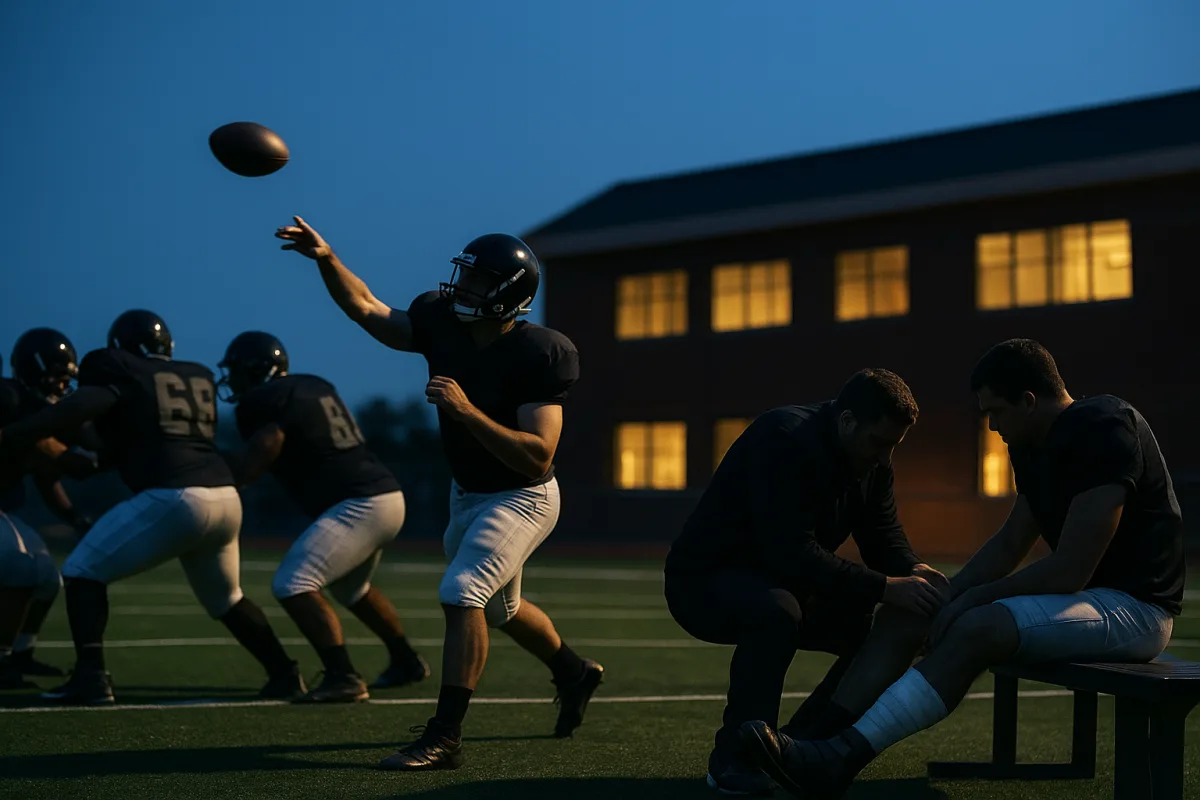
The number that explains San Francisco’s start: zero sacks allowed
The San Francisco 49ers are 2-0 after a 27-7 win over the Los Angeles Rams in Australia and a 35-13 win over the Miami Dolphins. [1][8] The obvious headline is quarterback Brock Purdy’s accuracy, but the more useful number is zero sacks allowed.
That is not a small early-season curiosity. According to NBC Sports Bay Area’s reporting on the Miami win, San Francisco had never opened a season with two sack-free games since 1982. [10] Two games do not establish a season-long trend, but protection is the foundation of this offense.
The 49ers’ protection number matters because it helps explain Purdy’s 80.4 percent completion rate, which led the NFL through two weeks. [8] A completion percentage can describe efficiency, but it cannot tell readers whether a quarterback created that efficiency under pressure, through structure, or both.
The tape-level question is not whether Purdy has completed passes. He has. The question is why he has had so many snaps in which he can reach the right answer without having to escape, absorb contact, or throw off platform.
What a sack-free start actually measures
A sack is officially charged when a quarterback is tackled behind the line of scrimmage on a designed pass. It is a useful statistic, but it is the final event in a much larger process involving the line, backs, tight ends, receivers, play design, and quarterback.
The offensive line gets most of the credit and blame because it is nearest to the quarterback. That is understandable, but incomplete. Protection begins before the snap with identifying potential rushers and deciding how many blockers the offense will commit.
A standard five-man protection asks five offensive linemen to account for the defense’s rush threats. If a defense sends only four, that can leave five blockers against four rushers. In theory, that is favorable. In reality, one losing matchup can still wreck the play.
The problem grows when defenses threaten pressure with five or six players. The offense can keep a running back or tight end in to block, creating six- or seven-man protection. That reduces the number of receivers in the route, but it can stabilize the quarterback’s launch point.
That is the cost. When a back stays in, he is not releasing into the flat. When a tight end chips an edge defender, he may enter his route later. A coordinator is constantly deciding whether the next snap needs more route options or more protection certainty.
San Francisco’s personnel makes that balance easier than it is for many teams. The offense has long treated tight ends, fullbacks, and running backs as real parts of its blocking picture rather than merely eligible receivers who happen to be near the formation.
That does not mean every clean pocket comes from extra blockers. It often comes from the opposite. A quick-game concept can make a pass rush irrelevant if the ball is delivered before the rush has time to win.
Purdy described his desired style in the 49ers’ team-produced interview as playing with urgency, staying on top of his progressions, and maintaining sound footwork. Those are not generic quarterback clichés in this offense. They are directly tied to how San Francisco protects its line.
If the quarterback reaches the back foot of his drop and throws on schedule, an edge rusher does not get the extra beat needed to turn a near-pressure into a sack. If the quarterback holds the ball, even excellent protection eventually becomes a difficult assignment.
Why Purdy’s percentage is more than a screen-pass statistic
Purdy’s 80.4 percent completion rate is impressive because it is hard to lead the league in any accuracy category, even over two games. [8] It also fits what the 49ers have wanted from their quarterback: fast decisions, accurate placement, and fewer wasted downs.
Still, completion percentage is not a grading system. It does not distinguish a five-yard throw with a clean throwing lane from a difficult third-down completion against a disguised coverage. It does not measure throw depth, receiver separation, dropped passes, or whether a completion actually moved the chains.
The early evidence does show that San Francisco has not needed Purdy to live in chaos. FOX Sports noted the offense’s efficient opening, while Purdy’s own comments emphasized the value of playing fast through his progressions. [10] That is a good combination, not a reason to ignore context.
The 49ers’ offensive structure can create defined reads through formation, motion, play-action action, and route spacing. The goal is not to make every read easy. The goal is to force defenses to declare leverage, then give the quarterback a clear answer before pressure arrives.
A quarterback who plays quickly can make an offensive line look better. An offensive line that avoids immediate leakage can make a quarterback look more accurate. Those are connected facts, which is why treating Purdy’s completion rate and the zero-sack total as separate stories misses the mechanism.
San Francisco coach Kyle Shanahan pointed to one example after the Miami game when discussing a deep completion to veteran receiver Mike Evans. Shanahan said Evans’ route angle gave Purdy a narrow but identifiable throwing window, allowing Purdy to make what Shanahan called an almost impossible throw.
That is the distinction worth making. Structure can create a throwable picture, but the quarterback still has to identify it, set his feet, and place the ball where the defender cannot undercut it. The system is an advantage, not an autopilot setting.
The same is true of protection. Zero sacks does not mean Purdy has never been pressured, that every lineman has won every snap, or that the offensive line will remain perfect. It means the operation has prevented pressure from ending possessions behind the line of scrimmage.
The injury test is now on defense
The offense has supplied the cleanest explanation for the 2-0 start, but the immediate issue is on the other side of the ball. Defensive end Nick Bosa injured his calf during warmups before a September 24 practice, not during a game snap. [3][5]
Shanahan said Bosa was likely out for “a few weeks,” and NFL Network’s reporting similarly described a multiple-week absence. [5] That remains an estimate, not a confirmed return date, because the club had not announced whether it would place Bosa on injured reserve.
That decision matters mechanically. A player placed on injured reserve must miss at least four games before becoming eligible to return. The designation creates roster flexibility, but it also removes the option of bringing a player back after only a short absence.
Shanahan acknowledged that calculation when discussing Bosa’s status, saying the 49ers had several players in roughly the same range and would have to judge which injuries might last longer. That is less certainty than fans want, but it is the real roster-management problem.
The team cannot simply place every injured player on injured reserve without consequences. The 49ers have already used injured reserve and practice-squad transactions to manage losses, including tight end Jake Tonges and receiver De’Zhaun Stribling. [6][7][13]
Bosa’s absence is especially significant because elite edge rushers change protection rules before the ball is snapped. Offenses may keep a tight end in to chip, slide protection his direction, or call quicker throws to avoid leaving a tackle isolated for too long.
Removing him does not merely subtract sacks from a stat sheet. It can give opposing offenses more freedom to release receivers, use deeper route concepts, and devote fewer players to protection. That is why a pass-rush injury has effects beyond the injured player’s own snap count.
The 49ers’ problem is compounded by other losses. CBS San Francisco reported that Sam Okuayinonu suffered a broken foot likely to end his season, Alfred Collins suffered a season-ending knee injury, and C.J. West is on injured reserve with a potential Week 7 return. [11]
James Thompson Jr. and Romello Height were also ruled out for Week 3, leaving San Francisco with severely reduced depth up front. [12] The available reporting indicated the club had only two healthy defensive tackles and one defensive end available before subsequent roster moves. [12]
It is fair to call that a serious depth problem. It is not responsible to call it historically unprecedented. There is no comprehensive league-wide early-season injury comparison that establishes where San Francisco’s 2026 defensive-line losses rank against prior NFL seasons.
The next proof point
The 49ers have earned their strong start. Purdy has been efficient, the protection has been unusually clean, and the offense has avoided the negative plays that turn promising drives into second-and-long situations. [8][10]
But the next stretch will test whether San Francisco can keep the same complementary formula without Bosa. Shanahan said the club wants complementary football regardless of personnel, which means the offense’s ability to stay on schedule now carries even more defensive value.
If Purdy and the protection unit continue to eliminate sacks, the offense can sustain drives, control possession, and reduce the burden on a depleted front. That does not replace Bosa’s disruption. It is the practical way a 2-0 team can keep one injury from changing its entire season.
Frequently Asked Questions
How have the San Francisco 49ers performed in the early 2026 NFL season?
The 49ers have started the 2026 season with a 2-0 record, including wins over the Los Angeles Rams and Miami Dolphins. Their early success is notable for strong offensive protection and efficient quarterback play.
What is the impact of zero sacks allowed on the 49ers' offense?
Allowing zero sacks through two games, a feat not achieved since 1982, has been fundamental to the 49ers' efficient offense. It reflects strong protection from the offensive line and supporting blockers, enabling quarterback Brock Purdy to make quick, decisive throws without pressure.
What is Brock Purdy's completion rate and what does it signify?
Brock Purdy leads the NFL with an 80.4 percent completion rate through two weeks. This high rate indicates effective and accurate quarterbacking supported by the team's offensive structure, though it does not alone measure the difficulty of his throws or coverage challenges.
What is the status of Nick Bosa's injury and how does it affect the 49ers?
Nick Bosa suffered a calf injury during pre-practice warmups on September 24, 2026, and is expected to miss multiple weeks starting Week 3. The 49ers have not yet made a final decision on placing him on injured reserve, but his absence complicates an already thin defensive line rotation due to other injuries.
How is the 49ers' offensive line contributing to their early success?
The offensive line’s ability to prevent sacks has been crucial, providing Brock Purdy with clean pockets to operate. The 49ers also use tight ends, fullbacks, and running backs as blockers, balancing protection and route options to maintain offensive efficiency.
How we researched this
This article was assembled from 5 video sources across 2 channels, 13 cited references.
Nothing here is based on hands-on testing. Where a figure or finding appears, it belongs to the source cited beside it, and the writing says so rather than implying otherwise. Every source is listed below so you can check it.
Sources
The NFL Report: 49ers' Nick Bosa Out "A Few Weeks" + Jim Harbaugh Tries to Avoid 0-3 Start — NFL
Kyle Shanahan Provides Injury Updates Ahead of Week 3 Matchup vs. Cardinals | 49ers — San Francisco 49ers
David Lombardi on the 49ers' 2-0 Start, Raheem Morris' Defense & Brock Purdy's Historic Streak — San Francisco 49ers
Brock Purdy on Fatherhood, Gameday Routines, and Life Off the Field | 49ers: You've Got Mail — San Francisco 49ers
103 Minutes of George Kittle Mic'd Up (4K) — San Francisco 49ers
The Latest: 49ers beat Super Bowl favorite Rams at their season opener in Australia
NFL Injuries Before and After the 2011 Collective Bargaining Agreement (CBA)
When 49ers star Nick Bosa’s ‘rough’ calf injury occurred – NBC Sports Bay Area & California
Report: 49ers' Bosa expected to miss a few weeks with calf | theScore
49ers place TE Jake Tonges on IR with MCL injury, promote KhaDarel Hodge — XFN Football
Brock Purdy Record As A Starter 49ers This Season | StatMuse
49ers' Brock Purdy makes NFL history with remarkable Week 2 performance | 49ers Webzone
Brock Purdy and the 49ers' offense are off to an efficient start | FOX Sports
49ers star defensive end Nick Bosa to miss multiple games with calf strain - CBS San Francisco
San Francisco 49ers Injury Report and Status 2026-27 - CBS Sports
49ers sufren doble golpe en la NFL: De'Zhaun Stribling y Jake Tonges salen lesionados
Watch San Francisco 49ers Early Season Performance and Injury Updates on Youtube
Also from the sources
Related Articles
San Francisco 49ers Week 4 Preview and Player Updates
Get the San Francisco 49ers Week 4 preview with injury updates and analysis on handling Denver's pressure defense.
Dallas Cowboys Team Updates and Media Insights for Week 6
Get the latest Dallas Cowboys team updates, injury status, and media insights ahead of Week 6 against Green Bay Packers.
San Francisco 49ers Key Player Performances and Dominance
Explore the San Francisco 49ers' 2026 dominance with key player performances from Brock Purdy, Mike Evans, and their adaptive defense.
49ers Rams Australia Game Updates
Get the latest updates on the 49ers Rams Australia game, including player status, ticket info, and NFL's scheduling plans for Melbourne 2026.