NFL Week 2 Injury Status Meanings
Understand NFL Week 2 injury status meanings and what 'questionable' really means for players like Puka Nacua and RJ Harvey.
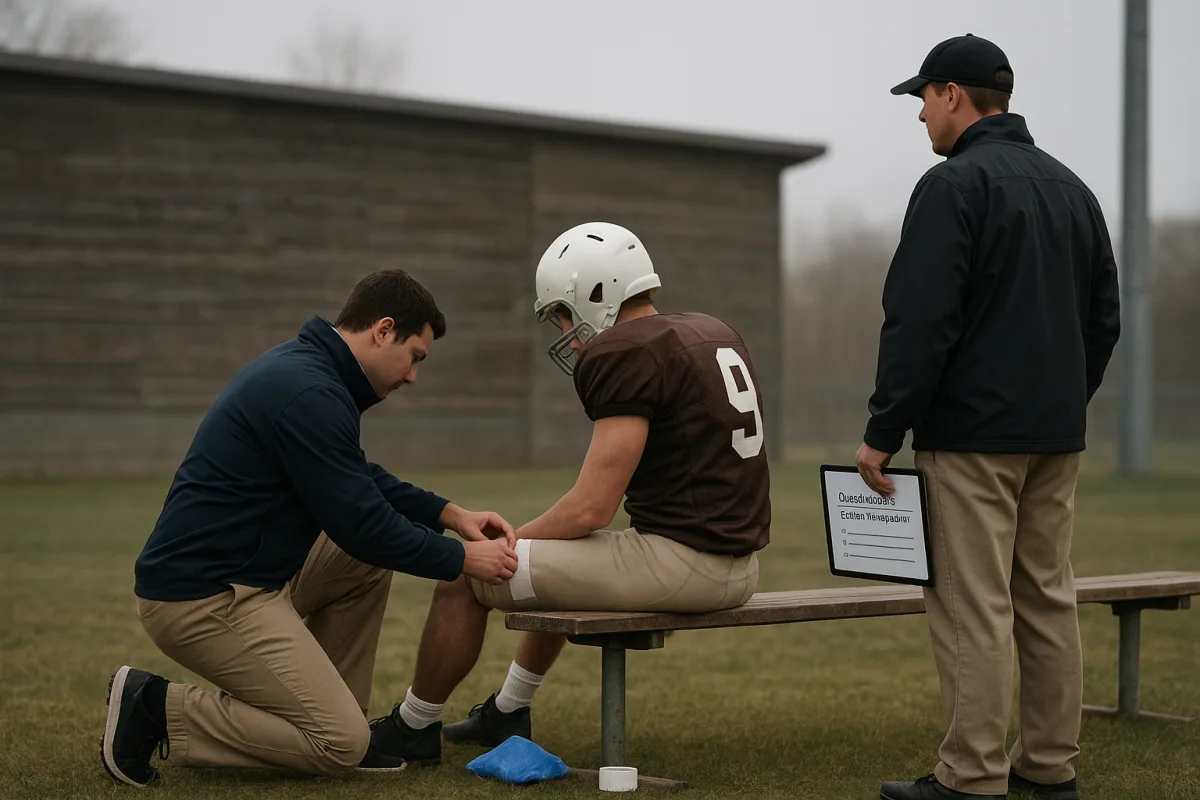
Week 2 NFL injury report: What questionable really means for Puka Nacua, RJ Harvey and Joey Porter Jr.
The designation is not the diagnosis
The most repeated phrase around Week 2 is “questionable,” and it is also the easiest one to misuse. Questionable is a game-status label, not a medical diagnosis, a recovery timetable or a prediction of workload.
NFL teams pair that label with practice participation, usually designating players as full participants, limited participants or non-participants. Those categories tell us how much of a scheduled practice a player completed, but not what drills he did.
A player can be limited because he skipped team periods, contact work, special teams reps, or conditioning volume. Conversely, a full participant may have received a carefully managed practice that does not resemble the demands of an NFL game.
That distinction matters most for the injuries on this week’s board. Puka Nacua, Denver rookie running back RJ Harvey and Pittsburgh cornerback Joey Porter Jr. are all dealing with conditions that can turn a player’s ability to accelerate into the central question.
The label does still matter. A player who does not practice all week has a smaller runway to prove he can protect himself and execute the game plan. But a late-week limited session is not automatic clearance.
The real decision involves the player, medical staff, position coach and coordinator. The medical staff assesses function and reinjury risk, coaches determine whether the player can do his assignment, and the coordinator decides whether a reduced role actually helps.
That is why fantasy projections and injury reports can get disconnected. A player may be active because he can handle a package of plays, while his normal snap load goes to teammates who can practice every route, protection call or coverage adjustment.
Puka Nacua’s issue is about opening up
The Rams listed Nacua as questionable for Monday night’s game against the New York Giants after he missed a second consecutive practice. NFL.com reported the designation followed his hip issue, while the club’s public comments add necessary detail about a separate groin concern. [3]
McVay said in the Los Angeles Rams’ official availability that Nacua had practiced well earlier in the week but did not feel fully like himself afterward. The coach specifically tied the concern to Nacua’s ability to “open up” and reach full speed.
That language is more informative than a generic questionable tag. A receiver can run routes at controlled speed and still be unable to hit the last gear needed to threaten a cornerback vertically or separate at the top of a breaking route.
It also helps explain why the Rams should not treat this as simply a matter of pain tolerance. Nacua’s role requires him to work through traffic, block on the perimeter and create yards after the catch, not merely line up outside.
The reporting has described hip and groin symptoms, but they should not be flattened into one injury. The research around Nacua indicates a September 18 hip issue may be related to earlier psoas soreness, while McVay described the current groin soreness as separate.
That nuance matters because the psoas and adductor region contribute to hip flexion, stride length and cutting mechanics. A player who compensates for either discomfort can alter his running gait, especially when accelerating off the line or decelerating into a route break.
There is no announced diagnosis, grade or recovery timeline for Nacua. It would be irresponsible to apply the timetable for a severe adductor tear to his situation, although major grade-three adductor injuries can require roughly nine weeks of conservative recovery and sometimes longer treatment. [1]
The immediate football question is narrower: can Nacua get to full speed without compensation, then repeat that movement on successive snaps? McVay’s wording suggests that, rather than raw availability, will determine whether Nacua plays and how much he can handle.
Jordan Whittington’s doubtful designation with a quad injury also matters for Los Angeles. If Nacua is active but restricted and Whittington cannot play, the Rams lose two potential pieces of their receiver rotation at once.
That does not automatically mean an inactive Nacua. It means the Rams must weigh the value of his condensed formation work, blocking and high-percentage targets against the possibility that he cannot perform the vertical and after-catch elements normally built into his usage.
RJ Harvey’s limited practice does not settle Sunday
Harvey’s Week 2 case is simpler in paperwork and murkier in prognosis. The Broncos listed the running back as a limited participant after his Week 1 hamstring injury and tagged him questionable for the Jaguars game. [4]
That is an improvement from a complete absence, but not proof that he will play. Pro Football Talk’s brief report said Denver was expected to be without Harvey, and separate reporting from Adam Schefter characterized him as unlikely to play. [2]
The Broncos have not publicly identified the severity of the hamstring injury or supplied a return date. Without that information, declaring Harvey a one-week absence or predicting a multi-game shutdown would be speculation, not injury analysis.
Hamstring injuries are particularly awkward for running backs because the position asks for repeated high-force acceleration. A back may be able to take a handoff during practice but still lack the confidence or burst to press a crease, cut off a blocker and finish a run.
Pass protection raises another layer. If a rookie runner cannot consistently plant and redirect against a blitzing linebacker, coaches may reduce his third-down work even if he is active. That can sharply limit snaps without appearing in a box score.
The actionable expectation is to plan for Denver’s other backs to carry the normal workload unless Harvey is upgraded by Sunday. If he does play, limited practice and the “unlikely” reporting point toward a managed role rather than a safe assumption of regular usage. [4]
Joey Porter Jr. is not just an injury-report story
Porter will miss his second straight game when Pittsburgh faces New England. The immediate reason is his back, which flared during a Thursday practice as the Steelers tried to increase his workload after he spent training camp on the physically unable to perform list. [5]
A back injury is especially significant for an outside cornerback. Press coverage requires a low stance, forceful lateral steps and abrupt hip turns. Any restriction can show up not only in speed, but in the ability to stay square before opening to run.
Porter is reportedly considering a second opinion, which is a reasonable marker of uncertainty rather than evidence of an impending procedure. It means the Week 3 target against Cincinnati remains conditional on medical evaluation and how his symptoms respond. [5]
The Steelers also have a contract storyline running alongside the injury. Reporting has connected Porter’s stalled extension situation to trade speculation, but the picture is not uniform: ESPN reported interest from multiple teams, while Steelers-connected reporting has indicated no trade calls were received. [7]
Pittsburgh’s established policy against negotiating contracts during the season is important context. The current impasse is not, by itself, proof that the club intends to move Porter or that he has forced the issue.
Reports have also indicated Pittsburgh would seek a premium draft pick, a price that naturally limits the number of viable discussions. Until there is confirmation of substantive negotiations, the trade talk belongs in the background behind the more immediate health question. [7]
On the field, Porter’s absence changes matchup options more than it changes a single statistic. The Steelers lose a boundary corner capable of taking a demanding outside assignment, which can force more safety help, more conservative calls or different coverage leverage.
Those choices have costs. Safety assistance can reduce numbers available against the run or underneath routes, while softer coverage can help prevent explosive plays but concede easier completions. That is the scheme impact of an unavailable corner, not simply the absence of one name.
The wider Week 2 risk calculation
Several other Week 2 injuries reinforce the same point. Houston Texans receiver Nico Collins was not expected to play with a hamstring injury, while Cincinnati Bengals quarterback Joe Burrow was listed as questionable with back tightness. [12]
Neither designation tells the full tactical story. A hamstring affects a receiver’s ability to separate, while back tightness can affect a quarterback’s rotation, platform and willingness to move in the pocket. The team’s alternatives matter as much as the label.
Las Vegas Raiders tight end Brock Bowers was listed as doubtful with a knee injury, and Arizona Cardinals quarterback Kyler Murray was ruled out with a concussion, according to Yahoo Sports’ Week 2 tracker. [12] Those are clearer status calls, not clearer recovery forecasts.
For Nacua, Harvey and Porter, the useful approach is to separate three questions. Can the player be active? Can he execute his normal job? And can he do it for his normal number of snaps without creating a larger problem?
Week 2 answers will arrive at different times. Nacua’s Monday status gives the Rams more time to evaluate his movement. Harvey’s Sunday decision hinges on a hamstring the Broncos have not fully characterized. Porter’s timeline depends on both his back and further evaluation.
Frequently Asked Questions
What does questionable mean on an NFL injury report?
Questionable is a game-status label indicating uncertainty about a player's availability for an upcoming game. It is not a medical diagnosis or a prediction of workload, but rather a designation that the player may or may not play depending on factors like practice participation and medical evaluation.
How does practice participation affect NFL player status?
Practice participation categories—full participant, limited participant, or non-participant—reflect how much of a scheduled practice a player completed but do not specify which drills were done. These categories provide context but do not guarantee a player's snap count or game availability, as players may be limited in practice yet still play many snaps, or fully participate and still be ruled out.
Can a limited practice player still play full snaps in the NFL?
Yes, a player designated as a limited participant in practice can still play a full snap count in a game. Practice participation does not directly forecast snap counts, and decisions about playing time depend on medical clearance and coaching evaluations.
What factors determine if an NFL player is active despite injury?
The decision involves multiple parties: medical staff assess the player's function and risk of reinjury, position coaches evaluate whether the player can fulfill their assignment, and coordinators decide if a reduced role benefits the team. A player might be active but limited in role depending on these assessments rather than just practice participation or injury designation.
How do hip and groin injuries impact NFL receivers' performance?
Hip and groin injuries can affect key movements such as acceleration, deceleration, and change of direction, which are critical for receivers. For example, Puka Nacua's ability to "open up" and reach full speed is central to his effectiveness, as these injuries can alter running gait and reduce a skill player's ability to separate from defenders or perform after-catch actions.
How we researched this
This article was assembled from 1 video source, 4 published articles, 12 cited references.
Nothing here is based on hands-on testing. Where a figure or finding appears, it belongs to the source cited beside it, and the writing says so rather than implying otherwise. Every source is listed below so you can check it.
Sources
Sean McVay Talks Puka Nacua's Injury Status, Aaron Donald's Return & More Ahead Of Week 2 vs. Giants — Los Angeles Rams
Broncos are expected to be without RJ Harvey on Sunday — Pro Football Talk
Report: Joey Porter Jr. considering second opinion on back injury — Pro Football Talk
Is Puka Nacua Playing Week 2? Fantasy Football Injury Update — FantasyPros
Report: Joey Porter Jr. considering second opinion on back injury — ProFootball Talk on NBC Sports
A guide to the most common NFL injuries, from Achilles tendon tears to concussions
Rams WR Puka Nacua misses practice with a hip injury - NBC Sports
Injury Report: RB RJ Harvey improves to limited participant ahead of Week 2 game vs. Jaguars
Steelers' Joey Porter Jr. 'Considering' New Back Examine Amid Push to Play in Week 3 - HEAVY
Is RJ Harvey Playing Today? (Injury Update, Betting Impact for Jaguars vs. Broncos in NFL Week 2)
Estos han sido todos los movimientos de Pittsburgh Steelers en la agencia libre 2026 de la NFL
Watch Injury Updates and Player Status for Week 2 on Youtube
Related Articles
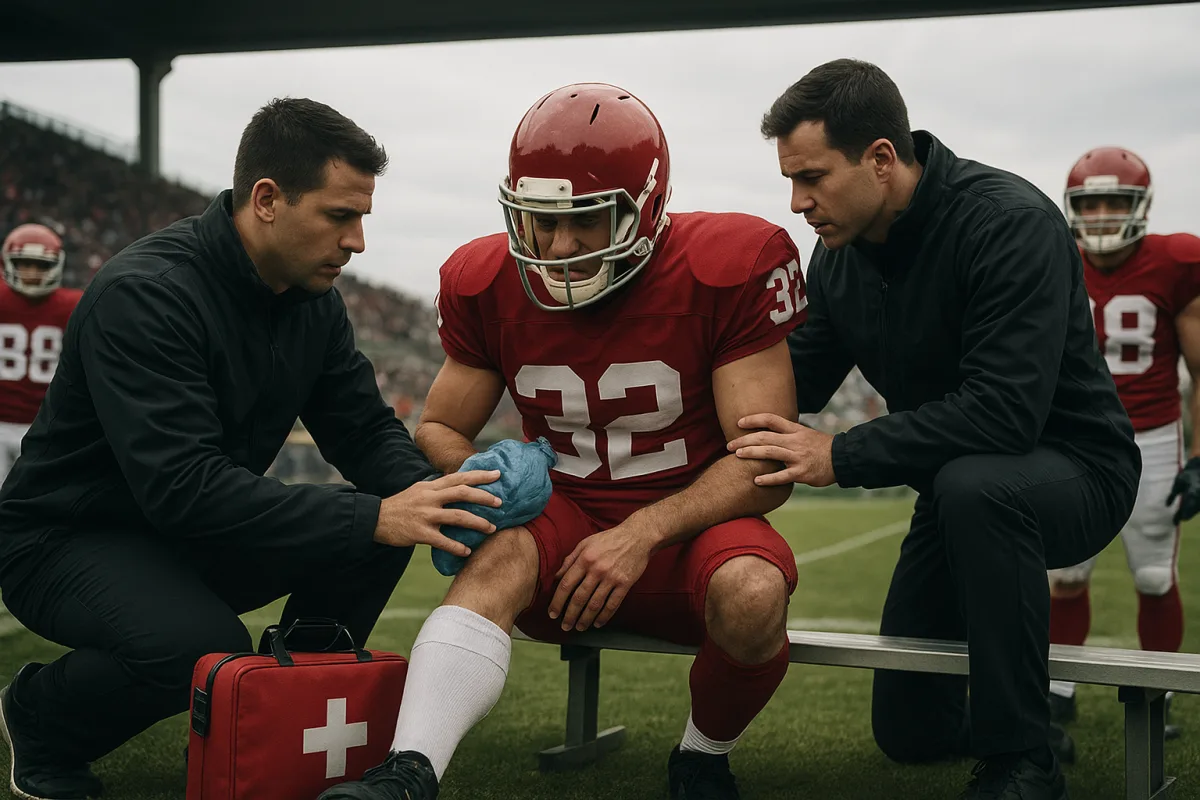
NFL Week 3 Key Player Injury Analysis and Confirmed Status
Get an in-depth NFL Week 3 key player injury analysis with confirmed statuses and impact on team roles for Brian Burns, Breece Hall, and De'Von Achane.
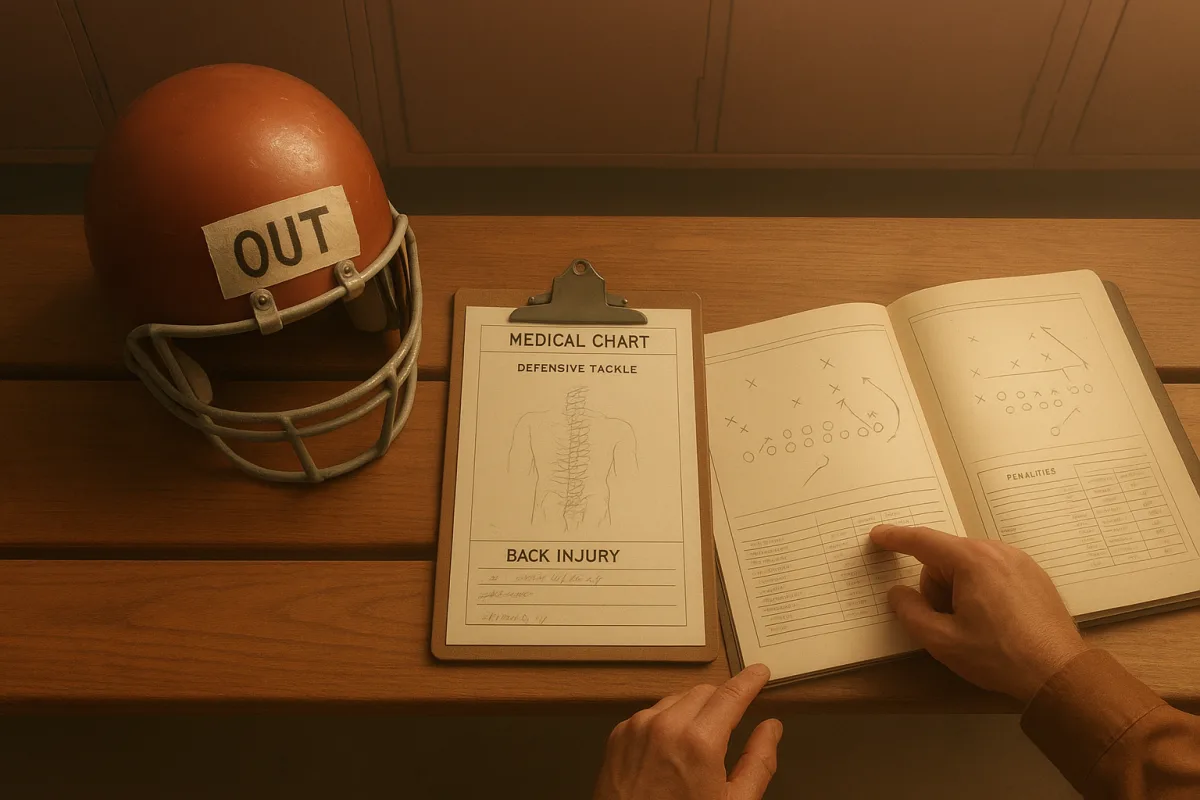
Week 5 NFL Game Previews and Injury Impact Analysis
Get detailed Week 5 NFL game previews with injury updates and tactical analysis to understand how player availability shapes matchups.
San Francisco 49ers Week 4 Preview and Player Updates
Get the San Francisco 49ers Week 4 preview with injury updates and analysis on handling Denver's pressure defense.
NFL Week 3 Team Preparations and Media Availability Updates
Get the latest NFL Week 3 team preparations, player statuses, and media availability insights to understand upcoming game strategies and key updates.