
Under Center Quarterback Strategy: NFL Offensive Insights
Explore under center quarterback strategy and how it shapes NFL offensive play-action and bootleg tactics in modern football.
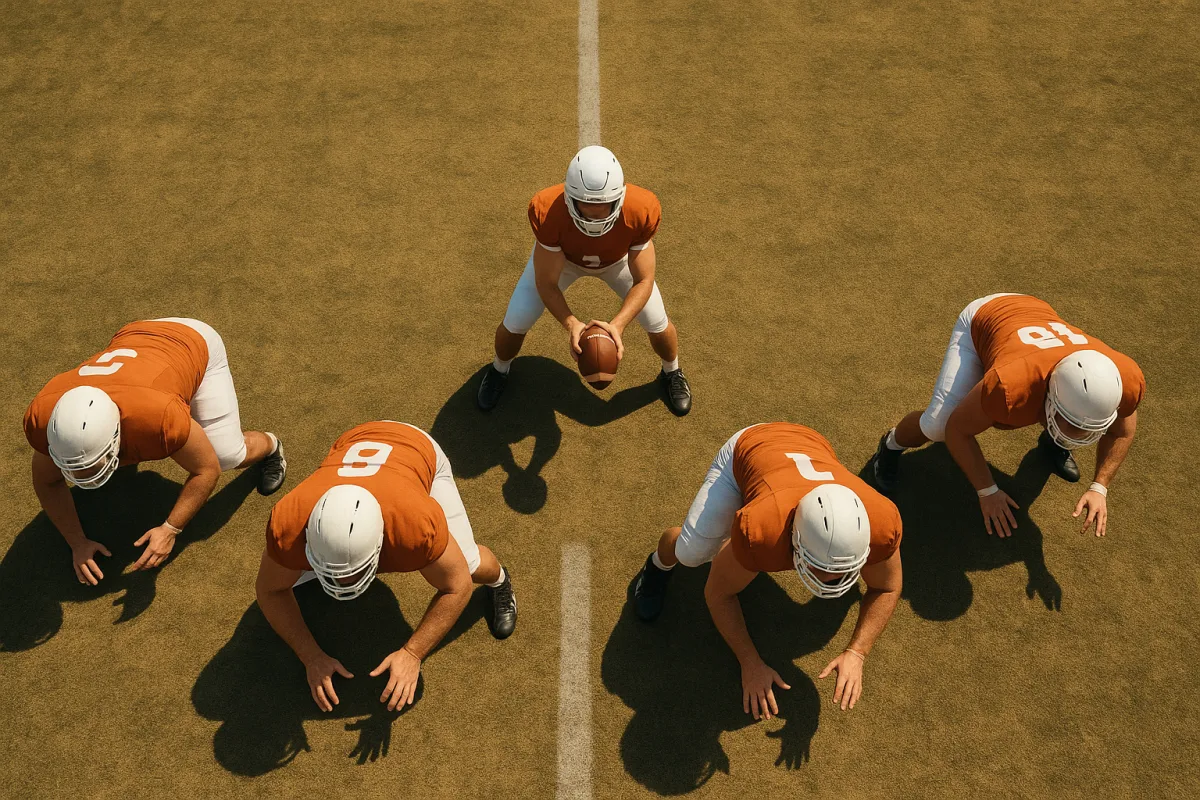
The Week 1 shift was about disguise, not nostalgia
The easy Week 1 story was that NFL offenses suddenly went back in time. The more accurate one is that coordinators have found a practical answer to the defenses that spent several seasons taking away explosive passes.
Shotgun is still foundational across the league. It remains the cleanest way to run quick game, empty formations, run-pass options and quarterback-designed runs. It also gives the quarterback an immediate picture of the defense before the snap.
But the league-wide under-center rate had already climbed to 34.8 percent in 2025, from 28.7 percent in 2023 and 30.3 percent in 2024. [6] That is not a one-week fad. It is a structural adjustment.
The channel That’s Good Sports framed the Week 1 trend as a sharp increase in under-center usage. That specific team-by-team claim cannot yet be verified. Public 2026 comparison data is not available to establish that six teams increased their rate by at least 20 percent.
Still, the tactical point holds. The Rams led the league by taking 60 percent of their offensive snaps under center in 2025, followed by the Seahawks at 55 percent, Bills at 51 percent, Lions at 49 percent and Bears at 48 percent. [6]
Those teams did not use the formation simply to look old-fashioned. Four of the five paired substantial under-center usage with solid records and strong rankings in pass success or explosive-pass production. The Bears were the exception, ranking 25th in pass success despite their 48 percent rate. [6]
That distinction matters. Being under center is not an offense. It is a platform. A coordinator still needs an efficient run game, protection answers, receivers who can separate and a quarterback whose feet match the timing of the call.
Why the center snap changes the defense’s job
Under center means the quarterback begins immediately behind the center instead of four or five yards back in shotgun. The running back is usually deeper behind him, allowing the offense to build downhill action without changing personnel.
That geometry creates a more credible run presentation. On an outside-zone play, the offensive line steps laterally together, trying to displace the front and create a cutback lane. The back takes the handoff already moving downhill toward the declared edge.
From the defense’s perspective, that action requires commitment. Linebackers have to fit the run lanes. Edge defenders must set the edge rather than sprint directly into a pass-rush track. Safeties may rotate down to handle an extra gap.
Now run the same initial picture, but have the quarterback keep the football and boot away from the run action. The defense has spent valuable fractions of a second reacting to a play that never came.
That is the core of the system. It is not that play-action magically makes defenders foolish. It forces them to honor assignments that are rational if the offense can actually run the ball.
ABC7 reported that more than 75 percent of under-center pass dropbacks in Week 1 used play-action, while just 9.5 percent of shotgun and pistol dropbacks did. [1] That gap explains why the under-center discussion matters more than a formation-count debate.
A coordinator can run play-action from shotgun, and many do. But a shotgun fake typically offers a different visual picture. The quarterback is already facing the defense, the back is often aligned beside him, and the run tracks are more constrained.
Under center, the quarterback turns his back to complete the mesh. The back crosses behind him. The line sells zone, power or split-flow action. A bootleg can start from the same posture as a run the defense has seen repeatedly.
The gain is multiplicity without substitution. An offense can use the same 11 personnel, one running back and one tight end, and threaten inside zone, outside zone, duo, counter, naked boot and conventional play-action.
That matters against the two-high safety structures that became widespread as defenses sought to limit deep throws. If two safeties stay high, an offense wants to run efficiently. If a safety inserts into the box, the offense wants the intermediate voids behind that player.
The quarterback’s job is more difficult than it looks
The public conversation often treats under-center offense as a gift to the quarterback. It can be, particularly when it produces a bootleg with a defined high-low read. But the quarterback is also taking on more technical work.
Start with the drop. On a standard play-action concept, the quarterback has to take the snap cleanly, execute the proper turn, exchange or fake accurately, reset his feet and arrive at the throwing point on time. One bad step changes the route timing.
This is why the seven-step drop shown by San Francisco in Week 1, highlighted by That’s Good Sports, was notable. The play is not inherently exotic. What is rare is a modern offense trusting a quarterback’s under-center footwork long enough to build deeper-developing concepts.
A seven-step drop asks the offensive line to protect longer, and it asks receivers to win later in the route. It also asks the quarterback not to drift. If he drifts, tackles lose the edge relationship they need against speed rushers.
The better answer for many teams is not deep-drop football. It is marrying quick, intermediate and boot-action concepts to the same run presentation. That allows the quarterback to move the launch point without asking his line to win every snap from a static pocket.
Boot action can reduce direct pressure because the quarterback exits the original rush lane. It also gives him a simpler progression, often a deep crossing route, a flat route and a backside outlet. [1]
But the scheme imposes a cost. A quarterback turning his back to the defense loses sight of late rotations and pressure movement. A blitzing safety or an edge defender crashing the boot side can wreck the play before the read ever appears.
There is also a physical component. Under-center play-action can put the quarterback closer to defenders after the fake, particularly if protection breaks down or the edge defender ignores the run action. ABC7 noted concern about added direct hits on quarterbacks in these structures. [1]
The Bengals are a useful example of why this cannot be installed by proclamation. Sharp Football Analysis identified Joe Burrow’s limited under-center experience as a potential concern, because the transition requires different timing, footwork and visual processing. [2]
That is not an argument that Burrow cannot operate it. It is an argument that a quarterback who has lived in shotgun-heavy football needs reps, and that the offense must decide which concepts fit him instead of copying another team’s menu.
What defenses will try in Week 2
If Week 1 featured more under-center play-action, Week 2 should bring the counterpunch. The first defensive adjustment is simple: make the edge player responsible for the quarterback on boot action.
On a traditional boot, the backside edge defender may chase the apparent run from him. A disciplined defender stays home, squeezes the quarterback’s rollout lane and forces the passer to throw from a compromised platform or take a loss.
The second counter is to alter the front. A six-man line, particularly a 6-1 structure with six defenders on the line and one stacked linebacker, can muddy the blocking angles that wide-zone teams depend on.
The Eagles have used 6-1 fronts as an answer to under-center run concepts, according to reporting on the league’s tactical shift. [1] The point is not merely to put another large body near the ball. It is to eliminate clean lateral movement for the line.
Wide zone works when blockers can stretch the front and climb to linebackers. If defensive linemen occupy every immediate gap and linebackers stay clean, the back is forced to cut before the offense has created a crease.
The third counter is more subtle: defensive backs can play with patient eyes. Safeties cannot recklessly trigger downhill on every under-center fake, especially if an offense has repeatedly shown the same run action before throwing behind them.
That is why the system’s effectiveness depends on sequencing. The coordinator must establish enough real runs to make the fake matter, then call the complementary pass before the defense can comfortably disregard the run.
The best offenses will have another answer ready. If the defense squeezes the boot, the offense can call a throwback screen, a backside glance route or a conventional pocket play-action pass. The point is to make disciplined defense expensive, too.
What to watch beyond the scoreboard
Week 2 results will not tell us much if we only count points. A high-scoring game can come from turnovers, short fields, special teams or broken coverages. A low-scoring game can still reveal an offense finding its intended identity.
Watch first-down snaps. If a team regularly goes under center on first down, it is likely trying to make the defense play the run honestly and create favorable second-down passing opportunities rather than merely changing formations for show.
Watch the tight end and fullback-like players. A tight end who aligns attached to the line, then sifts across the formation at the snap, is often critical to split-zone and bootleg action. That player can seal the backside defender or leak into the flat.
Watch whether the quarterback resets his feet after the fake. Clean boots look easy because the quarterback arrives outside with his shoulders square and his eyes already on the first read. Choppy feet and rushed shoulders usually mean the defense won the rep.
Philadelphia offers a useful reminder against over-reading September. Pro Football Talk noted that Nick Sirianni entered the season 14-4 in September, the third-best winning percentage among coaches with at least 15 games. [4]
That record says the Eagles tend to be prepared early. It does not prove that every Week 1 wrinkle is sustainable or that a September win forecasts January. Scheme evaluation needs more than a single result.
The same rule applies to under-center football. It is not a league-wide cure for declining offense, and it is not a replacement for shotgun. It is a way for coordinators to make defenders defend more possibilities with the same personnel.
That is the Week 2 question worth tracking: not who copied the trend, but which offense can keep its runs, boots and dropbacks visually connected after the defense has spent a week preparing for the answer.
Frequently Asked Questions
Why are NFL teams using under center formations more often?
NFL teams are increasing under-center usage to improve disguise between run and pass plays. The formation allows offenses to run a variety of runs and play-action passes with the same personnel, making it harder for defenses to predict the play. This structural adjustment helps counter defenses that have limited explosive passing in recent seasons.
How does playing under center affect quarterback footwork and reads?
Playing under center requires quarterbacks to master precise footwork, including proper drops and turns, and to deliver faster answers to edge pressure. The quarterback must execute clean exchanges and reset feet on time, which is more technically demanding than shotgun drops. Defined reads and cleaner bootleg lanes are benefits, but the quarterback’s job is more complex.
What advantages does under center play-action provide?
Under center play-action is more effective because it forces defenders to honor credible run action, creating hesitation and opening passing lanes. Over 75 percent of under-center pass dropbacks in Week 1 of 2026 used play-action, compared to just 9.5 percent from shotgun or pistol. The formation’s geometry allows the quarterback to turn his back and sell the run convincingly before bootlegging.
How does under center offense disguise run and pass plays?
The under-center setup allows the offense to use the same personnel and initial actions to threaten inside zone, outside zone, power, duo, counter, naked boot, and conventional play-action. This multiplicity without substitution makes runs, boots, and play-action passes look similar until after the snap, complicating defensive reads and reactions.
What challenges do quarterbacks face when playing under center?
Quarterbacks must handle more technical demands, including clean snaps, precise footwork, and faster decision-making under pressure. They face blind spots during play-action and must adjust timing and mechanics compared to shotgun. Additionally, under-center play can expose quarterbacks to more direct hits, increasing injury risk.
How we researched this
This article was assembled from 3 video sources across 3 channels, 1 published article, 7 cited references.
Nothing here is based on hands-on testing. Where a figure or finding appears, it belongs to the source cited beside it, and the writing says so rather than implying otherwise. Every source is listed below so you can check it.
Sources
NFL Offenses Just Changed in a BIG Way — ThatsGoodSports
How Texans RB David Montgomery uses poetry as an outlet off the field | NFL Countdown — NFL on ESPN
Nick Sirianni has had plenty of success in September — Pro Football Talk
Why NFL offenses are going under center more often in 2026 - ABC7 Los Angeles
Joe Burrow Under Center Stats: A Potential 2026 Red Flag? – Sharp Football Analysis
Nick Sirianni has had plenty of success in September - NBC Sports
Watch Quarterback and Offensive Strategy Insights on Youtube
Also from the sources
Related Articles
Baltimore Ravens Offense 2026: Lamar Jackson’s New Look
Explore the Baltimore Ravens offense in 2026 and how Lamar Jackson’s new look and pre-snap motion shape their strategy.
NFL Week 3 Quarterback Insights and Offensive Analysis
Explore NFL Week 3 quarterback insights and offensive strategies from media, including Bo Nix, Joe Burrow, and C.J. Stroud’s performances.
NFL Week 1 Offensive Strategy and Coaching Insights
Explore NFL Week 1 offensive strategy, including coaching insights, run-pass tendencies, and the sail concept for 2026 season openers.
Cleveland Browns Week 4 Performance and Key Player Impact
Analyze the Cleveland Browns' Week 4 performance, key player impacts, and strategic adjustments in their win over the Steelers.