
Buffalo Bills Week 1 Defensive Highlights and Team Outlook
Explore Buffalo Bills Week 1 defensive highlights, player insights, and the impact of the new stadium on their 2026 season opener.
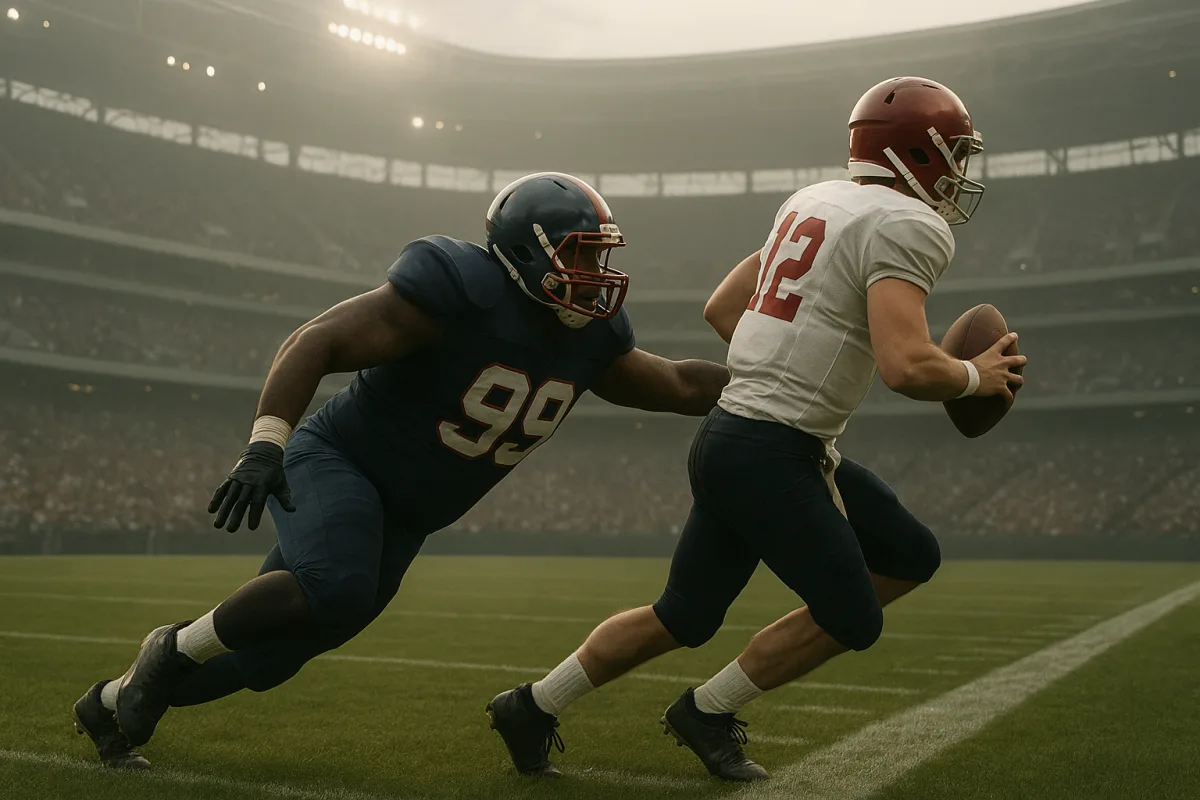
The shift is from spectacle to process
Buffalo has an obvious reason to sell excitement. A new Highmark Stadium, a nationally visible Thursday opener and a Week 1 comeback win create the kind of setting that can become bigger than the game itself.
The players, however, have not really fed that narrative in the usual way. Across separate Buffalo Bills media sessions, the repeated message was that the building matters, but only if the team handles its routine correctly.
Josh Allen put it most plainly. The quarterback acknowledged the crowd and the significance of opening a new stadium, but said the team had deliberately practiced and played preseason games there so the environment would not feel unfamiliar.
That is not boilerplate when it comes from a quarterback who has to manage crowd noise, protection identification and communication on a short week. Allen’s explanation was functional: the staff had tried to remove novelty before it could become a distraction.
Spencer Brown offered the complementary offensive-lineman version. He said he intended to enjoy the atmosphere, particularly with the crowd helping the defense, but also described the need not to get “too juiced up” before doing the job.
Bradley Chubb was the one Bills player most willing to use the expected language around the crowd. He called the stadium likely to be electric, yet immediately tied that anticipation to the need to slow Detroit’s offensive talent at every level.
Those are three independent player perspectives, quarterback, offensive tackle and edge defender, arriving at the same point. The excitement is real, but Buffalo’s public framing is preparation first, emotion second.
Why that matters after a 36-31 game
That approach is partly a response to what actually happened against Houston. The Bills won 36-31 in Week 1, with NFL.com highlighting Allen’s 96-yard touchdown drive as the defining offensive answer in the shootout. [4]
A 36-point offense can make any building feel like a party. It can also obscure the more useful lesson from the tape: Buffalo did not control the game cleanly enough on defense to let ceremony or early-game adrenaline become the story.
The defense allowed 31 points. That figure does not establish that every level played poorly, and it certainly does not tell us whether the issue was coverage, pass-rush spacing, missed tackles, short fields or situational calls.
It does establish the appropriate level of caution. A defense that permits 31 points in an opener may have produced pivotal plays, but it has not yet earned a broad claim of dominance. [4]
Chubb’s comments fit that reality better than the highlight narrative. He credited Greg Rousseau with two sacks and two forced fumbles and said Ed Oliver made a late impact, while also stressing that he and Oliver were not satisfied merely with affecting the quarterback.
Those remarks come from a team-produced interview, not an official statistical audit. The available research does not include a detailed NFL game log or a full team-specific defensive analysis confirming each player’s snap-by-snap production, so those individual totals should be treated carefully.
Still, the final sequence matters. The Bills’ own mic’d-up footage identifies a late strip-sack fumble against Texans quarterback C.J. Stroud as the play that sealed the win, after an earlier sack-fumble had already swung possession.
That does not erase the 31 points allowed. It does show a defense capable of producing the high-leverage negative play that a shootout demands, especially when the offense has already placed the opponent under scoreboard pressure.
The pass rush is the more credible early defensive trend
The most defensible defensive takeaway is not that Buffalo shut Houston down. It is that the Bills’ front is talking, and apparently playing, as a connected rush unit rather than four isolated players chasing sacks.
Chubb specifically described learning how Oliver, Rousseau, DaQuan Jones and other linemen “get off” the ball, then playing off those tendencies. That language matters because pass-rush production often depends on coordinated lanes as much as individual wins.
A rusher who widens the pocket can create the inside lane for a teammate. An interior push can prevent a quarterback from stepping up against an edge rush. A sack is assigned to one player, but the pressure picture can belong to the whole front.
That is why Chubb’s self-evaluation is more valuable than a single zero in the sack column. He said he was around the quarterback but framed the next step as studying what created disruption and what prevented finishes.
There is a warning in that, too. The Bills cannot assume strip sacks will arrive every week, and the lack of a complete public defensive data set means there is not enough evidence to declare a transformed pass rush after one game.
The better working hypothesis is narrower: Buffalo’s defensive line produced enough disruption in Week 1 to create two defining turnover moments, and the players believe the group has room to sharpen its rush coordination.
That is a promising start. It is not a completed evaluation, particularly with Detroit’s offense next and with the Bills having only a short practice window to prepare.
Allen pushed back on the offensive narrative, too
The same resistance to easy narratives showed up in Allen’s discussion of the offense. Asked whether Week 1 signaled a permanently more aggressive identity under head coach Joe Brady, Allen rejected the premise.
His answer was correct. One game can reveal a coordinator’s willingness to attack a matchup. It cannot prove that every future Buffalo game plan will be built around the same frequency of downfield attempts or fourth-down aggression.
Allen described the offensive goal as finding the particular way to win each week. Some opponents may demand aggressive throws; others may call for 40 rushing attempts, quicker checkdowns and a more conservative protection-based plan.
That is how a quarterback should describe an early-season offense. Defenses present different coverage structures, pressure plans and personnel vulnerabilities, then coordinators adapt. Scheme is not an identity slogan repeated regardless of the opponent.
Brown provided one concrete reason Buffalo’s opener looked cleaner offensively. He said the offensive line cut its pressures allowed from 33 in the comparable game a year earlier to seven, crediting the protection plan and contributions from tight ends in pass protection.
That is a useful player-reported comparison, although it needs context before it becomes a conclusion. Pressure totals can vary by tracking provider, game situation, quarterback time to throw and whether a play is scored as a designed rollout or scramble.
But the underlying point is sound. Better protection can change the entire geometry of a game, particularly against an aggressive front, because it gives Allen time to identify coverage and gives receivers time to uncover.
The new stadium has a football story and a public-cost story
The new Highmark Stadium is therefore not merely a backdrop. It affects footing, crowd volume, communication and the game-day experience, but none of those variables should be separated from the project’s cost and accessibility questions.
The stadium’s base capacity is 60,108, with configurations reported to expand toward roughly 63,000 standing-room capacity and up to 66,000 for selected events. [2] That is a significant venue, but more seats do not automatically mean accessible seats.
Secondary-market pricing for the 2026 opener reportedly started around $400, with a median listing price near $738. [3] Those are resale-market figures rather than a full accounting of primary-market pricing, season-ticket costs or personal-seat licenses.
They still explain why some fan enthusiasm has been tempered by practical concerns. An opening-night crowd can be loud and deeply invested while also confronting an expensive entry point for a stadium supported by substantial public funding.
The project’s estimated cost rose from an original $1.4 billion budget to roughly $2.1 billion to $2.2 billion, with taxpayers contributing $850 million. [1][9] That does not make the building a failure, but it makes scrutiny of the fan experience reasonable.
Reports following preseason events also identified obstructed-view complaints, which the Bills acknowledged and said they were addressing. [5] For a venue launch, that is not a minor social-media complaint, it is a core operational issue.
A stadium opener succeeds over time when its sightlines, field conditions, crowd flow and price structure hold up after the ceremony ends. The initial natural-grass installation shows why the operational part cannot be treated as an afterthought.
The field is improved, not fully proven
Allen said the replacement grass felt more stable underfoot, and Brown described a firmer surface after observing the field’s treatment. Chubb likewise said he wore his expected game cleats without problems during the available work.
Those are meaningful player observations, but they should be described accurately. They are early impressions from controlled preparation, not a full-season safety verdict on the surface.
The original Kentucky bluegrass field, installed in October 2025, developed problems serious enough that the club replaced it before the regular season. Reports cited turf detachment and safety concerns, while the Bills said the original surface did not meet its standards. [7][8]
That sequence undercuts the idea that the new stadium immediately delivered a superior natural-grass experience. It also explains the players’ restrained language. They are encouraged by the replacement surface, not claiming the question has been settled.
For football operations staff planning any major venue launch, that is the useful model. Build repetitions into the calendar before the official opener, test the surface under real cleats, solicit player feedback and be willing to correct a visible mistake quickly.
For fans planning a trip, the lesson is similarly practical. Do not treat the new stadium as a generic premium event. Check exact seat views, account for resale pricing and recognize that the Bills are still working through some opening-year venue issues.
What Buffalo’s Week 1 excitement actually means
The team’s enthusiasm is not fake, and the closing defensive highlights were not empty theater. The Bills came away with a one-point win because their offense delivered late and their defense produced turnovers at decisive moments.
But the more interesting trend is the discipline around that excitement. Allen, Brown and Chubb all redirected attention from the building’s novelty toward protection, footing, opponent preparation, rush coordination and emotional control.
That is a healthier early-season signal than any proclamation about a new era. Buffalo has evidence that its offense can recover from a high-scoring game and that its front can manufacture late disruption.
It does not yet have evidence of a finished defense, a fully validated grass surface or a stadium experience free from cost and sightline concerns. Those are separate questions, and treating them separately is the only useful way to evaluate the Bills’ opening stretch.
The NFL also fined Texans defensive lineman Mario Edwards for a low hit on Allen in the opener, though the fine amount was not publicly disclosed. [6] That development reinforces the physical edge of the game, but it should not be inflated into a broader story without more detail.
Frequently Asked Questions
How did the Buffalo Bills defense perform in Week 1 of the 2026 season?
The Bills’ defense allowed 31 points in their 36-31 win over Houston, indicating challenges in controlling the game cleanly. While the defense made some pivotal plays, the overall performance did not establish dominance, and detailed individual defensive statistics were not available.
What were the key defensive plays for the Buffalo Bills in their Week 1 win?
Key defensive plays included two sack-fumble forced turnovers by Greg Rousseau and a late strip-sack fumble against Texans quarterback C.J. Stroud that sealed the win. These high-leverage plays were crucial in a shootout but did not fully offset the 31 points allowed.
How does the new Highmark Stadium affect the Buffalo Bills' gameplay?
The new Highmark Stadium features a natural grass surface preferred by players for safety, though the initial turf installation was defective and replaced before the regular season. The stadium’s atmosphere is expected to be electric, but players emphasize preparation over emotion to avoid distractions from the new environment.
What is the Buffalo Bills' defensive strategy after their Week 1 game?
The Bills’ defense is focusing on improving operational readiness rather than celebrating the win. Players highlighted the importance of playing as a connected rush unit and continuing to refine their coordination, especially in pass rush, to reduce points allowed in future games.
How did Josh Allen and the offense complement the Buffalo Bills' defense in Week 1?
Josh Allen led a defining 96-yard touchdown drive that helped the Bills overcome the shootout. The offense’s ability to put up 36 points relieved pressure on the defense and was critical in securing the comeback win despite defensive lapses.
How we researched this
This article was assembled from 4 video sources, 3 published articles, 9 cited references.
Nothing here is based on hands-on testing. Where a figure or finding appears, it belongs to the source cited beside it, and the writing says so rather than implying otherwise. Every source is listed below so you can check it.
Sources
Bradley Chubb Mic'd Up for Buffalo Bills EPIC Shootout vs Houston Texans! — Buffalo Bills
Josh Allen Talks The Excitement Around The First Game in Highmark Stadium | Buffalo Bills — Buffalo Bills
Bradley Chubb Talks How Electric Bills Mafia Is Going To Be Thursday Night | Buffalo Bills — Buffalo Bills
Spencer Brown Talks The Challenges Facing Detroit Thursday Night | Buffalo Bills — Buffalo Bills
NFL Hands Down Punishment for Play Involving Bills QB Josh Allen — Yahoo Sports
NFL Hands Down Punishment for Play Involving Bills QB Josh Allen — heavy.com
Titans Make Two Practice Squad Moves — NFLTradeRumors.co
Bills' new stadium costs balloon to $2.1 billion, $560 million over initial estimate, team tells AP
New Highmark Stadium: Seating Chart, Capacity & Everything That's Changed for Bills Fans · sports24
Buffalo Bills Ticket Prices — 2026 Season — Seated Courtside
Bills counter criticism of new Highmark Stadium - The Stadium Business
NFL Hands Down Punishment for Play Involving Bills QB Josh Allen
Why are the Bills replacing the grass at Highmark Stadium? It wasn’t up to their standards
Watch Buffalo Bills Excitement and Defensive Highlights on Youtube
Also from the sources
Related Articles
Week 1 NFL Defensive Highlights and Impact Plays
Explore Week 1 NFL defensive highlights and impact plays, featuring key performances and game-changing defensive moments.
Vikings Week 1 Win Over Packers Hinged on Fourth-and-One
Explore how the Vikings' Week 1 win over the Packers was shaped by a crucial fourth-and-one defensive stop and Carson Wentz's steady play.

Broncos vs Chiefs Week 1 Preview: Key Matchups and Analysis
Get a detailed Broncos vs Chiefs Week 1 preview with key matchups, player updates, and game analysis for the 2026 NFL season opener.
49ers vs Rams Australia Game Week 1 Preview and Travel
Preview the 49ers vs Rams Week 1 game in Australia with insights on travel strategies and team acclimation for optimal performance.