
Falcons vs Ravens Overtime Game and Injury Impact Analysis
Detailed analysis of the Falcons vs Ravens overtime game and how player injuries impacted the outcome and team strategies.
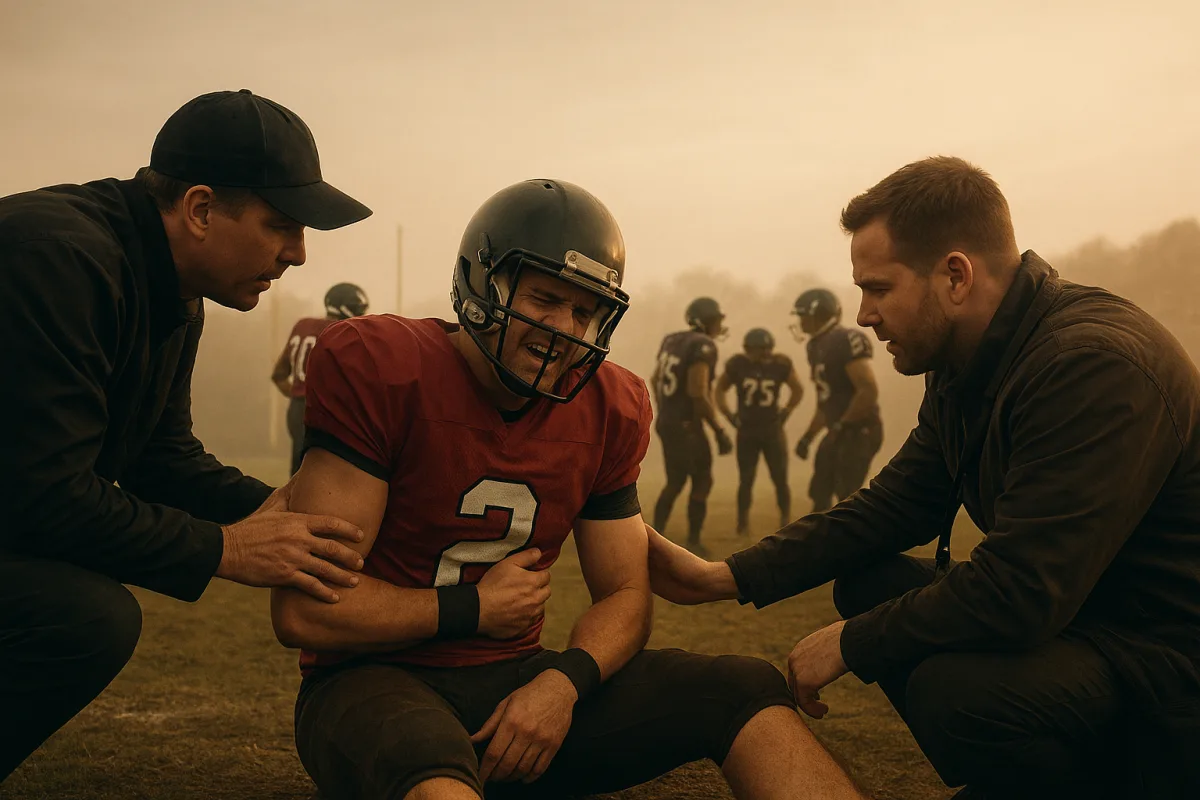
The overtime rule was the game’s central mechanism
The cleanest explanation for Atlanta’s loss is not that the Falcons “blew” overtime in one snap. Baltimore won the toss, elected to receive, and turned the format itself into an advantage before Tyler Huntley’s winning touchdown run ended it, 30-23. [6][9]
Regular-season overtime is a 10-minute period, not an extra full quarter. Both clubs are ordinarily guaranteed a possession unless the opening drive ends in a safety, but that guarantee does not create equal time, field position or quarterback health.
That distinction mattered in Atlanta. A team can technically be entitled to one possession and still receive it with only a handful of plays available, no margin for a penalty, and a backup quarterback operating under urgency.
Baltimore’s opening overtime drive did what a winning first possession is designed to do. It did not merely seek a touchdown. It reduced the number of snaps Atlanta could use to answer, while making every defensive error more expensive.
The Ravens had already shown their preferred late-game identity. With Tyler Huntley at quarterback, they leaned into the running game, used Justice Hill in passing situations, and asked Derrick Henry to finish drives rather than carry the entire offense on every down.
That is important because Huntley’s presence did not turn Baltimore into a one-dimensional offense. Atlanta could account for the quarterback run, Henry and Hill, then still had to defend short throws when pressure forced Huntley outside structure.
Why clock control becomes a defensive problem
There is a tendency to call a long overtime drive a conditioning failure. Falcons safety Jessie Bates III pushed back on that after the game, saying fatigue was not the explanation and acknowledging that Baltimore ran effectively when Atlanta needed a stop.
The tape-level issue is more precise. Run defense is a sequence of assignments. Interior defenders must control gaps, edge players must set the perimeter, linebackers must fit off those blocks, and the secondary must finish tackles when the first level is displaced.
If any one piece fails, a four-yard run becomes six. That may not look catastrophic on a highlights package, but it changes the down-and-distance math. Second-and-4 keeps the whole call sheet open. Second-and-9 invites pressure and passing downs.
Atlanta’s pass rush had created problems earlier by making Huntley move, producing sacks, holding calls and contested throws. The Falcons’ posted game broadcast showed a front willing to bring five-man pressure and use stunts to create uncertain protection pictures. [1]
But blitzing has a cost. It adds rushers, which can create immediate stress, yet it also reduces the number of defenders in coverage. If a blitzer does not get home, the offense often has a favorable one-on-one matchup somewhere behind him.
Baltimore found that balance late. On the tying drive, Huntley hit enough quick and intermediate throws to move the chains, including throws involving Zay Flowers and Mark Andrews. The Ravens did not need every snap to be dramatic. They needed manageable downs.
The decisive fourth-quarter sequence illustrated the problem. With Falcons cornerbacks compromised in the game broadcast, Baltimore attacked a replacement matchup near the goal line, then used Derrick Henry on the two-point conversion to tie it at 23. [5][6]
That was not simply a matter of targeting an inexperienced defender. Atlanta’s pressure call placed a safety in the deep middle and asked the replacement corner to win a one-on-one situation. Huntley recognized the leverage and delivered the touchdown throw.
The eight-point lead was not enough because Atlanta could not end the game
Atlanta had the kind of lead a defense expects to protect: eight points late, which means the opponent needs a touchdown and a conversion simply to force overtime. Bates said afterward that the game should not have reached that point.
That assessment is fair, but it should not be reduced to one defensive snap. The Falcons had several chances to create separation earlier, including red-zone opportunities and a tackle-eligible concept involving left tackle Jake Matthews that did not produce a touchdown.
Falcons coach Kevin Stefanski, in the team’s postgame press conference, described the missed chances as collective, involving calls and execution. That is a more useful framing than assigning the result to one player, because the game repeatedly turned on small failures to finish drives. [10]
Atlanta’s third-down passing did provide a counterpoint. Michael Penix Jr. connected with Drake London on important third-and-long plays, and Kyle Pitts Sr. scored on a red-zone touchdown after the Falcons began finding more rhythm through the air.
Still, third-and-long conversions are corrective plays, not a stable offensive plan. Stefanski noted that Atlanta needed to avoid creating those situations in the first place. A successful third-and-15 does not erase the first- and second-down plays that made it necessary.
The Ravens’ defensive approach made that difficult. Baltimore could take away Penix’s first read, challenge the Falcons to operate on schedule and trust its front to produce pressure when Atlanta fell behind the chains.
Atlanta’s late trick-play failure should be judged within that context. A tackle-eligible design can work because it changes the defense’s count of available receivers, but it also demands clean communication, proper reporting and a quarterback throw under condensed-field pressure.
The concept is not inherently reckless. It is a calculated attempt to manufacture an uncovered target near the goal line. The cost is that if the defense identifies it, or the ball cannot be delivered cleanly, the offense has spent a valuable red-zone snap.
Penix’s rib injury changed the answer, not the earlier mistakes
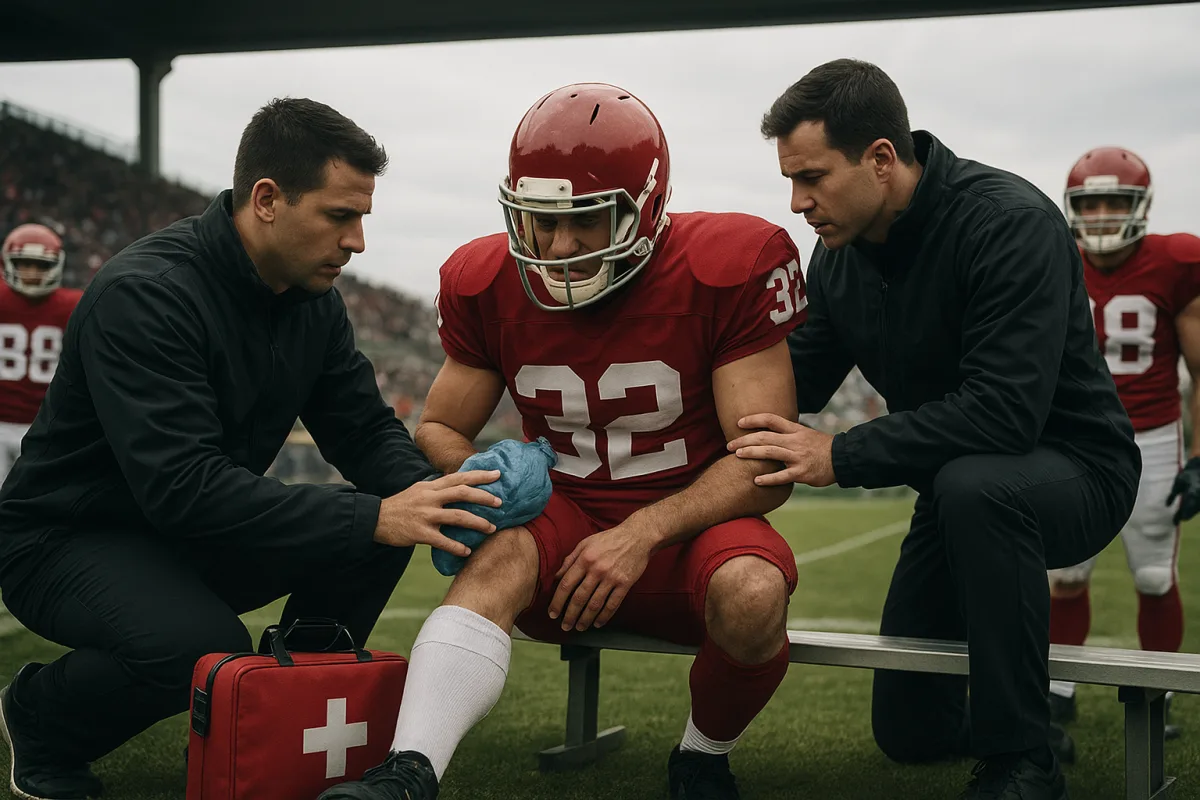
Penix took a late fourth-quarter sack from Ravens linebacker Tavius Robinson and suffered a rib injury. He returned briefly, but did not play in overtime, leaving Tua Tagovailoa to handle Atlanta’s final possession. [5][8]
That injury had immediate tactical consequences. Penix had been Atlanta’s active quarterback throughout the game, working through third-down situations with London and operating the offense’s timing concepts. Tagovailoa entered without the benefit of a normal series to settle into the game.
The broadcast sequence showed Tagovailoa complete an underneath pass to Bijan Robinson after Penix left the field, helping Atlanta preserve its chance to reach field-goal range. Penix then briefly returned before Atlanta punted to send the game to overtime. [5]
Once Baltimore consumed most of the overtime period, Atlanta’s response became more difficult. The Falcons were not merely down their starter. They were trying to answer a touchdown with limited time, against a defense that knew urgency would narrow the menu.
Tagovailoa’s final overtime pass was intercepted by Ravens safety Kyle Hamilton, ending the game. The turnover will be attached to the quarterback in the box score, but it also came after Baltimore had dictated the possession structure from the coin toss onward. [6][9]
Penix said after the game that pain worsened as he sat on the sideline and that he could not give Atlanta what it needed in that moment. He also said he did not believe the injury was long term, but that is not an official medical prognosis. [8]
The Falcons have not released a detailed severity or recovery timetable for Penix’s ribs. NFL injury reporting requires practice participation and game-status designations such as questionable, doubtful or out, not public disclosure of imaging results or treatment specifics. [4]
That means projecting his availability beyond the next injury report would be speculation. The meaningful known fact is that the injury removed him from the overtime decision point, exactly when Atlanta needed its normal quarterback operation most.
Separate the line story from the defensive-line story
Atlanta entered the game with offensive-line questions. Chris Lindstrom was listed questionable entering Week 5 and Matthews was out, conditions that naturally invite assumptions about protection and run-game problems. [1]
But the available performance data does not support a broad “the offensive line is collapsing” narrative. The Falcons carried an 84.2 offensive-line grade, second in the league through Week 5, despite the injury pressure. [2]
That ranking does not mean every short-yardage play worked or that Baltimore never won at the line of scrimmage. It means the line’s season-long work should not be used as a catchall explanation for a 30-23 overtime defeat.
The more credible injury-related concern is on defense. Za’Darius Smith was questionable and Trey Sermon had been placed on injured reserve before Week 5, while Atlanta’s defense had allowed 122 points through five games. [1][3]
The connection is not automatically causal. Defensive rankings are shaped by coverage, field position, turnovers and opponent quality. But reduced front depth makes it harder to maintain gap integrity and fresh pass-rush rotations in a game that extends into overtime.
Baltimore’s finish made that problem visible. The Ravens did not need a single 50-yard strike to beat Atlanta. They sustained the ball, forced Atlanta to defend the run, punished pressure when it created isolated coverage, and left the Falcons with too little room to recover.
That is why the final score should not be read as a simple quarterback injury story or a one-call coaching failure. Penix’s ribs mattered. So did Baltimore’s late execution. But the underlying lesson is that overtime rewards the team that can control the first possession’s clock, downs and physical terms.
Frequently Asked Questions
How did Michael Penix Jr.'s injury affect the Falcons in overtime?
Michael Penix Jr. suffered a rib injury late in the fourth quarter after a sack, briefly returned, but did not play in overtime. His injury limited Atlanta’s late-game offensive options, forcing backup quarterback Tua Tagovailoa to lead the Falcons in overtime under urgent conditions. The Falcons have not released an official severity or recovery timeline for Penix’s injury.
What was the impact of player injuries on the Falcons vs Ravens OT game?
While the Falcons had injuries on their offensive and defensive lines, their offensive line still maintained a top-tier performance (84.2 grade, 2nd in the league). Defensive struggles were more pronounced, with the Falcons ranked 21st in points allowed through five games. Penix’s rib injury specifically affected the Falcons’ quarterback situation late in the game, contributing to their challenges in overtime.
How did the Ravens capitalize on the Falcons' injury situation in overtime?
The Ravens won the overtime coin toss and chose to receive, using a run-heavy, clock-controlling offense led by backup QB Tyler Huntley. By sustaining a long possession, they limited the Falcons’ offensive snaps and forced them to respond with an injured quarterback. Baltimore’s balanced attack of short passes and runs exploited the Falcons’ defensive vulnerabilities and helped secure the win.
What role did the overtime rules play in the Falcons vs Ravens game outcome?
The NFL’s 10-minute regular-season overtime period allowed Baltimore to possess the ball first and control the clock, reducing the Falcons’ opportunities to respond. Although both teams are guaranteed a possession unless a safety occurs, the limited time and the Falcons’ injured quarterback situation meant their possession was constrained. This structural advantage was key in Baltimore’s victory.
How did the Falcons' defense perform during the Ravens' overtime possession?
The Falcons’ defense struggled to stop Baltimore’s balanced run and short passing attack in overtime. Despite earlier success with blitzes and pressure, the Ravens adjusted with protections and manageable plays, preventing the Falcons from generating effective pass-rush situations. Defensive breakdowns in gap control and tackling contributed to extended drives and ultimately the game-winning touchdown.
How we researched this
This article was assembled from 4 video sources across 2 channels, 4 published articles, 10 cited references.
Nothing here is based on hands-on testing. Where a figure or finding appears, it belongs to the source cited beside it, and the writing says so rather than implying otherwise. Every source is listed below so you can check it.
Sources
Baltimore Ravens vs Atlanta Falcons Game Highlights | 2026 NFL Season Week 5 — NFL
Can Tua Tagovailoa Save The Day In OT? Ravens vs Falcons Week 5 Ending — NFL
HC Kevin Stefanski & QB Michael Penix Jr. Post-game Press Conference | Week 5 | Falcons vs. Ravens — Atlanta Falcons
Kyle Pitts Sr, Jessie Bates III, & more speak after Sunday Night Football | Falcons Press Conference — Atlanta Falcons
NFL Week 6 Opening Odds for Every Game (Seahawks, Packers, 49ers Favored in Primetime) — Sports Illustrated
“Didn’t Do Enough”: Kevin Stefanski Points Fingers at Falcons Locker Room After OT Loss to Ravens — Yahoo Sports
NFL world reacts to Falcons' devastating loss to Ravens in OT — Falcons Wire
NFL world reacts to Falcons' devastating loss to Ravens in OT — Yahoo Sports
Falcons Collapse in Overtime Loss to Ravens Amidst Offensive Struggles - Fantasy Nerds
NFL Injury Reports Explained: Participation, Statuses and Deadlines
Falcons lose 30-23 to Ravens in overtime after Michael Penix Jr. exits with rib injury - CBS Atlanta
Ravens Excel in Clutch to Rally for ‘Incredible Win’ in Atlanta | Late for Work
Falcons' Penix suffers rib injury in OT loss to Ravens | theScore
The Ravens hacked NFL overtime to beat the Falcons - Yahoo Sports
Falcons' Missed Opportunities Prove Costly in Overtime Loss to Ravens
Watch Falcons vs Ravens OT Game and Player Injury Impact on Youtube
Also from the sources
Related Articles
Giants vs Rams Injury Impact
Analyze the Giants vs Rams injury impact in Week 2 and how key injuries changed offensive performance and game outcomes.
Week 5 NFL Game Previews and Injury Impact Analysis
Get detailed Week 5 NFL game previews with injury updates and tactical analysis to understand how player availability shapes matchups.
Washington Commanders Upset Win Over Seattle Seahawks
Detailed analysis of the Washington Commanders' upset win over the Seattle Seahawks, focusing on quarterback performance and key game factors.
NFL Week 3 Key Player Injury Analysis and Confirmed Status
Get an in-depth NFL Week 3 key player injury analysis with confirmed statuses and impact on team roles for Brian Burns, Breece Hall, and De'Von Achane.