NFL Joint Practices and Preseason Finales: Key Team Insights
Explore how NFL joint practices and preseason finales shape roster decisions and team readiness in the 2026 preseason.
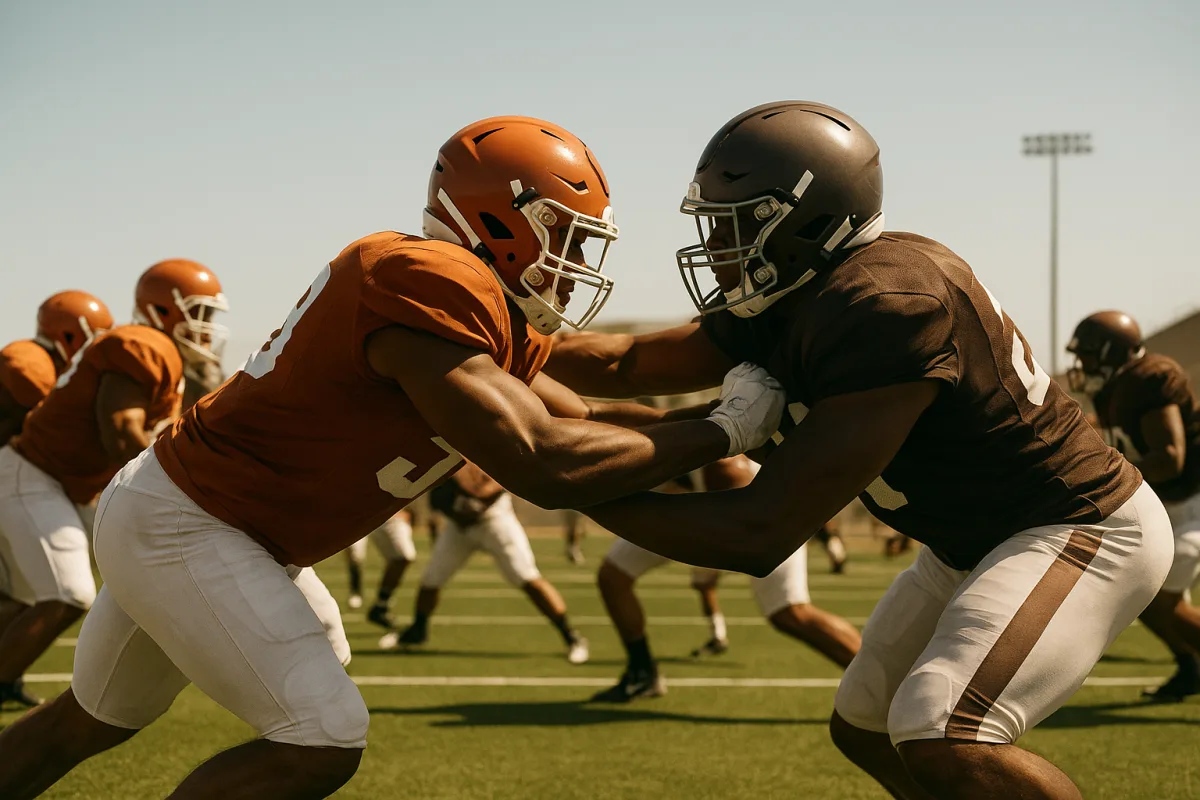
Joint Practices Are the Real Preseason Test, but Friday Still Decides the Bottom of the Roster
The quick list
Best overall: Baltimore Ravens joint-practice plan, for contenders seeking full-speed schematic work without asking established starters to absorb unnecessary preseason-game snaps.
Best value: Cleveland Browns versus Buffalo Bills, for teams sorting receiver depth, where unfamiliar coverages and blocking assignments reveal more than highlight catches.
Best for small spaces: New York Giants preseason finale, for teams with only a few unsettled roster spots, where game tape and special-teams usefulness can settle the final decisions.
Best physical-identity build: Dallas Cowboys camp model, for a team that needs its front to dictate terms, but only if the work translates into cleaner pass protection.
Best scheme-transition test: Carolina Panthers camp model, for an offense changing its play-calling structure while trying to preserve continuity for its quarterback.
What teams are actually deciding this week
The useful question is not which club “won” a joint practice. Those reports usually reduce a two-hour session to a handful of red-zone throws or one sideline confrontation. The real question is what each team needed to learn before roster cuts and Week 1.
For most starters, the answer is communication against a defense that has not spent three weeks seeing the install. For bubble players, the answer is simpler: can they function on special teams, execute without busting an assignment, and show enough on game tape for their own club or another team?
That distinction explains why 28 of 32 teams scheduled at least one joint practice in the 2026 preseason. [6] It also explains why the Detroit Lions chose the opposite route, prioritizing internal evaluation rather than arranging outside work. [7] There is no universal preseason formula because roster construction changes the calculation.
The league’s practice rules put a ceiling on how much physical preparation any club can buy. Teams may conduct up to 16 padded practices in the 2026 preseason, no longer than 2.5 hours each, with no more than three straight padded days and a four-hour total daily on-field limit. [2]
That is why a joint session matters. It is not extra football. It is a scarce padded or competitive period spent against a different set of rules, coverages, techniques and pass-rush plans.
Comparison table
| Team and approach | Primary preseason decision | Best evidence from the practice plan | Main trade-off | What the finale should decide |
|---|---|---|---|---|
| Baltimore Ravens, joint work before limited preseason action | Starter readiness and new-offense communication | Lamar Jackson cited different defensive wrinkles from Minnesota and Washington | Less live game exposure for core starters | Whether the supporting depth can execute game operations |
| Cleveland Browns, Bills joint practice | Wide receiver depth and rookie readiness | Coaches emphasized routes, blocks and off-ball effort, not only long completions | A productive practice does not replace special-teams game tape | Bottom-of-roster receiver and coverage-unit roles |
| New York Giants, Jets preseason finale | Remaining open roster spots | John Harbaugh said game tape matters for players still in the “not sure yet” category | A few snaps may not replicate regular-season pressure | Special teams and situational execution |
| Dallas Cowboys, Rams and Saints joint work | Offensive-line identity and swing tackle depth | Dallas staff highlighted reps against opposing first teams and tackle flexibility | Physical camp work cannot hide edge-speed issues in pass protection | Backup tackle reliability and line communication |
| Carolina Panthers, internal camp emphasis | Offensive transition under Brad Idzik | Head coach described Idzik’s established work with Bryce Young and the quarterback room | Smooth terminology does not prove live-game play-calling | Tempo, operation and cohesion under game conditions |
| Tampa Bay Buccaneers, Jaguars finale | Late-preseason readiness | The scheduled Jacksonville matchup follows a joint-practice week | Available reporting flags concerns but offers limited detail | Avoid broad conclusions without fuller practice evidence |
| Arizona Cardinals and Chicago Bears | Not enough supplied reporting for a supported comparison | Neither team is detailed in the provided practice reporting | Filling gaps with camp narratives would be guesswork | Evaluate their final-game participation separately |
Baltimore’s version: use opponents to expand the quarterback’s file
The Baltimore Ravens offered the clearest explanation of why joint practices have become central to modern camps. Lamar Jackson said Minnesota and Washington presented related structures with different wrinkles, forcing the offense to identify coverage and react rather than operate from accumulated familiarity. That is the point of the exercise.
Jackson’s comments matter because they identify a limitation of camp statistics. A completion in a Ravens-only practice might show timing, but it can also be a quarterback and receiver recognizing every coverage check their own defense has used throughout August. A new opponent changes that.
The Ravens’ approach is best suited to a veteran contender whose principal players do not need 40 preseason snaps to prove they can play. They need a meaningful volume of calls, checks and protection communication against unknown looks. Those are different things.
Still, joint work is not the same as a game. Jackson himself framed the value as progress and chemistry, not as proof Baltimore is ready. He said he does not judge what the team is “about” during camp. That is the correct reading. Practice can expose problems, but it cannot settle them.
Cleveland’s version: the receiver evaluation is in the snaps without targets
The Cleveland Browns’ work against Buffalo supplied the best tape-based reminder that preseason receiver evaluation is not a receiving-yardage contest. Cleveland celebrated rookie Casey Concepcion’s two long catches, but its coaches emphasized how he played away from the ball, ran routes and finished blocks.
That is exactly what should decide a depth receiver battle. Long completions have value, particularly when a rookie creates separation against unfamiliar defensive backs. But an offense cannot disguise play-action, threaten the edge or keep its personnel flexible if its wideouts tip run versus pass with indifferent effort.
Cleveland also has a useful contrast inside its own room. Isaiah Bond’s speed has reportedly shown up in and out of breaks, while veteran Tylan Wallace brings familiarity with offensive coordinator Todd Monken’s system and a four-core special-teams background, according to the Browns’ team production. Those are separate roster cases.
Bond’s path is offensive stress on a defense. Wallace’s path is role flexibility, special teams and knowing all three receiver positions. The final preseason game should not ask which player produced the flashier clip. It should ask whether the club can afford either player’s limitations in a 46-man game-day construction.
Dallas has made physicality the point, but the tackle tape remains the point
The Dallas Cowboys have put more emphasis on padded work under Brian Schottenheimer, according to the Cowboys’ own camp coverage. The stated goal is to become a team that dictates contact rather than absorbs it, and that is a reasonable correction for an offense built around a talented skill group.
Dallas used joint periods against the Los Angeles Rams and New Orleans Saints to get first-team work that its stars may not receive in preseason games. That gives Dak Prescott, CeeDee Lamb and George Pickens a more useful competitive setting than an abbreviated August cameo.
But the bigger Dallas issue is not whether the offense can generate explosive plays in a controlled practice. It is whether the tackle group can survive obvious passing situations. Team coverage identified Terence Steele as a strong forward-moving run blocker whose vulnerability comes when speed rushers can isolate him.
That is a scheme issue, not merely an individual critique. If Dallas can establish the run, use play-action and keep Steele attacking, it can make his best trait relevant. If early deficits force straight dropback football, the edge rusher gets the preferred geometry.
The swing-tackle competition deserves equal attention. Dallas moved rookie Drew Shelton from right tackle to left tackle and shifted Nathan Thomas across the formation, seeking one reserve able to function on both sides. A clean preseason box score will not answer that question. Pressures allowed, communication errors and snap-to-snap assignment reliability will.
The Cowboys-Saints work also supplies the caution against romanticizing joint practices. Their August 18 session in Oxnard produced multiple fights, and both teams were fined $500,000, according to reporting cited by The Washington Post. [5] Competition is valuable. Losing control of practice is not.
Carolina’s central issue is organizational, not merely physical
The Carolina Panthers are not just measuring whether their roster can play a more physical brand. They are also testing how the offense functions after the head coach transferred play-calling responsibility to Brad Idzik.
Carolina’s camp production shows why the staff believes the transition can be smooth. The head coach said Idzik has spent extensive time with Bryce Young in the quarterback room and has long been involved in the offensive process. That continuity matters more than the title change.
But continuity does not remove the test. A coordinator can know the system and still need live repetitions managing sequence, tempo and response after an unfavorable down. The preseason finale is useful if Carolina lets the offense operate through those details rather than treating it as a collection of individual auditions.
The Panthers’ emphasis on pads and physical running also carries a measurable standard. The offense should be judged by whether its front creates displacement and whether its receivers and tight ends sustain blocks, not by camp slogans about toughness.
The Giants’ finale is for the players who cannot be hidden
New York Giants coach John Harbaugh put the roster logic plainly before the Jets finale: some jobs remain unsettled, and game tape can also put a player on another team’s radar. His other point was just as important, special teams is usually the common denominator for the final roster spots.
That should shape how the game is watched. A receiver making three catches may help himself, but a receiver who covers kicks, blocks correctly and aligns properly across multiple units offers the roster flexibility coaches need. The same is true for reserve linebackers, safeties and running backs.
Harbaugh also described the starter decision accurately as a risk-reward balance. A series of six to 10 plays may provide limited value, but a month without a live game environment is also a real concern. Neither side of that argument is irrational.
The Giants’ recent joint-practice context reinforces the risk. Their session with Miami ended in a fight involving quarterback Jameis Winston, with both teams fined $500,000. [5] Joint practice can produce controlled situations, but it is not automatically calm, safe or clean.
What not to claim about joint practices
It is fair to say joint practices create unfamiliar looks and targeted evaluation opportunities. It is not fair to say they are demonstrably safer than preseason games in 2026. The NFL has not released data comparing injury rates between those settings. [3]
The broader safety framework is real. The 2011 collective bargaining agreement placed restrictions on contact, and a study of injury data found no significant post-CBA increase in injuries. [1] But that finding does not resolve the narrower question of joint-practice versus game risk this summer.
Nor should observers invent travel explanations for final preseason games. Reporting has identified broader travel burdens for certain clubs, but the supplied research does not establish detailed team-by-team accommodation or facility issues related to joint practices. [4] Stick to football evidence, not presumed logistics.
The Tampa Bay Buccaneers’ finale against Jacksonville is an example of why restraint matters. The available SB Nation excerpt says the joint-practice week raised concerns, but it does not provide enough detail to identify a scheme failure, a specific personnel problem or a definitive winner. The right conclusion is that more tape is required.
Arizona and Chicago belong in the larger league-wide conversation because joint practices now touch most of the league, but the supplied reporting does not provide comparable camp detail for either club. A responsible preseason roundup should leave that space unfilled rather than manufacture analysis from team branding.
Who each option suits
Baltimore suits veteran teams protecting stars. The Ravens’ model works when a quarterback and established core need coverage recognition, communication and chemistry more than preseason-game volume.
Cleveland suits teams with crowded skill-position rooms. The Browns’ model is useful when coaches must distinguish between a receiver’s splash-play ability and his value as a blocker, route runner and special-teams contributor.
New York suits teams with only a handful of genuine open jobs. The Giants’ finale framework puts the remaining candidates in a setting where game operations and special teams can make the difference.
Dallas suits teams rebuilding a physical offensive identity. The Cowboys have used their allotted practice intensity to stress the line, but their final evaluation must focus on pass-protection survivability, especially at tackle.
Carolina suits teams changing responsibility without rebuilding terminology. The Panthers can use the finale to test Idzik’s game-management rhythm with Young, while maintaining the offensive language already installed.
Tampa Bay suits a wait-for-tape approach. With only a brief report on the Jaguars week, the appropriate evaluation is narrow: watch the finale, identify the personnel groups used, and avoid reading a vague concern as a settled problem.
Arizona and Chicago suit no firm recommendation from this evidence set. There is not enough sourced material here to compare their joint-practice structure or final-game priorities responsibly.
Frequently Asked Questions
How do NFL joint practices affect preseason roster decisions?
Joint practices provide teams with a more competitive and varied environment to evaluate starters and new schemes against unfamiliar defenses. They help coaches assess communication and execution under live conditions without exposing key players to excessive preseason-game snaps. For bubble players, joint practices offer a chance to demonstrate special-teams ability and assignment discipline, but final roster decisions often rely on game tape from the preseason finale.
What is the role of preseason finales in NFL team evaluations?
Preseason finales primarily serve as auditions for players competing for the final roster spots, especially receivers, backup linemen, and young defenders. These games allow coaches to evaluate special-teams contributions and situational execution over a full game, which joint practices may not fully replicate. The finale helps settle decisions about depth players who must prove consistency under game conditions.
Why are joint practices considered better tests than preseason games?
Joint practices create more competitive snaps against unfamiliar coverages and fronts than preseason games, where many starters see limited action. They allow teams to conduct full-speed schematic work and test communication and recognition skills in a controlled but challenging environment. This makes joint practices a more effective setting for evaluating starter readiness and implementing new offensive or defensive schemes.
Which NFL teams use joint practices to prepare starters in 2026?
In 2026, 28 of 32 NFL teams scheduled at least one joint practice to prepare starters and evaluate schemes. Notable examples include the Baltimore Ravens, who used joint practices to expose quarterback Lamar Jackson to different defensive wrinkles, and the Dallas Cowboys, who focused on offensive-line identity and pass-protection questions. The Carolina Panthers also used joint practices to test their offensive transition under new play-calling.
What are the risks and benefits of NFL joint practices compared to preseason games?
Joint practices offer benefits such as controlled, competitive environments that help evaluate starters and new schemes without requiring extensive preseason-game snaps. However, there is no 2026 injury data proving that joint practices are safer than games. In fact, several joint practices in 2026 involved fights, ejections, and league fines, indicating that these sessions can be physically intense and sometimes contentious, similar to or even exceeding the risks of preseason games.
How we researched this
This article was assembled from 5 video sources across 5 channels, 1 published article, 7 cited references.
Nothing here is based on hands-on testing. Where a figure or finding appears, it belongs to the source cited beside it, and the writing says so rather than implying otherwise. Every source is listed below so you can check it.
Sources
LIVE: Cowboys Night | 8-26-26 | Dallas Cowboys 2026 — Dallas Cowboys
Panthers Blueprint: Training Camp 2026 | S4E2 | Carolina Panthers — Carolina Panthers
John Harbaugh: ‘There are still spots up in the air’ | New York Giants — New York Giants
Wideouts Part 2: Fortifying Depth — Cleveland Browns
Lamar Jackson Says Joint Practices Are 'Extremely Valuable' | Baltimore Ravens — Baltimore Ravens
Tampa Bay Buccaneers news: Joint practice with Jaguars raises concerns — SB Nation
NFL Injuries Before and After the 2011 Collective Bargaining Agreement (CBA)
NFL 2026 Preseason Training Camps: Where the Season Is Forged Before It Begins
Preseason Injury Reduction | Latest NFL News, Analysis & Updates | NFL.com
Tempers are flaring, fists are flying around the NFL during joint practices | FOX Sports
Everything to Know About the NFL’s 23 Joint Practices in 2026
Watch Joint Practices and Preseason Finales Across NFL Teams on Youtube
Also from the sources
Related Articles
Evaluating NFL Preseason Joint Practices and Final Games
Learn how to evaluate NFL preseason joint practices and final games for player performance and roster decisions.
New York Giants Roster Cuts and Preseason Finale Analysis
Detailed analysis of the New York Giants' 2026 preseason finale and roster cuts, including key player evaluations and roster decisions.
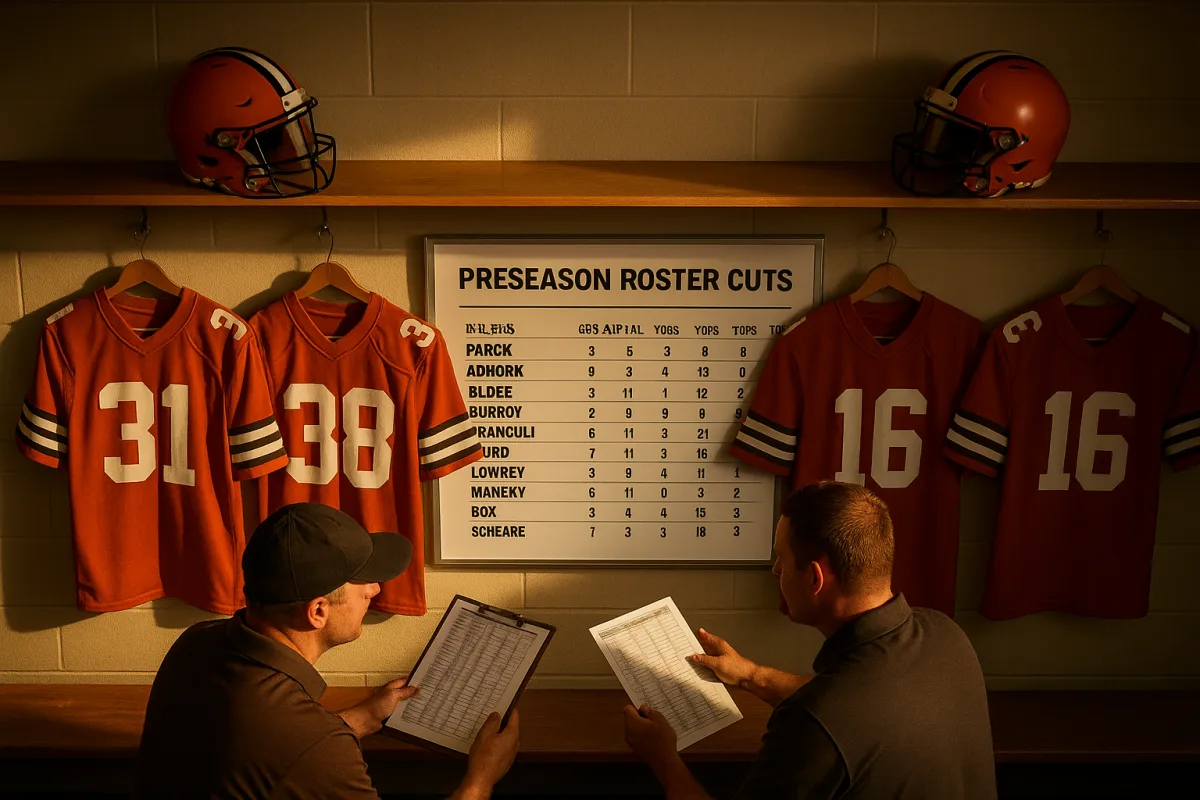
Cleveland Browns Preseason Roster Cuts and Player Analysis
Detailed Cleveland Browns preseason roster cuts and player performances shaping the 2026 team ahead of the final 53-man deadline.
Giants Roster Moves and Odell Beckham Jr. Status Explained
Explore the Giants' roster moves and Odell Beckham Jr.'s status, focusing on practice squad roles and special teams impact.