
Seattle Seahawks Ownership Change and Future Outlook
Explore the Seattle Seahawks ownership change to the Khosla Group and what it means for the team's future and football operations.
The ownership change is real, and the reporting is converging
The Seattle Seahawks are changing hands after 29 years under the Allen family, with Vinod Khosla and the Khosla Group taking control of the franchise. The sale agreement was announced July 11, and NFL ownership approval arrived August 26. [1]
That matters because NFL sales do not move on headlines alone. A controlling-interest transaction requires unanimous approval from the league’s other owners, which makes the August vote the meaningful checkpoint rather than the initial report of a deal. [1]
Axios characterized the transaction as a record $9.6 billion sale, while Al Jazeera also reported a record Seahawks sale to the Khosla Group. [1][10] Separate outlets landing on the same basic terms is the evidence that this has moved beyond the exploratory phase.
The remaining procedural point is closing, which reporting indicated was expected before Seattle’s September 9 regular-season opener. [1] Detailed financing terms, individual minority stakes, and governance structure within the Khosla Group have not been publicly established.
That absence is worth stating plainly. A $9.612 billion valuation tells us what buyers agreed to pay for the asset, but it does not reveal how aggressively the group intends to spend on football operations, real estate, or future capital projects.
The price is a franchise-value signal, not a football verdict
The headline number is $9.612 billion, a record for an NFL franchise sale. [1] That valuation reflects the league’s national media economics, Seattle’s market position, the Seahawks’ brand, and the scarcity of available controlling stakes.
It should not be read as a scouting report on the roster. Ownership valuations are not built from one offseason’s free-agent class or a coordinator’s coverage menu, and they certainly do not guarantee a better third-down offense next month.
The football side of the organization is coming off a period in which head coach Mike Macdonald’s staff has emphasized continuity and player-led accountability. Seattle’s own Training Camp Central programming showed the club’s leadership council operating as a veteran sounding board for Macdonald’s staff.
That is not independent proof of organizational health. Team-produced footage is designed to show access and culture, not to audit personnel power. Still, it does show the present football operation has existing structures rather than a vacuum for new ownership to fill.
The cleanest short-term reading is that Khosla bought an established NFL operation, not a distressed rebuild. Pro Football Talk reported that Khosla framed the job as sustaining winning and pursuing another Super Bowl, language that points toward continuity rather than disruption.
Words from a new owner are not a cap-management plan. Until Seattle changes the general manager’s authority, restructures reporting lines, or alters the coaching staff, there is no evidence that the purchase itself changes the team’s weekly football process.
Why this is happening now
The timing is not accidental. NFL franchise values have climbed sharply, and the league broadened the pool of available capital when it permitted certain private-equity investments in teams beginning in 2024. [4]
That policy change does not mean private equity is necessarily part of the Seahawks’ new ownership structure. No public report has detailed the Khosla Group’s financing, minority partners, or whether institutional capital will hold any permitted stake.
It does mean buyers can approach NFL ownership in a more flexible market than existed several years ago. The league remains restrictive about control, but the financial ecosystem around a team is wider than it was during the Allen family’s early ownership years.
Khosla also arrives with a relevant, if limited, NFL ownership history. He held a 3.1 percent minority stake in the San Francisco 49ers, acquired at an $8.5 billion valuation in 2025, and was required to divest that stake as part of the Seahawks purchase. [9]
That background demonstrates familiarity with NFL ownership rules and the league’s business environment. It does not demonstrate how he will run Seattle, because a minority investment provides little evidence about decisions on coaches, facilities, ticketing, or long-term football strategy.
The technology connection will invite predictable assumptions about data, innovation, and efficiency. Those assumptions may eventually prove accurate, but there is no reported public strategy from Khosla or the Seahawks tying his venture-capital background to a specific club initiative.
What changes for the football operation
The immediate football question is not whether a new owner can identify a slot blitz or diagnose a split-safety disguise. It is whether ownership changes the decision-making chain between Macdonald, the personnel department, and the business side.
There is no reporting that it has done so. That is important because ownership transitions often create noise around coaches and executives before there is any actual change in their authority, budget, or roster-building timeline.
Seattle’s camp coverage has centered on repetition, standards, and leadership rather than a new ownership message. In the Seahawks’ Training Camp Central feature, coaches and players repeatedly described the work in terms of running the existing process forward.
That language can be boilerplate, but the football context matters. Teams rarely install a new culture through an ownership press release in August, especially when training camp reps, injury management, special-teams roles, and the bottom of the roster are being settled.
The tape-level version of this is simple: schemes improve through player execution, coaching detail, and roster fit. A new owner can fund facilities, staff, and retention over time, but cannot create a cleaner red-zone plan or more efficient pass rush overnight.
Seattle’s recent on-field identity under Macdonald has been built around communication, situational discipline, and flexible defensive answers. The organization’s own camp footage highlighted veterans participating in leadership decisions, which fits a staff still establishing its standards.
Again, that is not proof those standards will translate to wins. It does suggest that the franchise has a defined football direction already in place, making an immediate philosophical overhaul less likely than a gradual ownership influence behind the scenes.
Lumen Field is the larger long-term issue
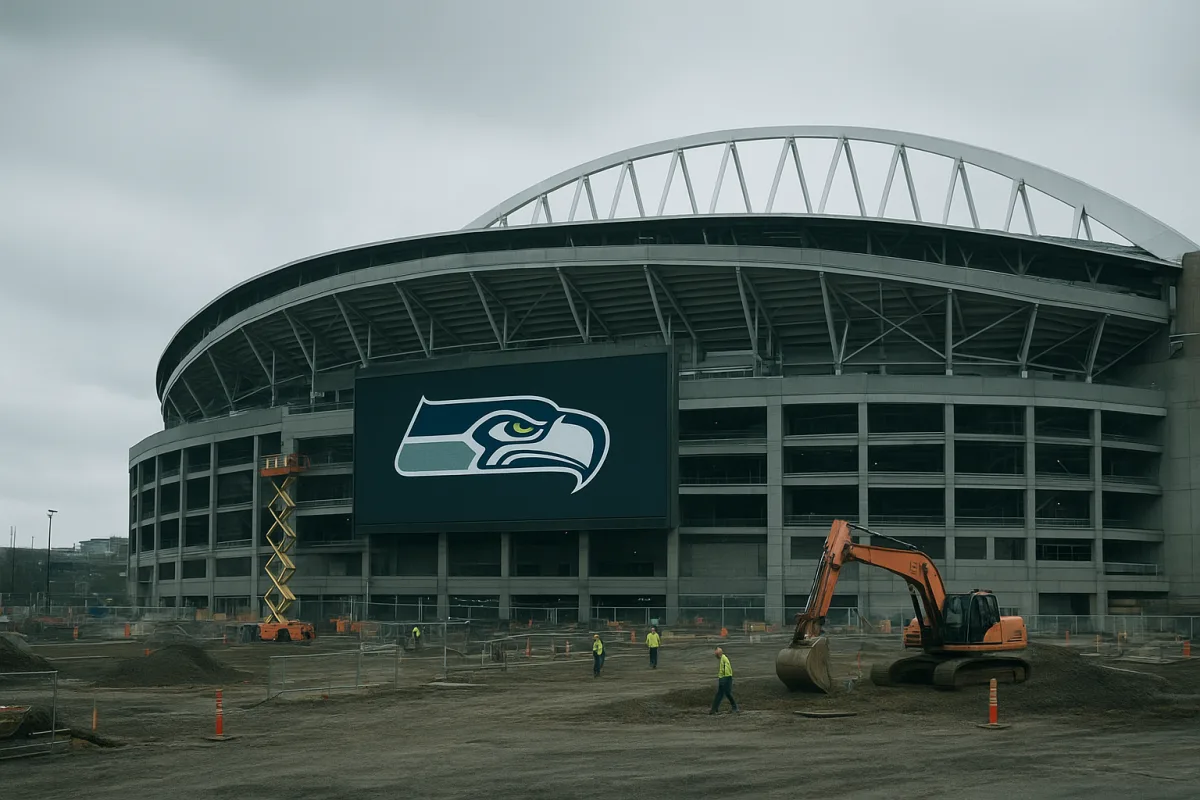
The most consequential future question is likely the stadium, not the depth chart. Lumen Field is owned by the Washington State Public Stadium Authority and operated by the Seahawks’ parent company, creating a different set of negotiations than a privately owned venue.
Khosla told Pro Football Talk that it was too early to discuss a renovation or replacement, while expressing interest in preserving what he called an iconic part of the Seahawks brand. That is a cautious answer, not a stadium commitment.
The building is already part of broader regional planning because of the 2026 World Cup. Washington allocated $19.4 million in 2025 for World Cup-related renovations, including natural-grass installation and seating upgrades, while FIFA required stadium branding changes during the event. [3]
Those projects do not settle Seattle’s NFL stadium future. They do, however, complicate any simplistic claim that the new owners can immediately choose between “doing nothing” and building an entirely new venue.
The NFL is also requiring stadium playing surfaces to meet new standards by 2028 as part of its player-safety push. [2] The practical implications for each club will depend on local facilities, leases, surface decisions, and construction schedules.
A new stadium remains possible in the abstract, but the evidence for a Seahawks replacement plan is thin. Reporting on the issue has emphasized the cost, land constraints, and political challenges that would confront any effort to build a new Seattle facility. [7]
The broader NFL market offers a reminder of the scale involved. Jacksonville’s stadium agreement calls for a $1.4 billion project shared by the Jaguars and the city, illustrating that modern venue plans require public negotiations, private capital, and years of planning. [6]
Seattle also has a separate stadium conversation involving the Sounders, whose ownership group has sought new investment while showing interest in a future venue. [8] That does not mean the Seahawks and Sounders will pursue the same project, but it reinforces regional demand for facility planning.
For fans and local policymakers, the useful indicator will be formal action: lease discussions, public funding requests, land options, design studies, or announced capital commitments. Until one of those appears, stadium-move talk remains a trend line, not a plan.
What to watch instead of forcing a narrative
The first real ownership tells will be administrative. Watch whether the Khosla Group retains existing football leadership, adds executives with stadium or commercial-development backgrounds, or changes the club’s reporting structure after the sale closes.
Watch spending patterns over more than one offseason. A single veteran signing can be about a roster need, while sustained investment in staff, facilities, player retention, and football operations says more about ownership priorities.
Watch the stadium calendar, too. The World Cup preparations, future playing-surface requirements, and Lumen Field’s public ownership create deadlines and negotiation points that will force more concrete answers than introductory ownership comments. [2][3]
What should not be overstated is the fan reaction. As of late August, there has been no meaningful public reporting establishing a broad Seahawks fan consensus on the sale, so claims about community excitement or distrust would be projection.
The Seahawks have a new owner, a record valuation, and a credible long-term stadium question. They do not yet have a documented new football doctrine, a confirmed facility plan, or an ownership strategy that can be measured from the outside.
Frequently Asked Questions
Who is the new owner of the Seattle Seahawks?
The new owner of the Seattle Seahawks is Vinod Khosla and the Khosla Group. This ownership change ended the Allen family’s 29-year tenure. Family members Neeru, Nina, and Neal Khosla are also involved in the new ownership group.
What does the Seahawks ownership change mean for the team?
The ownership change is a completed transaction approved unanimously by NFL owners, signaling a stable transition rather than speculation. It marks a record $9.612 billion sale but does not inherently indicate immediate changes to football operations or team strategy.
How will the Khosla Group's purchase affect Seahawks football operations?
In the short term, football operations are expected to remain stable with no reported plans for coaching, front-office, or roster changes before the 2026 season opener. The new ownership has emphasized sustaining winning and pursuing another Super Bowl, suggesting continuity rather than disruption.
What is the value of the Seattle Seahawks franchise after the sale?
The Seattle Seahawks franchise was sold for a record $9.612 billion, reflecting the league’s media economics, Seattle’s market, and the team’s brand. This valuation is a financial signal and should not be interpreted as a direct assessment of the team’s on-field prospects.
Are there expected changes to the Seahawks coaching or roster after the ownership change?
No evidence currently suggests changes to the coaching staff or roster as a direct result of the ownership transition. The existing coaching staff under Mike Macdonald has focused on continuity and player leadership, and no public plans indicate a reset before the 2026 season opener.
How we researched this
This article was assembled from 1 video source, 5 published articles, 10 cited references.
Nothing here is based on hands-on testing. Where a figure or finding appears, it belongs to the source cited beside it, and the writing says so rather than implying otherwise. Every source is listed below so you can check it.
Sources
Previewing The 2026 Season, Nashville Trip Recap & Hard Knocks Ep.4 | Training Camp Central — Seattle Seahawks
Vinod Khosla: Seahawks' task is simple, keep winning and get another Super Bowl — Pro Football Talk
NFL champions Seattle Seahawks sold to Khosla Group for record $9.6 billion — Al Jazeera
New Seattle Seahawks owners address potential stadium move after NFL meeting — Yahoo Sports
Vinod Khosla: Seahawks' task is simple, keep winning and get another Super Bowl — ProFootball Talk on NBC Sports
NFL mandates playing surfaces for all stadiums meet new standards by 2028 to enhance player safety
As FIFA forces stadiums to change names, one embraces its bland new brand - The Washington Post
NFL Owners Approve San Francisco 49ers, LA Chargers’ Sale of Minority Stakes - Bloomberg
NFL owners approve sale of Seattle Seahawks to Khosla family
Seahawks’ next owners may want a new Lumen Field. Good luck getting it.
Seattle Sounders seek new investor as club interested in new stadium
Watch Seattle Seahawks Ownership Change and Future Outlook on Youtube
Related Articles
Washington Commanders Upset Win Over Seattle Seahawks
Detailed analysis of the Washington Commanders' upset win over the Seattle Seahawks, focusing on quarterback performance and key game factors.
Seattle Seahawks 2026 Season Preview and Coach Mike
Get a detailed Seattle Seahawks 2026 season preview with insights on Coach Mike Macdonald, roster changes, and key player roles.
Los Angeles Rams and Chargers Week 6 Outlook and Analysis
Get a detailed Week 6 outlook for the Los Angeles Rams and Chargers, including key challenges, player analysis, and game predictions.
Aaron Rodgers and Steelers Injury Challenges Impacting
Explore how Aaron Rodgers and the Steelers are managing wide receiver injuries and their effect on the 2026 offense.