
SEC Big Ten Ban NFL Players Returning to College Football
Explore the SEC and Big Ten bans on NFL players returning to college football and how eligibility and roster rules impact schools and athletes.
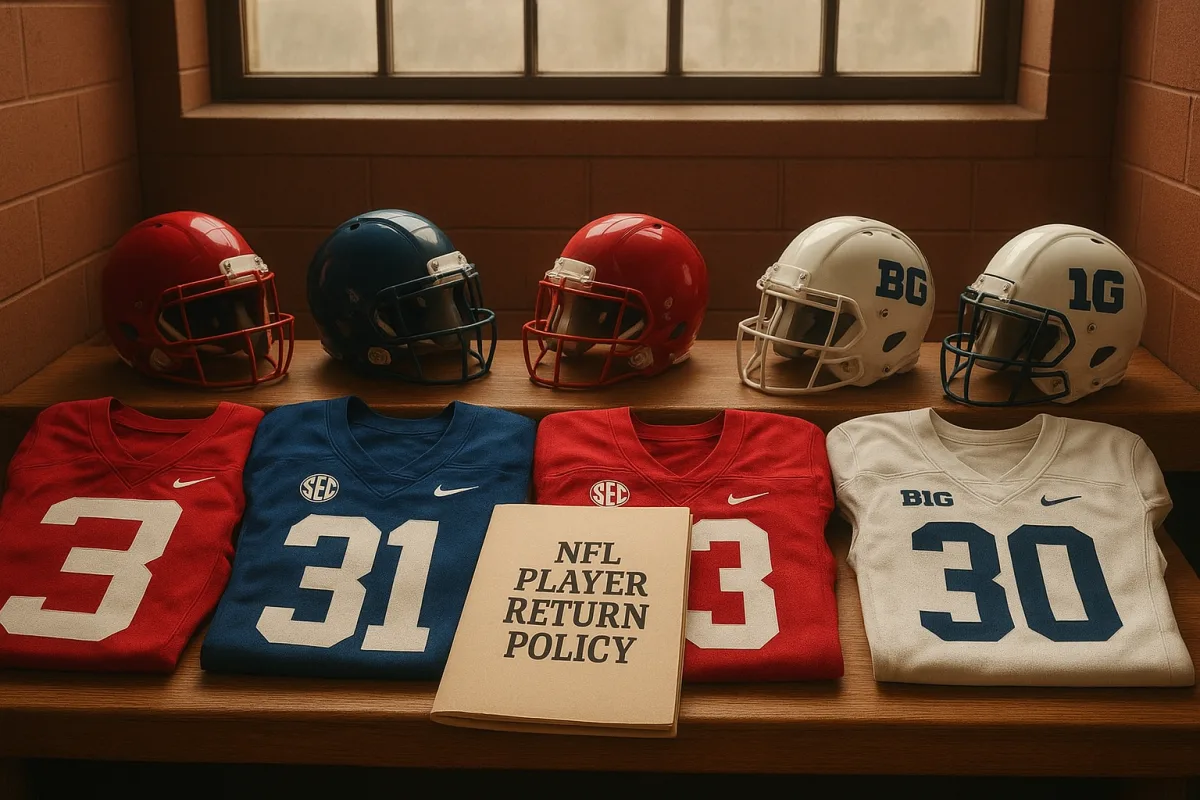
SEC and Big Ten Bans Are Not Really About NFL Returnees. They Are About Who Controls Eligibility.
The important change is not the player, it is the enforcement target
The first reading of the SEC and Big Ten decisions is simple: a player who has reached the NFL cannot come back and play college football.
That is close to the rule, but it misses the mechanism that matters. Neither conference has solved the underlying eligibility fight. Each has instead created a conference roster rule and aimed enforcement at its own schools.
That distinction is why the bans, adopted Aug. 25, remain legally unsettled even though the language is direct. Courts have temporarily allowed certain former NFL players, including Dae’Quan Wright and Zxavian Harris, to pursue college eligibility despite the new conference policies. The NCAA is appealing relevant rulings, which means the actual answer will not come from a conference press release alone. [1]
For NFL readers, think of the difference between the league declaring a player ineligible and the league disciplining a club for putting that player on the active roster. The first is an eligibility judgment about the athlete. The second is a governance fight between the league and its member franchises.
The SEC and Big Ten have chosen the second route.
That is the concept to understand here: the conferences are regulating institutional behavior, not necessarily extinguishing a player’s court-recognized eligibility.
What each conference actually banned
The Big Ten’s rule applies to football, effective Aug. 25. A player cannot maintain eligibility at a Big Ten school if he has signed a professional contract, appeared on a professional roster, or declared for the NFL Draft as an underclassman and failed to withdraw properly. [2]
The wording covers more than the player who made a 53-man roster and spent a season in the league. It also captures a player whose NFL experience was much shorter, such as a signed contract or an appearance on an offseason, preseason, practice, or other professional roster. The intent is to close the obvious workaround: a player cannot say he was never really an NFL player because he did not take a regular-season snap.
The SEC went further. Its policy applies across sports, not merely football. Under the SEC rule, a member school may not roster an athlete who:
- Declared for the NFL, NBA or WNBA draft and did not properly withdraw.
- Signed with the NFL or another professional football league, the NBA or G League, or the WNBA or an affiliated team.
- Appeared on a roster in any of those professional systems. [4]
So while the Big Ten’s immediate concern is football, the SEC has built a wider professional-return barrier that reaches men’s basketball and women’s basketball as well. The Big Ten has indicated it could consider restrictions in other sports later, but that expansion has not happened yet. [5]
The broad language is deliberate. College sports has already seen eligibility cases involving athletes in pro-adjacent environments, overseas leagues, developmental leagues and short-term contracts. A rule that only said “NFL veteran” would invite argument over every line on a transaction wire. A rule keyed to draft declaration, contract status and roster appearance gives a conference three more identifiable triggers.
Still, identifiable is not the same as simple.
Why the athlete can have a court order and still create a problem for his school
The current dispute grew from litigation concerning members of the high school class of 2022. The core claim is that this group should have received five seasons of eligibility under rules later applied more broadly. Courts have issued temporary relief for some athletes, allowing them an additional year and, in some cases, allowing athletes who had moved into professional football to return to college. [1]
That is how a situation that sounds absurd on its face became real. This is not, at least in the cases at issue, a blanket invitation for every player cut in August to choose between an NFL practice squad and a Power Four roster.
NFL reporter Albert Breer explained on NBC’s Dan Patrick Show that the players returning currently are operating under temporary restraining orders, not an automatic rule for every player released by an NFL club. That qualifier is essential. A player being waived at the end of training camp does not, by itself, establish new college eligibility.
LSU coach Lane Kiffin, speaking on The Pat McAfee Show, framed the affected athletes as a specific class covered by court orders, rather than established professionals returning after NFL seasons. He also said other schools recruited players in that category. That is a self-interested position from a coach whose program had an immediate roster interest, but it correctly identifies the legal hinge: the returnees claim their college eligibility existed all along and was improperly withheld.
The conference response does not directly erase that claim. Instead, it tells a member institution: even if an athlete says a court has cleared him, do not put him on your roster if he crosses one of our professional-participation lines.
That is where the potential conflict begins.
A court order may protect an athlete’s ability to compete under NCAA eligibility rules. The SEC or Big Ten may answer that its members voluntarily agreed to conference rules that are narrower or more restrictive. The school then sits in the middle, deciding whether to follow the court’s temporary relief, follow conference policy, or seek clarification before a player takes a snap.
There is no public, fully developed procedural map for resolving those collisions. Reporting on the new rules identifies potential fines and suspensions for institutions and coaches, but neither conference has publicly detailed the process for investigations, appeals, emergency waivers, or the exact penalty scale. [3]
That missing process matters more than the headline.
The real roster cost is uncertainty, not merely one scholarship
College coaches do not build a roster the way NFL clubs do in midseason. An NFL team can adjust its 53-man roster, elevate a practice-squad player and reconfigure its gameday actives within a rigid but familiar transaction system. A college program has scholarship limits, revenue-sharing arrangements, academic enrollment timing, transfer-portal windows, position-room planning and a practice calendar that does not pause for litigation.
Now add a player whose availability could be affected by an injunction, a conference penalty threat or an appellate ruling.
That player is not just a depth-chart addition. He is a roster-management risk.
Take the LSU example. The school’s planned addition of former Cleveland Browns tight end Dae’Quan Wright helped turn this from an abstract eligibility debate into a live SEC issue. The SEC policy appears to bar his addition because it prohibits rosters from carrying athletes who signed professional contracts or appeared on professional rosters. [3]
At tight end, that affects more than one player. It changes how many reps go to the returning player during camp, who is taking first-team snaps in heavy personnel, which younger player loses developmental work, and whether the staff alters its special-teams plan. A program cannot simply treat the player as a harmless extra body if there is a possibility he will be removed after the staff has redistributed practice reps.
That is the snap-count version of this debate.
If Wright gets 25 meaningful practice reps a day in the primary offensive install, those are 25 reps not going to a sophomore who may need to play in September. If the player is later ruled unavailable, the lost development is not restored by a scholarship opening. Players need the reps in protections, route adjustments, motion rules and situational calls. The depth chart may show the same number of names, but the quality of the preparation has changed.
That is also why conference leaders moved quickly. They are trying to prevent a one-year legal exception from becoming a recurring roster market. If schools believe experienced players can test the NFL, return under an injunction, and then collect college compensation, every August becomes a second portal window with professional alumni eligible to enter it.
The Big Ten and SEC view that as a threat to the structure of their leagues. Whether they have the legal authority to stop it is a different question.
The narrative that every returnee is getting an unfair football advantage is too easy
A player who spent an NFL offseason does bring something back to college. He has seen the pace of a professional install, learned the standard of meeting preparation, and competed against older players. Kiffin argued on The Pat McAfee Show that such players can return with a clearer understanding of what the NFL demands and can communicate that standard to younger teammates.
There is truth there, especially in meeting rooms and practice habits. NFL training camps force players to process terminology quickly, master adjustments and survive a sharper depth chart.
But the football benefit should not be overstated. An NFL camp is not a developmental cheat code. Many players return because they were not retained by the club, and a few weeks in a pro environment does not automatically make someone better at college football. The player still has to learn a new playbook, fit the program’s run game and protections, and earn snaps.
The actual advantage is usually experience at a scarce position. A proven tight end, offensive lineman, quarterback or corner can change a room because the roster has fewer ready answers there. That is not unique to NFL returnees. It is the same reason programs attack the transfer portal for veteran starters.
The conference bans are meant to stop a particular source of veteran supply, not to solve the basic incentives behind modern roster construction.
What happens next
The SEC and Big Ten have made their preference clear. The SEC’s rule is especially comprehensive, reaching NFL, NBA, WNBA and affiliate-league pathways. [4] But a preference written into a conference policy is not necessarily the final legal word when a court has temporarily granted a player relief.
The ACC and Big 12 had not adopted matching policies as of late August, despite expectations that those leagues would discuss the question. [1] That leaves uneven rules across major conferences, which is precisely the type of inconsistency that produces more litigation and more aggressive roster planning.
There are also no public figures showing how these bans will affect scholarships, school budgets, roster limits or player compensation. Those costs are real in planning terms, but the conferences have not quantified them. [1]
The larger fight is over control. Congress is considering the Protect College Sports Act, legislation supporters hope would give college sports stronger protection from eligibility-related antitrust challenges. [1] Until there is either a durable legal ruling or federal legislation that changes the landscape, the SEC and Big Ten bans are best understood as a forceful defensive call, not a completed stop.
The conferences have set the edge. The courts are still deciding whether the ball carrier can turn it.
Frequently Asked Questions
What are the SEC and Big Ten rules banning NFL players from returning to college football?
The Big Ten rule, effective August 25, 2026, prohibits football players from maintaining eligibility if they have signed a professional contract, appeared on a professional roster, or declared for the NFL Draft as underclassmen without properly withdrawing. The SEC’s policy is broader, applying across multiple sports, and bans athletes who declared for the NFL, NBA, or WNBA drafts without withdrawing, signed contracts with those leagues or affiliates, or appeared on their rosters. Both rules target institutional roster management rather than directly adjudicating player eligibility.
How do SEC and Big Ten bans affect athletes with NFL experience returning to college sports?
The bans prevent member schools from placing athletes with professional experience on their rosters, even if courts have temporarily allowed some former NFL players to pursue college eligibility. This creates a conflict where a player’s court-recognized eligibility may exist, but the conferences’ roster rules bar schools from officially including them. Schools must decide whether to follow court orders or conference policies, which can lead to suspensions or fines.
Can a player with a court order still be barred by SEC or Big Ten from playing college football?
Yes. Although courts have issued temporary relief for some players, the SEC and Big Ten rules regulate member institutions’ roster decisions independently. This means a school may be prohibited from rostering a player despite a court order affirming that player’s eligibility, placing the institution in a difficult position regarding compliance and potential penalties.
What is the difference between NCAA eligibility and conference roster rules for NFL returnees?
NCAA eligibility concerns whether a player is allowed to compete under NCAA rules, which can be subject to court rulings and appeals. In contrast, the SEC and Big Ten bans are conference-level roster rules that regulate whether member schools can place certain players on their teams. These conference rules focus on institutional governance and may be stricter than NCAA eligibility determinations.
How do SEC and Big Ten bans impact college football roster management and scholarships?
The bans restrict schools from recruiting or rostering athletes who have professional experience as defined by the conferences, limiting the pool of eligible players. This represents a significant change in roster-building strategies, especially for programs like LSU that had been recruiting former NFL players. The rules also expose schools and coaches to potential fines and suspensions if violated, adding complexity to scholarship and roster decisions.
Sources
The Big Ten Is Putting A STOP To NFL Players Returning To College — The Pat McAfee Show
New CTE Study Raises SERIOUS Questions For NFL Players — The Pat McAfee Show
Lane Kiffin Responds To Critics Of NFL Players Returning To Play At LSU — The Pat McAfee Show
Lane Kiffin Responds To Critics Of NFL Players Returning To Play At LSU — The Pat McAfee Show
Albert Breer breaks down NFL to NCAA, Jed York situation | Dan Patrick Show | NFL on NBC — NFL on NBC
SEC, Big 10 block return of NFL players to member schools — Pro Football Talk
‘You Can’t Have That in the Room’ — Browns Analyst Warns That Shedeur Sanders’ ‘Celebrity QB’ Status Hurts His NFL Future — Yahoo Sports
SEC, Big Ten To Ban NFL Returnees — NFL Rumors - ProFootballRumors.com
Sean McVay On NFL To CFB Transfers: 'Feel Like I Took A Freakin' Gummy' — FOX Sports
SEC bans return of NFL, NBA and WNBA players to collegiate level — DawgNation
Oregon HC sounds off on NFL players returning to college football — Browns Wire
Rams remembers legendary player who broke NFL color ban — CBS News
NFL Trade: Chiefs Land Offensive Help in Deal With Giants — Yahoo Sports
The Big Ten and SEC have taken a stand. Can an NFL player come back to college anyway?
Big Ten adopts rule barring players with pro contracts from returning to play | FOX Sports
Big Ten, SEC ban NFL players from returning to play, threatens stiff penalties - CBS Sports
SEC announces strict new roster policy targeting professional draft declarations, contracts
SEC rechaza que jugadores que llegaron al profesionalismo vuelvan al deporte universitario
Watch SEC and Big Ten Ban NFL Players Returning to College Football on Youtube
Also from the sources
Related Articles

Unveiling the Rising Stars: NFL Safeties at the Combine
Explore the dynamic world of NFL safeties at the combine, featuring standout talents like Sebastian Castro and Keaton Crawford. Discover the evolving role and aspirations of young players, alongside insights on versatility and athleticism in modern football.
Top NFL Defensive Backs: All-Everything DB Team Showcase
Discover the top NFL defensive backs in the all-everything DB team, including Kirby Joseph, Derwin James, Marlon Humphrey, Derek Stingley Jr, and Patrick Surtain II. Explore their standout performances, impact on the game, and the evolving role of defensive backs in the NFL.
NFL Celebration Fines and Bud Light’s Marketing Response
Explore NFL celebration fines for beer gestures and how Bud Light turned the controversy into a marketing campaign.
Rams Injury Updates and Monday Night Football Preview
Get the latest Rams injury updates and a detailed Monday Night Football preview ahead of their game against the Giants.