
Colts GM Chris Ballard Fired: Front Office Changes Explained
Learn why Colts GM Chris Ballard was fired and how front office changes affect the team's 2026 season and trade deadline strategy.
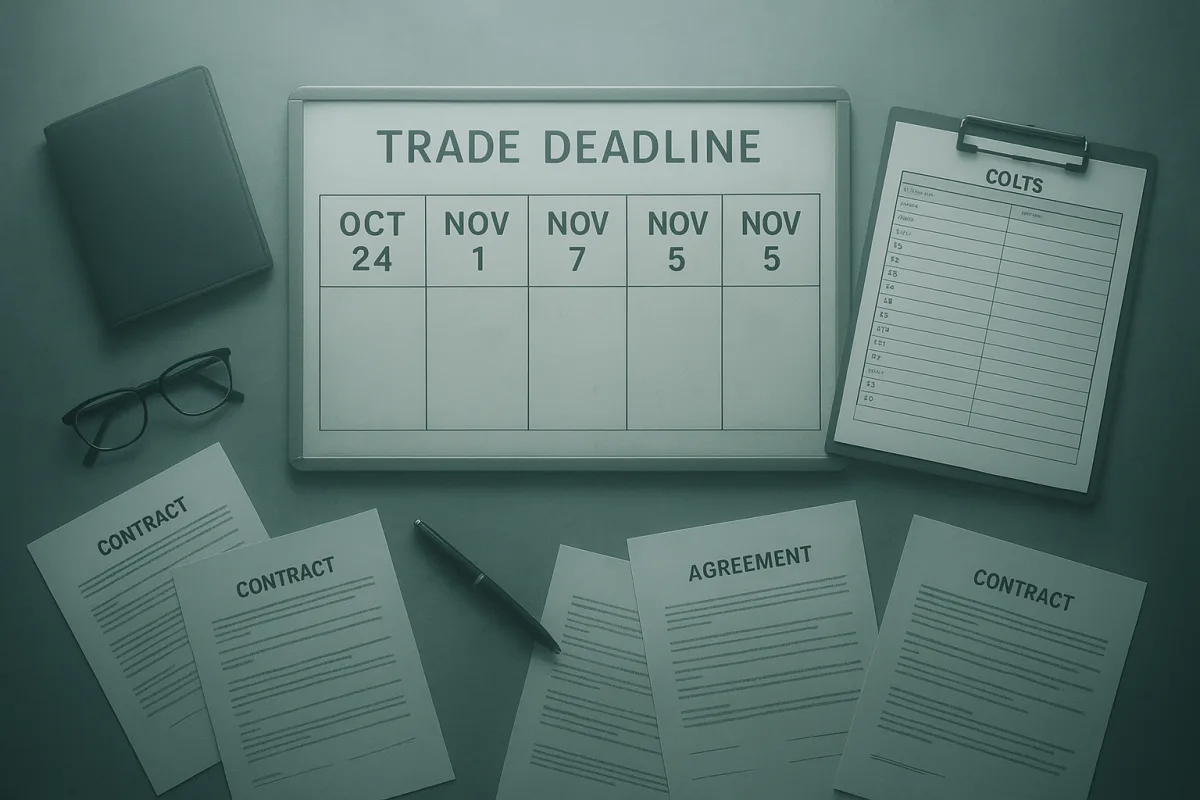
The Ballard firing was about organizational runway
The Indianapolis Colts fired general manager Chris Ballard after a 2-4 start and a loss to the Tennessee Titans, ending a tenure that began in 2017. Owner Carlie Irsay-Gordon said a leadership change was necessary to meet the franchise’s championship standard. [1]
That statement matters because it frames the move as more than punishment for one loss or one poor Sunday. Ballard had entered the final year of his deal, and Indianapolis had already spent the offseason operating under an explicit urgency to improve. [4]
The record supplies the broad indictment. Under Ballard, the Colts went 72-82-1 and made the postseason once, going 1-2 in those playoff games. The franchise also went five consecutive years without reaching the playoffs. [4]
But records can conceal the question that ownership actually has to answer: whether the roster construction gives the current coaching staff a realistic path forward. A general manager owns the accumulation of those decisions, especially when quarterback, premium draft capital and veteran contracts overlap.
CBS Sports’ accounting of the tenure emphasized the failed pursuit of long-term stability at quarterback after Andrew Luck’s retirement. That is the most consequential roster-building failure because every other decision, from pass protection to defensive spending, is made around the expected quarterback timeline. [4]
The Colts did not announce Ballard’s severance, termination terms or any financial details. Those details have not been publicly reported, so claims that the firing was driven by a specific contractual cost or buyout would be speculation.
Why Ed Dodds’ title matters more than it sounds
Indianapolis appointed assistant general manager Ed Dodds as interim head of personnel for the remainder of the 2026 season. Head coach Shane Steichen and the rest of the coaching staff will report directly to ownership under the temporary structure. [3]
That is not the same job as being named permanent general manager. The difference is not merely a business-card distinction. A permanent GM builds a multiyear roster plan, hires or retains coaches, sets departmental priorities and accepts responsibility for the future consequences.
An interim personnel executive has to keep the scouting department functioning, manage pro personnel work, communicate with agents and clubs, and prepare for free agency and the draft. Yet he must do it without certainty that he will be the person making final decisions in March.
Dodds has substantial experience in the areas that matter immediately. He worked in Seattle’s front office from 2007 through 2016, joined the Colts in 2017, and has interviewed for several general manager openings, including with the Lions, Bears, Chargers and Titans. [2][10]
Still, a respected evaluator’s résumé does not tell outsiders which Indianapolis decisions were specifically his. Public reporting offers limited detail on Dodds’ individual role in particular signings, draft picks or trades, which is a necessary distinction when assessing an assistant GM.
The immediate assignment is therefore continuity, not necessarily reinvention. Dodds can keep Indianapolis from drifting through the season, but the eventual permanent GM may arrive with different views on scheme fits, contract priorities, quarterback development and the coaching staff.
The trade deadline is a roster-control problem
The most useful way to understand the Colts’ next three weeks is to strip away the “buyer or seller” labels. The November 10 deadline is really a decision about control of future roster value.
A team trading a veteran does not simply exchange Player A for Pick B. It is deciding whether the player’s remaining production, leadership and injury insurance are worth more than a draft asset, cap flexibility and a clearer evaluation of younger replacements.
The calculation has four parts. First is the player’s contract, including salary and cap treatment. Second is the player’s on-field role. Third is whether a contending team has an urgent need. Fourth is whether the selling club has a credible replacement.
That fourth element is frequently ignored. If Indianapolis deals a starting defensive tackle, the club does not merely lose one player’s snaps. It changes early-down run defense, pass-rush rotation, short-yardage personnel and the workload distribution for everyone behind him.
For an interim head of personnel, that makes a trade harder, not easier. Dodds has to determine the current market, but he also has to avoid a transaction that boxes in the next GM or weakens Steichen’s chances of demonstrating that the current staff can win.
The change in reporting lines adds another layer. Since Steichen now reports directly to ownership, a trade decision requires cleaner alignment among ownership, Dodds and the coaching staff. That does not mean the setup cannot work. It means there are more interests to reconcile.
This is why the idea that Ballard’s firing automatically makes Indianapolis a seller is too neat. Irsay-Gordon said the team’s goals for the season had not changed and expected the Colts to compete, improve and win football games. [1]
Those words do not require Indianapolis to stand pat. They do mean a fire sale would contradict the stated goal unless the return is strong enough to justify making the current team less equipped to win.
Grover Stewart is the cleanest example
Defensive tackle Grover Stewart fits the profile that often draws deadline calls. He is 32, plays a premium interior role and is in the final year of the three-year, $39 million deal he signed in March 2024. [7]
The appeal to another team is easy to understand. A contender needing early-down interior sturdiness or a bigger defensive-line rotation could value a veteran who can absorb snaps and reduce the burden on other linemen.
The Colts’ side is more complicated. Stewart’s expiring deal creates the possibility of receiving compensation now rather than letting him reach free agency, but it also increases the cost of moving him. Indianapolis would be surrendering a capable current contributor for an uncertain future pick.
The return would depend on supply and demand, medical information shared between teams, contract assumptions and the acquiring club’s scheme. It would also depend on whether the Colts believe their next wave of interior defenders can handle those snaps without breaking the structure.
No public reporting has confirmed an offer for Stewart or active negotiations involving him. The trade-candidate label is a reasonable inference from age and contract status, not evidence that a move is imminent.
Bigger names come with bigger complications
Quarterback Anthony Richardson Sr. remains an unusual case. He requested a trade in February, but reporting through October found no meaningful development in a market for him. [8]
That lack of movement is instructive. A player can be available without being tradable at an acceptable price. At quarterback, the acquiring team must assess the player’s development, health, contract, scheme fit and whether it can offer a better environment than the original club.
Edge rusher Laiatu Latu has been assigned a projected value around a late first-round or second-round selection in July trade-value analysis. That is a projection, not a known offer, and premium young pass rushers rarely become logical deadline sales without a larger organizational reset.
Cornerback Charvarius Ward is another example of why cap numbers matter. He carries a reported $19.9 million cap hit in 2026 under his four-year, $54 million contract, while one projection placed his trade value around a fourth-round pick. [9]
A projected fourth-round return for a veteran starting corner may look modest, but the relevant question is whether it exceeds the value Indianapolis expects from keeping him. Cornerbacks can be expensive, but they also have outsized importance against the AFC’s passing offenses.
Running back Jonathan Taylor’s reported 2026 cap hit is $16.2 million on a four-year, $44 million contract, with a projected trade value around a second-round pick. [9] That is the classic trade-off between a proven offensive centerpiece and positional market skepticism.
Defensive tackle DeForest Buckner’s reported 2026 cap hit is $26.6 million, and a July projection put his value near a second-round choice. [9] Yet moving Buckner would be a fundamentally different decision from moving Stewart because Buckner changes the defense’s front-level disruption.
Those estimates should be treated carefully. They were projections made before the deadline market fully formed, and no confirmed offers have been reported. Performance, injury status, competing buyers and the remaining contract structure can move the actual price quickly.
What Dodds can realistically change now
Dodds can change the process immediately. He can define who is untouchable, direct scouts toward specific positions, decide which expiring contracts deserve calls and make sure Indianapolis has internal contingency plans before answering rival clubs.
He cannot honestly promise a new long-term football vision while holding an interim role. The best interim work is often disciplined rather than dramatic: preserve optionality, avoid panic discounts and give ownership a clear account of what the roster is and is not.
Wide receiver could be one area for additions, as outside coverage of Indianapolis’ deadline options has suggested. [11] But a receiver trade only makes sense if the player can learn the terminology, earn enough snaps and solve an actual target-separation or depth problem.
That is where tape and snap counts should govern the decision. If a receiver rarely sees the field because he cannot execute the route adjustments or blocking assignments the offense requires, acquiring another recognizable name does not automatically repair the offense.
The same standard applies to every position. A deadline move should answer a specific football question: Who loses snaps, in what personnel grouping, against which coverage or run front, and why does the incoming player improve that assignment?
The Colts have begun the front-office transition, not completed it. Ballard’s removal creates room for a different direction, while Dodds’ interim appointment gives Indianapolis someone to run daily personnel decisions. Whether that produces trades depends on value, authority and timing, not the optics of a firing.
Frequently Asked Questions
Why was Colts GM Chris Ballard fired in 2026?
Chris Ballard was fired after a 2-4 start to the 2026 season and a loss to the Tennessee Titans. Owner Carlie Irsay-Gordon stated the leadership change was necessary to meet the franchise’s championship standard. The firing reflected broader concerns about roster construction and the lack of long-term stability at quarterback during Ballard’s tenure.
Who is managing Colts personnel after Chris Ballard's firing?
Assistant general manager Ed Dodds was appointed interim head of personnel for the remainder of the 2026 season. Dodds has extensive front office experience but does not have the full authority of a permanent general manager. His role focuses on maintaining continuity rather than making sweeping roster changes.
How will the Colts handle the trade deadline after Ballard's dismissal?
With Ed Dodds as interim personnel chief, the Colts face a trade deadline decision that balances current roster value against future assets. Dodds’ interim status may limit aggressive moves, as any major changes could affect the next permanent GM’s plans. Defensive tackle Grover Stewart is a notable trade candidate, but no confirmed offers have been reported.
What impact does Chris Ballard's firing have on the Colts' 2026 season?
The firing shifts the organization’s reporting structure, with head coach Shane Steichen and staff now reporting directly to ownership. This change makes the remainder of the season more of an audition for the coaching staff rather than a normal campaign. The interim personnel leadership also introduces uncertainty in roster decisions and trade activity.
How we researched this
This article was assembled from 1 video source, 5 published articles, 11 cited references.
Nothing here is based on hands-on testing. Where a figure or finding appears, it belongs to the source cited beside it, and the writing says so rather than implying otherwise. Every source is listed below so you can check it.
Sources
We Still Know Nothing: NFL Week 6 Recap — ThatsGoodSports
Lions plan to have Brian Branch, Cade Mays in lineup this week — Pro Football Talk
Colts fire GM Chris Ballard as pressure mounts on Shane Steichen, staff after back-to-back losses — CBS Sports NFL
Patrick Mahomes ties Tom Brady for fewest games to 100 QB wins — Pro Football Talk
Assistant GM Ed Dodds will run Colts personnel department for rest of the season — Pro Football Talk
Colts opt for a half-measure, for now — Pro Football Talk
Titans Request To Interview Ed Dodds For GM Job - NFL News | Fantasy Football
Dodds to lead Colts' personnel dept. rest of year - NBC Sports
Fehlende Vision: Indianapolis Colts Spieler zerreißt Organisation • FootballR
Longtime Colts Starter Emerging As Trade Candidate | NFL Trade Rumors
Anthony Richardson Sr.'s Trade Market Has Been Quieter Than Colts Fans Might Think - Athlon
3 wide receivers Colts need to consider before NFL trade deadline passes
Watch Colts GM Chris Ballard Fired and Front Office Changes on Youtube
Related Articles
San Francisco 49ers Key Player Performances and Dominance
Explore the San Francisco 49ers' 2026 dominance with key player performances from Brock Purdy, Mike Evans, and their adaptive defense.
Giants Roster Moves and Odell Beckham Jr. Status Explained
Explore the Giants' roster moves and Odell Beckham Jr.'s status, focusing on practice squad roles and special teams impact.
Washington Commanders Offensive Line Analysis and Season
In-depth Washington Commanders offensive line analysis and 2026 season prep, covering injuries, depth, and run game strategy.
Seattle Seahawks 2026 Season Preview and Coach Mike
Get a detailed Seattle Seahawks 2026 season preview with insights on Coach Mike Macdonald, roster changes, and key player roles.