Dan Quinn Washington Commanders Coaching Challenges in 2026
Explore the coaching challenges Dan Quinn faces with the Washington Commanders, including game management and operational errors in 2026.
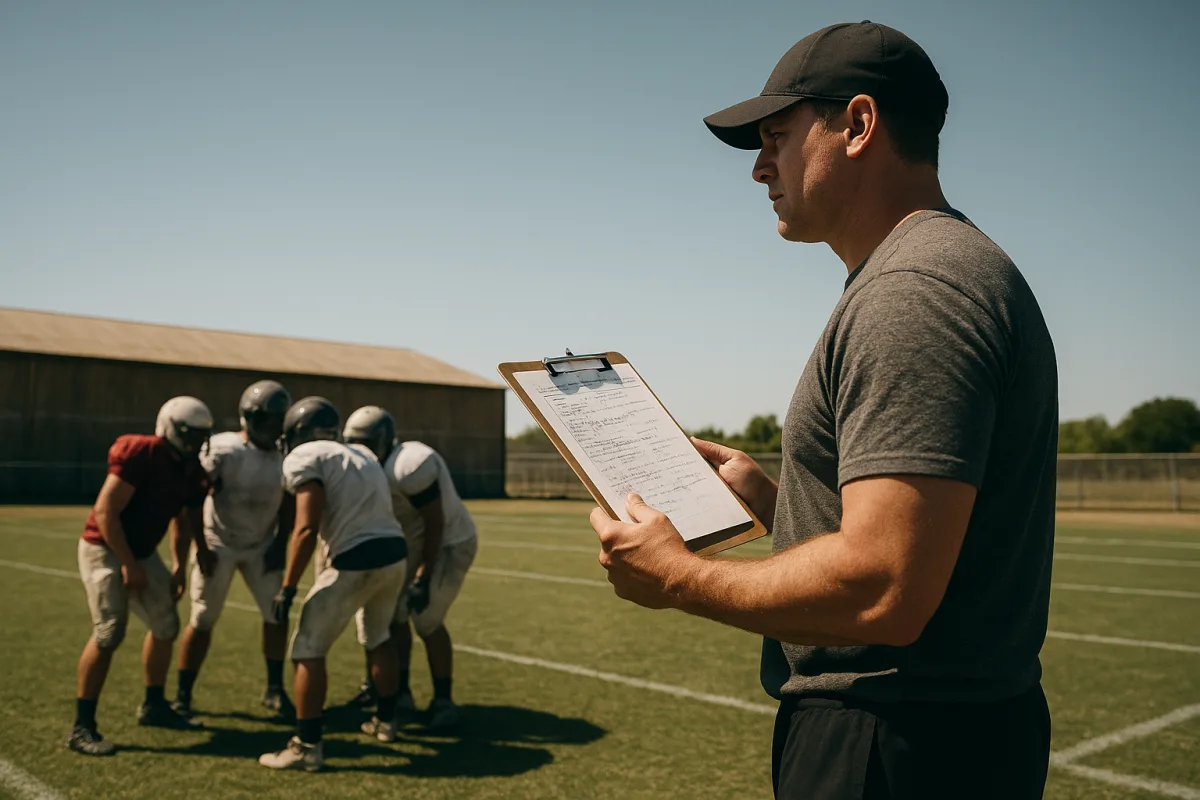
The shift is from poor results to preventable mistakes
The trend around Dan Quinn’s Commanders is now clear: the concern is no longer just that Washington is losing close games. It is that the same details, game state, communication and execution, are breaking down in consecutive weeks.
Washington entered its bye at 1-4-1, fourth in the NFC East, after a 23-17 loss to San Francisco followed a 27-27 tie against the Giants. [4][5] That record alone would invite criticism, but the tape-level concerns are more important.
Against the 49ers, Washington faced fourth down in field-goal range. Jayden Daniels threw the ball away after an illegal-shift flag, a decision that strongly suggested the offense did not fully process the down-and-distance situation.
NFL on ESPN’s postgame breakdown focused on the practical point, not merely Quinn’s sideline reaction: a quarterback cannot casually discard the ball on fourth down. Even with a flag in play, the offense must give itself a chance.
Quinn said afterward that he knew it was fourth down and that his response concerned whether Washington could kick after the penalty. That explanation may be true, but it does not resolve the more consequential issue.
Daniels’ decision still looked like a player operating as if another snap remained. NBC Sports similarly framed the sequence as an attention-to-detail failure, irrespective of whether Quinn personally knew the down. [8]
That distinction matters. A coach can know the situation himself and still preside over a process that has failed if the quarterback, center and relevant sideline communicators do not receive the same information.
The ESPN panel described the ordinary NFL answer: somebody has a designated job to announce the situation in the huddle and at the line. It might be the center, quarterback or another veteran, but the responsibility cannot be diffuse.
That is why the 49ers play drew so much attention. It came one week after Washington’s late-game confusion against the Giants, turning an individual mistake into evidence of a recurring process problem. [1]
The NFL on NBC discussion went further, questioning whether the sequence could prompt Josh Harris to consider a coaching move. That is a legitimate topic, although it is too early to confuse a television debate with evidence of an organizational decision.
There is no demonstrated reporting that Washington’s locker room has quit on Quinn or that Harris has decided to make a change. The available evidence supports concern about clean football, not a definitive verdict on team morale.
What the tape problem actually is
The popular shorthand is that Quinn “cost” Washington a game. That is too simple. San Francisco led 20-3 before Washington rallied, and the Commanders still had other chances to complete the comeback.
The fourth-down error was costly because it removed one of those chances. But it did not create the early deficit, solve the protection problems or explain why Washington struggled to match San Francisco’s tempo before halftime.
Quinn acknowledged in his Commanders media availability that the first half was far below expectation, while describing the second-half urgency and aggressiveness as closer to the team’s intended identity. That is a fair self-assessment.
The issue is that “we showed it in spurts” is not a sustainable weekly standard. Teams do not win consistently because they can manufacture 20 good minutes after falling behind by multiple scores.
The 49ers were able to build their lead by operating with cleaner structure. Washington’s defense had too many pass-game explosives, according to Quinn, and its offense could not consistently maintain the pocket or establish clean early-down rhythm.
Quinn identified pre-snap urgency, call selection and communication as areas needing correction on defense. That diagnosis fits the broader pattern: too often, Washington appears to be reacting after the snap rather than playing fast before it.
That does not mean every defensive issue is schematic. When a defense gives up explosive passes, the cause can be a poor call, a disguise that arrives late, a coverage bust, a lost matchup or a pass rush that never affects timing.
The offensive line is similarly not a one-variable explanation. Washington had allowed 14 sacks through five games, 2.8 per game, while producing 751 rushing yards on 165 attempts, a 4.6-yard average. [3][4]
Those figures say the run game has remained functional, sometimes more than functional. They do not prove the line is playing well overall, because sack totals and rushing efficiency capture different situations and are influenced by quarterback behavior and play design.
Washington Post reporting identified injuries to left tackle Laremy Tunsil and guard Nick Allegretti as meaningful hits to what had been viewed as an offensive strength. [3] The depth issue is real, and it limits the coaching staff’s options.
But injury context cannot become an all-purpose excuse. Quinn himself said the line’s 49ers performance did not meet Washington’s standard, in either pass protection or the collective synchronization required to move defenders in the run game. [3]
The key phrase there is “right combination.” Quinn said the staff would continue looking for it, which indicates the interior group is not settled. A bye-week reshuffle can help, but constant change can also compound communication errors.
Why this is happening now
The roster strain is more severe after the San Francisco game. Terry McLaurin tore his left patellar tendon and will miss the season after surgery, removing Washington’s top contested-catch receiver and a major part of its offensive structure. [6][9]
McLaurin’s absence will not be solved by assigning one reserve every route he ran. Quinn correctly described the replacement as a shared task, because McLaurin’s value included boundary wins, physical catches and trust with Daniels.
Daniels also remains part of the context. He dislocated his left elbow on Sept. 21, did not require surgery and is not on injured reserve, but any offense built around a young quarterback needs clarity around him. [6]
The Commanders cannot afford protection ambiguity, a rotating receiving hierarchy and situational confusion simultaneously. Each issue forces Daniels to process more after the snap, which is exactly when a developing offense becomes vulnerable to negative plays.
Quinn’s own remedy was notable. He said the staff would use the bye to become “more decisive” and “more exacting,” potentially streamlining the offense to a smaller group of calls it can execute repeatedly.
That is the correct direction if Washington follows through. Simplification is not an admission that a playbook was too ambitious. It is a recognition that the best call is the one 11 players can communicate and execute at game speed.
For someone planning an NFL project, whether that is a weekly game plan, a protection package or a personnel transition, Washington offers a useful warning. Do not measure readiness by how much your team has installed.
Measure it by whether the group can identify fourth down, handle a shift adjustment, communicate a protection and execute its base calls when the game is loud, fast and imperfect. The Commanders have not met that standard often enough.
The injury list makes a smaller operating system even more logical. Trey Burks had limited practice participation before the 49ers game, while Javon Kinlaw has dealt with ankle and knee issues and Javontae Jean-Baptiste is out with a pectoral strain. [6]
A thin roster does not require a passive coaching approach. It requires more precise role definition. Washington needs to decide which receivers handle vertical routes, which backs protect, which linemen start, and who owns every situational alert.
Quinn’s defensive record should not be erased
It would be inaccurate to reduce Quinn to the recent operational failures. His prior work as Dallas’ defensive coordinator from 2021 through 2023 was more valuable than some current criticism acknowledges.
The Cowboys’ defensive drop after Quinn left suggests that his scheme, preparation and player deployment had genuine impact. That does not automatically translate into clean head-coaching management, but it is relevant to evaluating the full body of work.
A coordinator can be an excellent tactician and still need better game-management systems as a head coach. Those are related jobs, but they are not identical. Washington’s current issue is not proof Quinn suddenly forgot how to coach defense.
It is evidence that his operation has not converted defensive priorities into consistent game-day execution. Quinn’s answer to that cannot just be more intensity, because intensity without responsibility assignments often creates more confusion.
His statement that players could lose snaps if accountability requires it is worth monitoring. That approach works only if coaches can identify whether the error was effort, technique, communication or an unclear instruction.
Benching a player for a coverage bust makes sense if that player ignored a defined rule. It is less useful if multiple defenders heard different checks or if a call arrived too late for the secondary to align.
The same principle applies on offense. If Washington’s line changes are based on clear evaluation of pass-set losses, stunt recognition and protection communication, then a personnel adjustment could stabilize the unit.
If the staff simply changes names after every bad week, it risks treating symptoms rather than causes. The Commanders’ snap decisions over the next month will say more than broad promises about accountability.
The ownership question is real, but not immediate
The pressure on Quinn has intensified because Washington is 3-14-1 over its last 18 games, according to Axios. [1] That is a meaningful sample of poor results, even if it should not be read as a complete measure of every game.
Harris is not an owner with no history of acting in season. Washington fired Ron Rivera on Nov. 29, 2023, soon after Harris’ ownership group took control. [2] That establishes willingness, not inevitability.
NFL.com’s review of midseason firings makes the larger point: they remain unusual and are usually treated as last-resort decisions. [7] Owners generally act early when they see no viable recovery path or believe the organization needs a head start on succession planning.
Washington is not mathematically out of contention, particularly in a weak division. But that should not become a reason to ignore the underlying quality of play, because a soft division can conceal a broken weekly process.
The next game is Nov. 1 against Philadelphia. [5] The bye gives Quinn and his staff time to implement tangible changes, making that matchup a useful evaluation point rather than merely another item on the schedule.
The evidence to watch is specific: fewer procedural errors, a clear offensive-line plan, improved protection answers, fewer explosive passes allowed and no uncertainty about game state. Those are coachable improvements, and Washington needs to show them quickly.
Frequently Asked Questions
What are the main coaching challenges Dan Quinn faces with the Washington Commanders?
Dan Quinn’s main challenges include repeated operational errors, particularly in down-and-distance awareness, late-game communication, and execution. These issues have led to costly mistakes such as poor fourth-down decisions and a lack of consistent team discipline. The offensive line’s injuries and protection problems also compound these challenges.
How has Dan Quinn's game management affected the Commanders' 2026 season?
Quinn’s game management has come under scrutiny due to preventable mistakes that have contributed to losses and missed opportunities. For example, a critical fourth-down error against the 49ers reflected a failure in situational awareness and communication, which removed a chance to complete a comeback. These recurring issues have undermined the team’s ability to win close games.
What operational errors are impacting the Washington Commanders under Dan Quinn?
The Commanders have struggled with down-and-distance confusion, late-game communication breakdowns, and execution failures. A notable example is the offense failing to recognize fourth down in field-goal range, leading to a turnover on downs. These operational lapses have occurred repeatedly over consecutive weeks, indicating systemic process problems.
Why is Dan Quinn's coaching under scrutiny with the Washington Commanders?
Quinn’s coaching is scrutinized because the team’s problems have shifted from bad luck to repeatable mistakes in game management and communication. The 1-4-1 start and visible errors in critical situations have raised questions about his ability to maintain operational control. Media and analysts have highlighted these issues as signs of deeper coaching and process deficiencies.
What changes could improve Dan Quinn's coaching effectiveness with the Commanders?
Improvements could come from simplifying the offensive playbook, clearly assigning situational communication responsibilities, and stabilizing the offensive-line rotation. Using the bye week to address these areas rather than attributing struggles solely to injuries may help reduce errors and improve overall team execution.
How we researched this
This article was assembled from 4 video sources across 4 channels, 1 published article, 10 cited references.
Nothing here is based on hands-on testing. Where a figure or finding appears, it belongs to the source cited beside it, and the writing says so rather than implying otherwise. Every source is listed below so you can check it.
Sources
Will Josh Harris move on from Dan Quinn after multiple costly mistakes? | Pro Football Talk — NFL on NBC
COMMANDERS CONFUSION?! 😧 Dissecting Washington's issues vs. the 49ers on MNF | Get Up — NFL on ESPN
Did Dan Quinn Cost The Commanders A Second Straight Win?! — The Pat McAfee Show
LIVE: HC Dan Quinn Speaks To The Media | Washington Commanders — Washington Commanders
Dan Quinn: OL performance was below the standard we set for ourselves — SB Nation
Commanders fire coach Ron Rivera as new ownership begins making changes
The Commanders’ offensive line was a strength. Now it’s a question mark. - The Washington Post
2026 Washington Commanders Schedule, Results, TV Channel | FanDuel Research
Washington Commanders Injury Report | Washington Football Team - Commanders.com
Dan Quinn's fourth-down explanation exposes a different failure of attention to detail - NBC Sports
Terrorífica Semana 6 para los receptores de la NFL; siete figuras terminaron lastimadas
NFL Coaching Cycle Timeline: A Look at Every Coaching Change of the 2025 Season
Watch Dan Quinn and Washington Commanders Coaching Challenges on Youtube
Also from the sources
Related Articles
Washington Commanders Upset Win Over Seattle Seahawks
Detailed analysis of the Washington Commanders' upset win over the Seattle Seahawks, focusing on quarterback performance and key game factors.
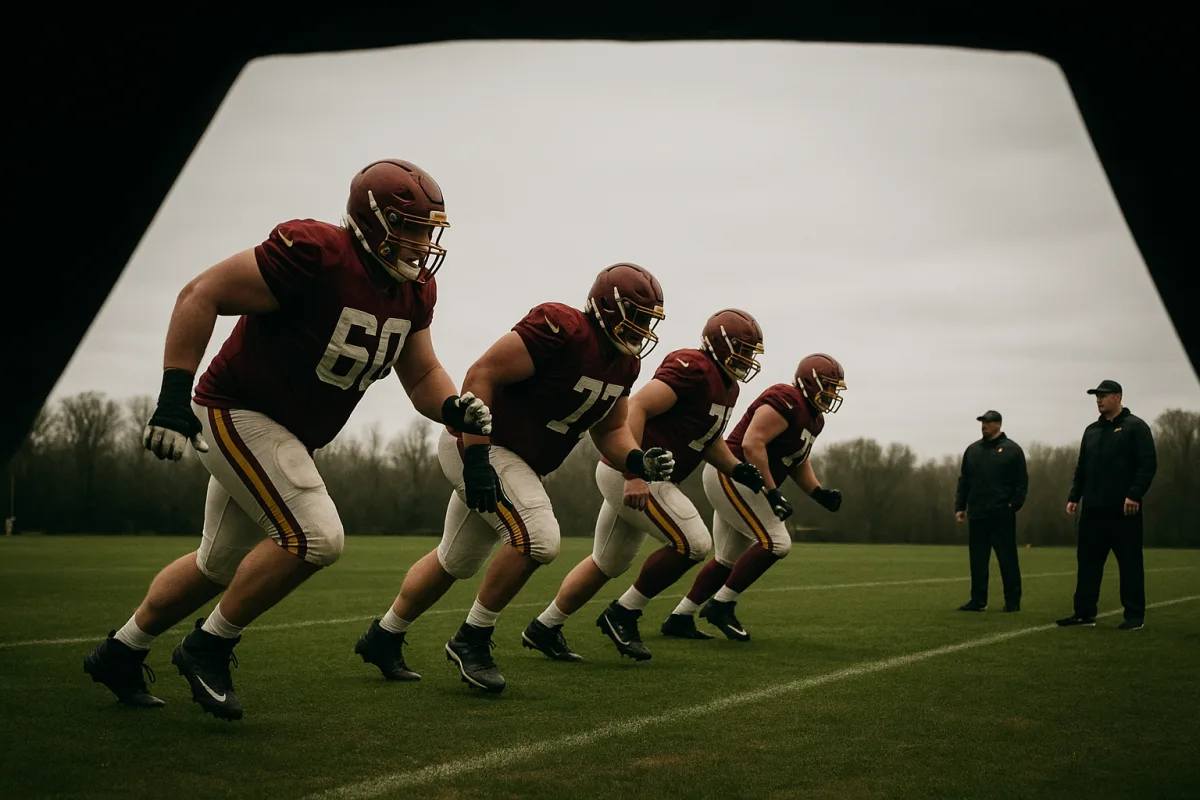
Washington Commanders Offensive Line Analysis and Season
In-depth Washington Commanders offensive line analysis and 2026 season prep, covering injuries, depth, and run game strategy.
Los Angeles Rams Struggles and 2026 Playoff Outlook
Explore the Los Angeles Rams struggles, key issues, and their 2026 playoff outlook with detailed analysis of offense, defense, and coaching adjustments.
Arizona Cardinals Week 1 Media Availability and Team Outlook
Get insights from Arizona Cardinals Week 1 media availability, injury updates, and team outlook ahead of the 2026 season opener.