
NFL Trade Deadline 2026: Colts, Bears, and Vikings in Focus
Explore the 2026 NFL trade deadline buzz around the Colts, Bears, and Vikings, including key players and cap considerations.
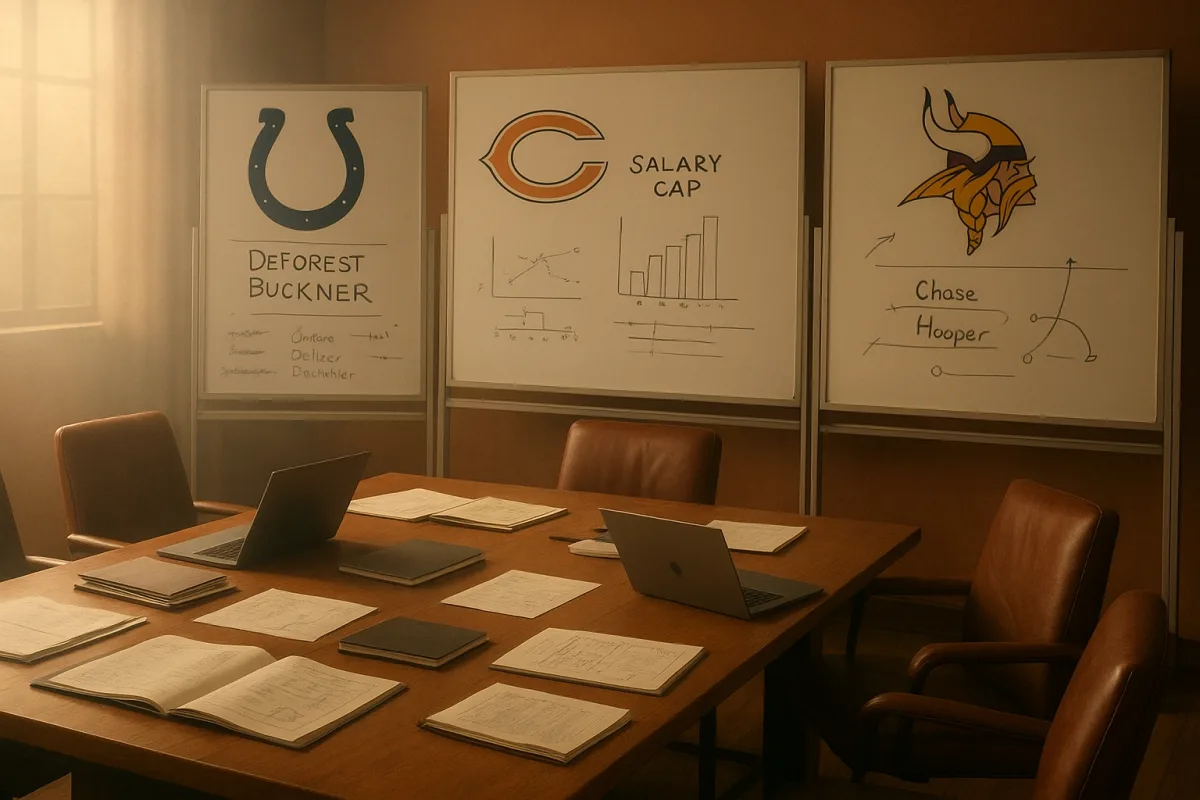
Start with the deadline mechanics, not the headline
The NFL’s 2026 trade deadline falls on Nov. 10 at 4 p.m. ET. [9] That is the point at which a player must be traded, not merely discussed, so the useful reporting will increasingly identify contract terms, draft compensation, and which team absorbs salary.
The first mistake in deadline season is reading “connected to” as “has made an offer.” Chicago’s reported links to defensive players and Minnesota’s reported interest in multiple veterans establish needs and possible targets. They do not establish that another club is willing to sell. [6][13]
The second mistake is assuming cap space is a checking account. In an NFL trade, the acquiring team generally takes on the remaining base salary, while the original team retains dead money tied to prorated signing bonuses. [10] That split can decide whether an otherwise sensible football move gets completed.
That is particularly relevant here because all three teams have financial constraints, just in different forms. Chicago has limited usable room after restructures, Indianapolis is reportedly over its projected cap position, and Minnesota faces the sharpest reported long-term cap issue. [11][12][15]
First reader question: Are the Colts buyers or sellers?
Indianapolis has the hardest decision because the record and roster point in different directions. At 2-4, the Colts need draft capital and flexibility, especially after previous moves left them without a 2027 first-round selection. [1][3]
But a reset is not as simple as trading every recognizable veteran. The Colts have reportedly drawn strong interest in Quenton Nelson and DeForest Buckner, two players who still matter because they affect how an offense protects and how a defense can call fronts. [2]
Buckner is the cleaner football discussion. An interior pass rusher who can win without a blitz allows a coordinator to play more coverage behind four-man rushes. If Indianapolis moves him, it is not merely subtracting sacks. It changes down-to-down protection plans for opponents.
That is why the reported interest from Chicago and Minnesota matters more than a generic “contender wants defensive help” rumor. Both teams would be pursuing a player capable of changing the math up front, rather than adding a rotational piece for depth. [6][13]
Still, Buckner is not known to be on the verge of being traded. Reports identify him as a target and a player attracting interest, but the available reporting does not confirm a club-to-club agreement, a formal offer, or a Colts decision to sell. [1][2][6]
Nelson presents a different calculation. Elite guard play is valuable, especially for an offense that needs reliable interior protection and credible run-game movement, but guards seldom return quarterback-style trade packages. Indianapolis would have to decide whether the financial relief and picks justify weakening its offense.
The practical signal to watch is not an anonymous claim that Nelson is “available.” Watch whether reports specify that Indianapolis is listening on him, what level of pick compensation it seeks, and whether a possible buyer can fit his contract. [1][2][15]
Do not overstate the Jonathan Taylor chatter
Jonathan Taylor’s name belongs in this conversation, but the evidence is mixed. Multiple reports have connected him to possible trade scenarios and potential landing spots, yet Taylor has denied considering a trade and said his focus remains on playing.
That denial does not prove Indianapolis would never listen. It does mean reporting around social-media speculation, including comments from family members, should not be treated as a confirmation of team intent or a request from the player.
On tape, moving Taylor would mean more than replacing carries. A back with his speed forces defenses to respect outside-zone tracks, cutback lanes, and explosives from light boxes. The Colts could replace touches, but not necessarily the defensive stress those runs create.
The same caution applies to defensive tackle Grover Stewart. He has surfaced as a possible Colts trade candidate, but there has been no public indication that Indianapolis is shopping him. A mention in deadline coverage is not evidence of an active auction. [4]
The Colts also have a reported cap problem. They are projected to be about $4.72 million over the cap despite roughly $21 million in nominal space, a distinction that reflects obligations and required roster accounting rather than a simple available-cash figure. [15]
That makes restructures, releases, and salary retention relevant to every rumored veteran move. Michael Pittman Jr. has been mentioned as one possible contract lever, but there is no confirmed indication that his contract has been changed or that he is part of a trade plan. [15]
What Chicago is actually trying to fix
Chicago’s deadline logic is easier to read. The Bears have reportedly created around $17 million through contract restructures and sit near $7.8 million in cap space, which suggests an effort to preserve the ability to make an addition. [5][11]
The reported target list is concentrated on defense: Buckner, Josh Sweat, and a possible reunion with Khalil Mack. [13] That is not necessarily three separate negotiations. It may be Chicago surveying different ways to add disruption without committing to one market.
The distinction matters because those players solve different problems. Buckner improves the interior, where pressure can collapse the quarterback’s launch point and make protection rules harder. Sweat and Mack are edge-oriented answers, more likely to test tackles one-on-one and force chips.
A coordinator’s front determines which answer is more useful. If Chicago needs an interior rusher to make simulated pressures and four-man rushes work, Buckner is the better schematic fit. If it needs a closer on obvious passing downs, an edge addition may carry more value.
The Mack rumor has the greatest name recognition, which can distort the discussion. The useful question is not whether a reunion would be popular. It is whether the Bears can absorb the remaining money, meet the selling club’s compensation demand, and still preserve flexibility. [8][11][13]
Chicago’s restructures do not prove a deal is imminent. They do establish that the club has taken steps consistent with wanting options. That is more meaningful than a broad rumor, but it remains short of evidence that a trade is agreed to.
Minnesota has to choose between urgency and sustainability
The Vikings enter the deadline from the opposite competitive position. Their 6-0 record makes an addition easier to justify because the roster is playing for January now, not merely gathering information for next season. [6][14]
But the cap picture complicates the straightforward buyer narrative. Minnesota is reportedly projected to be about $51 million over the cap while holding roughly $7 million in space, numbers that make any major acquisition dependent on additional work. [12]
Buckner and Saquon Barkley have both been identified as possible targets. [6] The football case for each is clear enough. Buckner raises the pass-rush floor, while Barkley would add an explosive run and receiving threat to an offense trying to avoid becoming predictable.
The roster-building case is less clear. Minnesota has recently used trades involving Jonathan Greenard and J.J. McCarthy to improve draft capital, according to its team draft tracker. [7] That suggests the organization cannot evaluate the deadline solely through this season’s standings.
That is why some Vikings deadline discussion has centered on long-term help rather than rentals. [8] A 6-0 team can rationally avoid paying premium picks for a short-term player if the contract, cap charge, or future compensatory cost undermines the roster beyond 2026.
Safety Cam Bynum is the complicating internal name. Reports have raised the possibility of Minnesota considering his trade value, but there is no confirmed indication that the Vikings have offered him around the league. [6] Keep that in the speculative category.
If Minnesota trades for Buckner, its clearest path could involve salary retention by Indianapolis, a reworked contract, or outgoing salary. Those are normal tools under the cap rules, but none has been reported as part of a specific Buckner proposal. [10][12]
How to read the next two weeks of rumors
Give the most weight to reporting that includes three elements: a named team need, a realistic cap mechanism, and a credible reason the other club would move the player. A rumor that checks only one of those boxes is usually an early-stage connection.
For the Colts, monitor whether the reporting shifts from “interest” to an asking price for Buckner, Nelson, Taylor, or Stewart. A stated draft-pick threshold would indicate Indianapolis has progressed from general evaluation to a real market.
For the Bears, monitor the contract side. The club’s defensive connections are credible as need-based reporting, but its remaining cap space means the next meaningful detail is whether Chicago seeks a contract restructure, retained salary, or a lower-cost alternative. [11][13]
For the Vikings, distinguish a win-now move from a roster-balancing move. A Buckner or Barkley acquisition would be an aggressive competitive decision. A Bynum trade, if it were to materialize, would be a capital-and-cap decision that could accompany rather than contradict buying.
The absence of a completed trade is also information. As of Oct. 27, there are no verified completed deadline deals involving Indianapolis, Chicago, or Minnesota. The most responsible reading is that all three clubs are evaluating options, not that any has committed to a direction.
Frequently Asked Questions
What are the trade deadline scenarios for the Colts, Bears, and Vikings in 2026?
The Colts, with a 2-4 record and no 2027 first-round pick, face a tough choice between selling veterans like Quenton Nelson or DeForest Buckner to gain draft capital or keeping their best players. The Bears have created some cap space and are linked to defensive upgrades but have not confirmed any trades. The Vikings, undefeated at 6-0, aim to add key players like Buckner or Saquon Barkley but face significant salary cap constraints requiring roster moves to create space.
Which Colts players are most likely to be traded before the NFL trade deadline?
Quenton Nelson and DeForest Buckner are the two Colts players reportedly drawing strong trade interest. Buckner is seen as a cleaner trade discussion due to his impact as an interior pass rusher, while Nelson’s trade would represent a bigger shift given his role in protecting the offense.
How do salary cap issues affect the Bears and Vikings trade deadline strategies?
The Bears have created about $7.8 million in cap space through restructures, which limits their ability to absorb large contracts despite interest in players like Buckner and Khalil Mack. The Vikings face sharper long-term cap problems, projected to be $51 million over the cap, so any acquisitions would require moving out salary, restructuring contracts, or having the selling team retain salary to make a trade feasible.
What impact would trading DeForest Buckner have on the Colts and interested teams?
Trading Buckner would not only reduce the Colts’ sack production but also affect their defensive scheme, as he allows coordinators to rely on coverage behind four-man rushes. For interested teams like the Bears and Vikings, acquiring Buckner would strengthen their interior pass rush but would also require managing salary cap implications carefully.
When is the 2026 NFL trade deadline and what are the key considerations?
The 2026 NFL trade deadline is November 10 at 4 p.m. ET. Key considerations include understanding that reported interest does not equal an offer, and that acquiring teams typically assume base salary while the original team retains dead money from prorated signing bonuses. Salary cap constraints and contract details will heavily influence whether trades are completed.
How we researched this
This article was assembled from 1 video source, 8 published articles, 15 cited references.
Nothing here is based on hands-on testing. Where a figure or finding appears, it belongs to the source cited beside it, and the writing says so rather than implying otherwise. Every source is listed below so you can check it.
Sources
The one Peyton Manning story that sticks with Peter King | The Colts Show | NFL | Podcast — Indianapolis Colts
NFL power rankings Week 8: Who's No. 1 after 49ers, Chiefs lose first games? — USA Today
Minnesota Vikings Insiders Update NFL Trade Deadline Plans — Yahoo Sports
Liam Coen Has 1 Simple Solution for Jaguars to Avoid NFL's Referee Debacle — Sports Illustrated
Opinion | When the NFL returns to Paris. Just imagine. — The Washington Post
Vikings’ 6-0 record will be put to the test against surging Lions at Ford Field — Star Tribune
NFL Power Rankings Week 8: Surprising Browns, Steelers should still be on fraud watch — USA Today
NFL Insider Fuels Khalil Mack Trade Rumors for Bears — Yahoo Sports
Colts Face Difficult Decision With Josh Downs as NFL Trade Deadline Approaches — Sports Illustrated
5 Colts Players Contenders Could Trade For Following Chris Ballard’s Firing | FOX Sports
NFL rumors: The 2 players Colts have received 'strong trade interest in'
Longtime Colts Starter Emerging As Trade Candidate | NFL Trade Rumors
Chicago Bears Receive Exciting Trade News Tidbit By NFL Insider
Vikings Trade Deadline Targets: Buckner, Taylor, Bynum & More | Daily Norseman
Minnesota Vikings Trade Debate Centers on Long-Term Help, Not Rentals - Athlon
Bears Trade Rumor From NFL Insider Lists 3 Pro Bowlers Chicago is 'Connected To' - Yahoo Sports
Minnesota Vikings, el único equipo invicto de la NFL tras la Semana 7
Colts 2026 Salary Cap Tracker: How Much Room They Have for Free Agency
Watch Trade Deadline Buzz: Colts, Bears, and Vikings in Focus on Youtube
Related Articles
Colts GM Chris Ballard Fired: Front Office Changes Explained
Learn why Colts GM Chris Ballard was fired and how front office changes affect the team's 2026 season and trade deadline strategy.
Marvin Harrison Jr. Performance and Confidence Amid
Explore Marvin Harrison Jr.'s 2026 performance and confidence amid criticism, with analysis of targets, effort, and team perspectives.
Packers Roster Moves and Josh Jacobs Exempt List Impact
Explore how Packers roster moves address Josh Jacobs' exempt list status and its effect on running back depth and team strategy.
NFL Roster Cuts 2026: Key Player Moves and Team Strategies
Explore NFL roster cuts 2026 with analysis of key player moves, team strategies, and impacts on depth charts and season outlooks.