
NFL Week 3 Team Preparations and Media Availability Updates
Get the latest NFL Week 3 team preparations, player statuses, and media availability insights to understand upcoming game strategies and key updates.
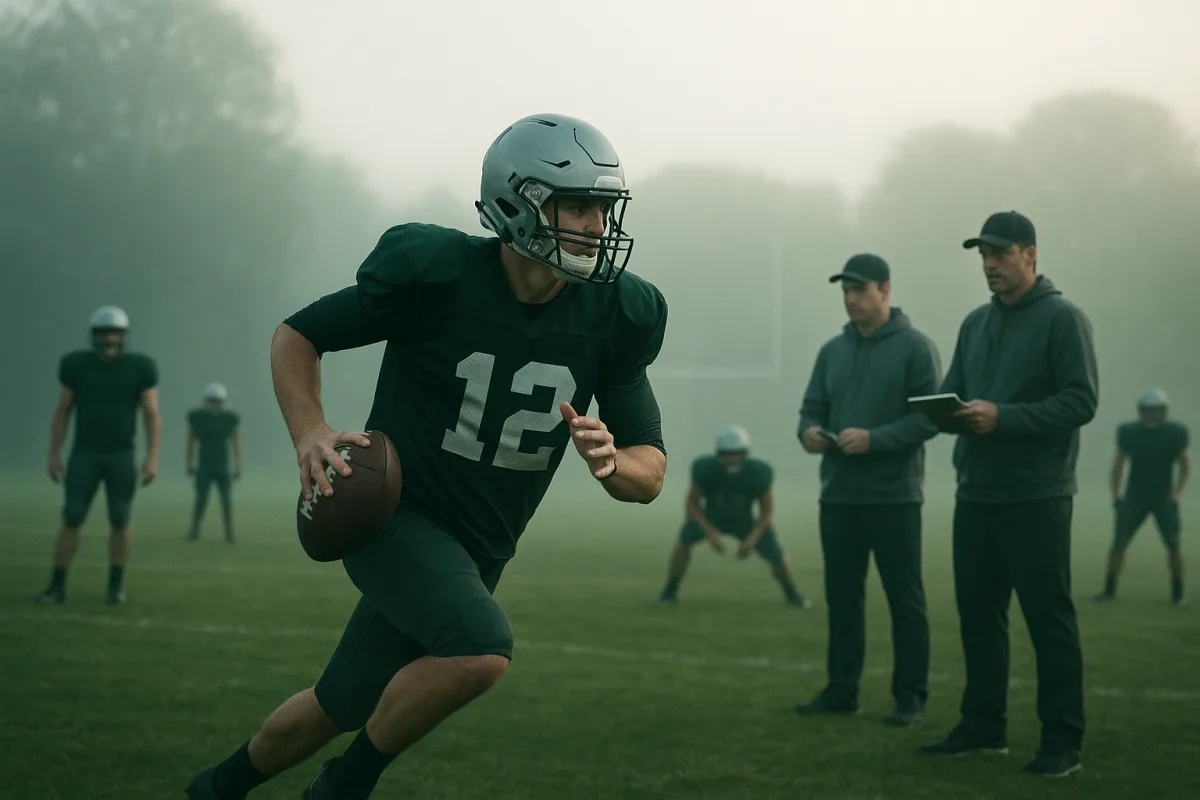
Week 3 preparation roundup: what is actionable, what is just noise
The quick list
- Best overall: Minnesota Vikings with Kyler Murray, for readers deciding which Week 3 availability update most changes an offense’s functional ceiling.
- Best value: Denver Broncos defense against the Los Angeles Rams, for readers looking for the clearest scheme-based game indicator rather than a headline matchup.
- Best for small samples: New York Giants receiver Malik Nabers, for readers resisting conclusions built from limited snaps and an abrupt quarterback change.
- Best long-term view: Tennessee Titans, for readers evaluating a rebuilding team beyond an 0-2 record.
- Best rules refresher: NFL celebration enforcement, for players and fans trying to distinguish legal creativity from a 15-yard penalty.
Comparison table
| Option | Price or cost | Size and availability | Offensive or defensive layout | Primary Week 3 trade-off |
|---|---|---|---|---|
| Minnesota Vikings with Kyler Murray | No financial cost disclosed | Murray cleared and expected to start after missing Week 2 [4] | Restores designed movement, scramble threat and full quarterback operation | Clearance does not guarantee timing or production |
| Denver Broncos defense vs. Rams | No financial cost disclosed | Full matchup arrives Sept. 27 [[8]](https://sports.betmgm.com/en/blog/nfl/broncos-vs-rams-prediction-odds-picks-week-3-snf-2026-bm16/?utm_source=openai "Broncos vs Rams Prediction, Odds & Pick for SNF | BetMGM") | Stop run, prevent explosives, create known passing downs |
| New York Giants with Malik Nabers | No financial cost disclosed | Nabers played 36 offensive snaps in one game [[7]](https://www.kofsports.com/nfl/players/malik-nabers?utm_source=openai "Malik Nabers Stats, Player Props & Trends | KofSports | KofSports") |
| Tennessee Titans | No financial cost disclosed | 0-2, 486 total yards through two games [[6]](https://www.footballdb.com/teams/nfl/tennessee-titans/seasons?utm_source=openai "Tennessee Titans Records by Season | The Football Database") | New Robert Saleh regime building identity |
| NFL celebration rules | Fines and penalties can be the cost | Applies leaguewide | Football may be used as a prop, team celebrations allowed | External props, taunting and delays remain prohibited [[2]](https://www.nfl.com/news/roger-goodell-details-changes-to-league-s-celebration-policy-0ap3000000810539?utm_source=openai "Roger Goodell details changes to league's celebration policy |
There is no literal price tag attached to any of these Week 3 decisions, and that is worth saying plainly. The relevant costs are possessions, field position, offensive snaps and, in the Titans’ case, the time required for a new staff to establish repeatable football.
Kyler Murray’s return changes Minnesota’s structure, not just its depth chart
The cleanest availability update of the week is Minnesota quarterback Kyler Murray clearing concussion protocol and being confirmed to start against the Buccaneers. Murray suffered the concussion in Week 1, missed Week 2 and was cleared Sept. 21. [4]
That matters because a starting quarterback’s absence does not merely replace one set of throws with another. It changes the menu. Murray’s return restores the possibility of designed movement, boot-action threats, scramble conversion and the spacing stress that comes when a defense cannot assume the quarterback will remain in the pocket.
Murray told the Vikings’ official channel that he felt well quickly but had to complete the required protocol. That is the right framing. A player feeling ready and being medically cleared are separate things, and the latter is what determines Week 3 availability.
His own comments also showed appropriate restraint about Tampa Bay. He declined to treat the Buccaneers’ prior result as predictive, saying the Vikings must execute rather than judge a defense solely by the prior week. That is more useful than the usual “get-right game” language.
The matchup will test whether Minnesota can regain operational consistency immediately. A cleared quarterback gives the offense its intended layout, but clearance does not restore timing automatically. The practical tape questions are whether Murray can get the ball out on schedule, whether Minnesota can remain efficient on early downs and whether Tampa Bay can keep him from extending plays.
Murray also noted the challenge of facing Todd Bowles’ defense. The schematic point is not that Bowles will automatically blitz at a particular rate. It is that his defenses have historically forced quarterbacks to identify pressure, coverage rotation and post-snap changes quickly. That makes protection communication and answers versus pressure more important than any single quarterback stat.
Denver’s defensive plan starts with personnel stress
The Broncos-Rams game offers the strongest coordinator-level material from this week’s media sessions. Denver defensive coordinator Vance Joseph described the familiar priorities: stop the run, avoid explosive plays, win third down, win in the red zone and rush the quarterback correctly.
That can sound generic until it is connected to the Rams’ personnel. Joseph specifically identified Los Angeles’ use of 13 personnel, three tight ends and one wide receiver, as a source of stress. That grouping can present a heavy run surface, then spread into a passing picture without substituting.
The issue is not simply whether Denver plays base or nickel. The Rams can make a defense choose. Put bigger bodies on the field and the offense may isolate them in space. Stay light and the offense can attack the edges and numbers in the run game.
Joseph’s public comments do not provide the specific coverage calls Denver will use against Matthew Stafford, Puka Nacua or Davante Adams, and reporting available before the game does not establish those details either. The defensible expectation is narrower: Denver will attempt to prevent the Rams from dictating personnel and getting efficient early-down gains.
The Broncos’ Week 2 performance supports that focus. Denver allowed only three second-half points in its 20-13 win over Jacksonville on Sept. 20. [8] Joseph said improved run defense and tackling created more pass-rush opportunities than in Week 1, which is a sound cause-and-effect description.
That distinction matters. Pass rush is not always a standalone trait. If a defense loses early downs, it gets fewer obvious passing situations and fewer chances to attack the quarterback with its preferred rush plans. Denver needs the first-down part of the formula against Los Angeles.
The special-teams discussion was also more revealing than it first appeared. Broncos special teams coordinator Darren Rizzi said more teams are using running backs as returners under the new kickoff format because many clubs want downhill runners who can press through traffic. That is a roster-management decision as much as a return-game decision.
Malik Nabers is available, but the Giants are still building the connection
Giants receiver Malik Nabers offered a useful corrective to the tendency to overstate receiver-quarterback chemistry. He said he has been doing extra work with quarterback Jameis Winston, trying to understand where the ball is placed, when it comes out and what the quarterback sees.
That is not a finished connection. It is an admission that the pair is still calibrating.
Nabers has played one game this season, recording six receptions for 69 yards, with a 16-yard long gain and no touchdowns. He was on the field for 36 offensive snaps, or 52 percent of the Giants’ offensive plays. [7] Those are legitimate production numbers, but they are not enough volume to establish whether New York can consistently manufacture favorable matchups for him.
The better clue was Nabers’ answer about line-of-scrimmage confusion. He called the offense complicated and said players need more study and more individual work. That points toward an operational issue, not merely a talent issue.
A receiver can beat man coverage and still be irrelevant if the offense is late getting aligned, if the quarterback and line identify pressure differently or if route adjustments are not shared. Before projecting a breakout, watch for fewer pre-snap problems, more stable snap share and more targets created from coherent concepts.
Nabers said he felt good physically and had encouraging X-ray results. Still, the available statistical record is limited. There is also no credible NFL data identifying a Giants quarterback named “Dart,” despite the reference in the team-channel transcript. That cannot be used as evidence of an existing quarterback-receiver partnership.
Tennessee’s 0-2 start needs context, not decoration
Former Titans linebacker Keith Bulluck, appearing on the NFL’s Lots To Say program, made the basic point correctly: uniforms and branding are secondary when the team is not winning. Tennessee is 0-2, third in the AFC South, and its early offensive output has been modest. [6]
The Titans have 486 total yards through two games, averaging 4.7 yards per play. They have thrown for 323 yards on 32 completions in 52 attempts, or 6.2 yards per attempt, while producing 190 rushing yards on 43 carries, a 4.4-yard average. [6]
Those figures do not identify one fatal flaw. They describe an offense that has not generated enough total volume or explosive efficiency to survive narrow margins. A 4.4-yard rushing average is workable in isolation, but it does not solve an offense that has only 486 total yards over two full games.
Saleh began his Titans tenure in 2026, after making his coaching debut against the Jets on Sept. 10. [1] The team’s short-term outlook is understandably cautious. ESPN’s projection of 6.3 wins and a 9.6 percent playoff chance, alongside Four and Out’s 0.5 percent Super Bowl odds, reflects the roster and results rather than a verdict on two games alone.
The stadium timeline also matters to the broader organizational picture. Tennessee is in its final season at Nissan Stadium before moving to a new indoor stadium in 2027. That is franchise context, not a football explanation. It will not fix third-down execution, protection or field-position problems.
The report that Titans players competed on turf measured at 157 degrees, hot enough to melt cleats, is also notable as a player-safety and equipment issue. It should not be used as an all-purpose explanation for the 0-2 record.
Celebration rules: more freedom, still clear boundaries
The Week 3 preparation cycle also included renewed conversation about touchdown celebrations after discussion on The Pat McAfee Show of a fine connected to an imitation of chugging a drink. The larger lesson is that the NFL’s rules are more permissive than the old no-fun caricature suggests.
The league now allows players to use the football as a prop, celebrate on the ground and participate in group or team demonstrations. [2] That is a meaningful change because it recognizes that a touchdown is a television moment and that coordinated celebration does not inherently delay or damage the game.
The limits remain clear. Celebrations directed at opponents, offensive gestures, simulated weapons, sexually suggestive acts, extended delays and external props remain prohibited. [2][3] A player can plan a creative celebration, but the safest version uses only teammates and the football, ends promptly and avoids the opponent entirely.
That is the practical Week 3 rulebook. Personality is allowed. Forcing officials to determine whether an act is taunting, offensive or a delay is where the risk begins.
Who each option suits
The Vikings and Murray suit readers seeking the largest immediate availability swing. Minnesota gets its intended quarterback structure back, but the evidence to watch is early-down efficiency and pressure response, not merely Murray’s final passing total.
The Broncos-Rams matchup suits scheme-focused viewers. Watch whether Denver can stay structurally sound against Los Angeles’ heavier groupings without sacrificing its ability to cover Stafford’s primary targets.
The Giants and Nabers suit readers who value process over box-score claims. Nabers has enough talent to change a game, but New York first needs cleaner pre-snap operation and more shared work with its quarterback.
The Titans suit readers assessing rebuild timelines. The record, yardage and outside projections all point toward a development season, where incremental improvement in offensive operation matters more than branding or broad declarations about culture.
The celebration-rule update suits anyone judging a highlight or a flag. The rule is not “celebrate at will,” and it is not “celebrations are banned.” It is a defined middle ground, with football-based, prompt celebrations generally safest.
Frequently Asked Questions
What are the key team preparations for NFL Week 3 games?
Teams are focusing on restoring or adjusting offensive and defensive structures. For example, Minnesota is preparing with Kyler Murray returning to restore their quarterback-run and off-schedule offense. Denver’s defense aims to win early downs, reduce explosive plays, and force longer passing situations against the Rams. The Tennessee Titans are still building their identity under first-year coach Robert Saleh after an 0-2 start.
Which players are returning from injury for Week 3 in the NFL?
Kyler Murray of the Minnesota Vikings has cleared concussion protocol and is confirmed to start in Week 3 after missing Week 2. His return is significant for restoring the Vikings’ offensive structure. There are no other confirmed Week 3 injury returns detailed in the article or research brief.
How does Kyler Murray’s return impact the Vikings in Week 3?
Murray’s return restores the Vikings’ ability to run designed quarterback movements, boot-action plays, scramble conversions, and create spacing stress on defenses. This goes beyond simply replacing a quarterback; it changes the offensive menu and unpredictability. His medical clearance, not just his feeling ready, determines his Week 3 availability.
What defensive strategies are teams using in NFL Week 3?
Denver Broncos plan to focus on winning early downs, limiting explosive plays, and forcing the Rams’ quarterback into longer passing situations. Specific coverage plans are not publicly detailed, but the emphasis is on controlling the line of scrimmage and reducing big plays. Other teams’ defensive strategies for Week 3 are not specified.
What are the NFL celebration rules for Week 3 games?
The NFL has relaxed celebration rules allowing use of the football as a prop, celebrations on the ground, and group or team demonstrations. However, celebrations that involve external props, taunting, prolonged delays, offensive gestures (like throat-slashing or simulated guns), and offensive or opponent-directed actions remain prohibited and can result in penalties.
How we researched this
This article was assembled from 5 video sources across 5 channels, 8 cited references.
Nothing here is based on hands-on testing. Where a figure or finding appears, it belongs to the source cited beside it, and the writing says so rather than implying otherwise. Every source is listed below so you can check it.
Sources
The NFL Is Cracking Down On Touchdown Celebrations Again?! — The Pat McAfee Show
Kyler Murray on Returning To Play, Preparing for Buccaneers, Relationship with Baker Mayfield & More — Minnesota Vikings
Malik Nabers on Getting Ready for Week 3 vs. Titans | New York Giants — New York Giants
DC Vance Joseph, STC/Asst. HC Darren Rizzi and OC Davis Webb meet the media ahead of Week 3 vs. Rams — Denver Broncos
NFL Unsportsmanlike Conduct, Taunting, and Ejection Rules | Sport Rules
Kyler Murray clears concussion protocol, set to start Week 3 vs. Bucs - NBC Sports
Kyler Murray clears concussion protocol, will start for Vikings in Week 3 vs. Buccaneers
Malik Nabers Stats, Player Props & Trends | KofSports | KofSports
Watch Media Availability and Team Preparations for Week 3 Games on Youtube
Also from the sources
Related Articles
Dallas Cowboys Team Updates and Media Insights for Week 6
Get the latest Dallas Cowboys team updates, injury status, and media insights ahead of Week 6 against Green Bay Packers.
Week 5 NFL Game Previews and Injury Impact Analysis
Get detailed Week 5 NFL game previews with injury updates and tactical analysis to understand how player availability shapes matchups.
San Francisco 49ers Week 4 Preview and Player Updates
Get the San Francisco 49ers Week 4 preview with injury updates and analysis on handling Denver's pressure defense.
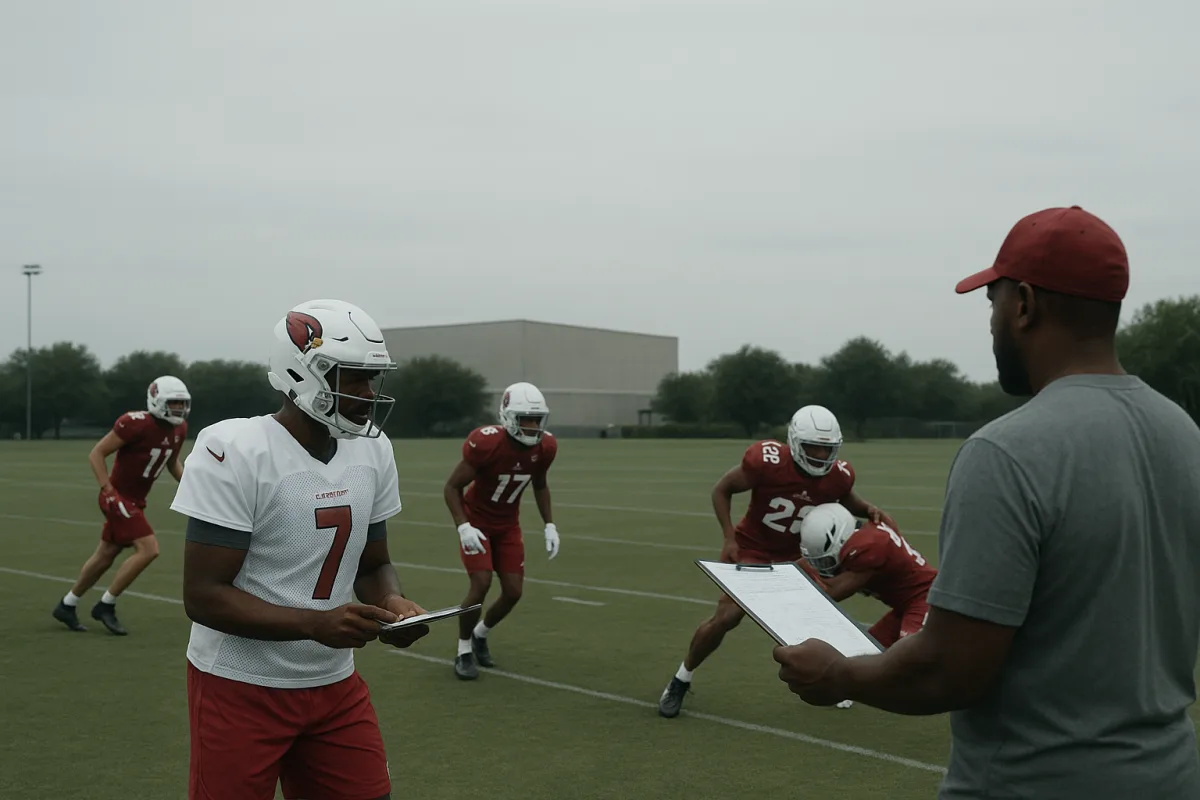
Arizona Cardinals Week 1 Media Availability and Team Outlook
Get insights from Arizona Cardinals Week 1 media availability, injury updates, and team outlook ahead of the 2026 season opener.