
Packers Week 3 Loss Analysis and Fan Reaction
In-depth Packers Week 3 loss analysis covering offensive struggles, fan reactions, and impact of Josh Jacobs' absence.
The shift is real, but it is not just about one bad night
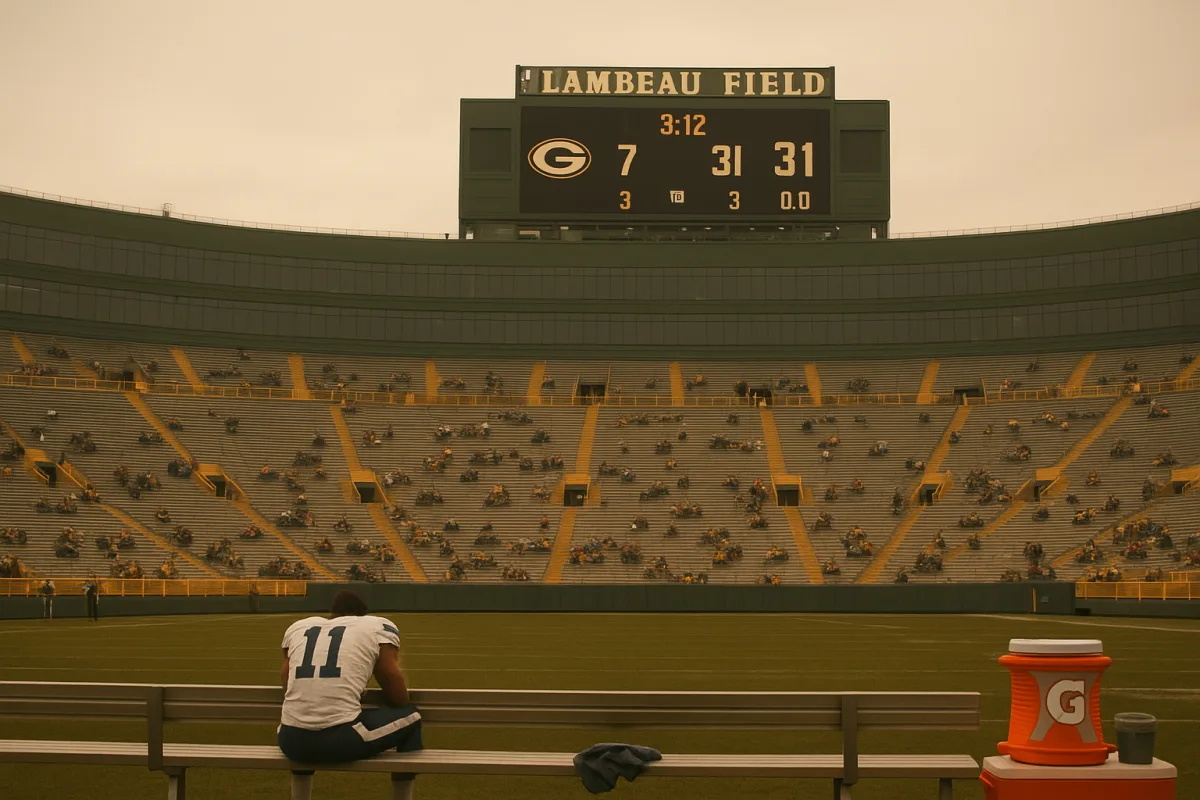
Green Bay’s Week 3 loss to Atlanta changed the tone around the offense because it made a developing problem impossible to dismiss. The Packers did not merely lose 35-14 at Lambeau Field. They were booed during a second-half performance in which the offense repeatedly failed to sustain drives. [3]
The score itself tells only part of the story. Blowouts can be turnover-driven or distorted by late-game possessions. This one pointed toward a structural issue: Green Bay opened with a touchdown, then could not establish enough efficient offense to keep the game balanced.
LaFleur, quarterback Jordan Love and wide receiver Christian Watson all arrived at the same postgame theme from different positions. The offense lacked execution, lacked rhythm and, most importantly, could not identify a dependable foundation from which to operate.
That alignment matters more than any one player’s frustration. Coaches can call a game poorly. Quarterbacks can miss throws. Receivers can fail to finish plays. When the play caller, quarterback and receiver all describe an inability to stack successful snaps, the concern is systemic.
The running-game collapse has changed the offense’s math
The cleanest evidence is Green Bay’s rushing production. The Packers entered the postgame break ranked last in the NFL at 48.7 rushing yards per game, averaging only 3.0 yards per attempt. [2] Those are not figures that merely signal a slow start.
The consequence is not limited to rushing totals. An offense that cannot threaten early-down runs faces more second-and-long and third-and-long situations. That changes defensive personnel, increases the chance of pressure, and makes every route concept easier for opponents to diagnose.
LaFleur’s postgame description was revealing. He noted that Green Bay had dropped back more than 50 times while logging only nine rushing attempts against Atlanta. That is not a balanced operation that happened to lose. It is an offense forced into a game script it is not built to survive.
Love made the same point without placing responsibility elsewhere. He said the Packers need to find completions earlier, make faster decisions against pressure and stay out of bad down-and-distance situations. Those are quarterback responsibilities, but they are also symptoms of an offense losing its early-down options.
The Falcons could play with more certainty once Green Bay became one-dimensional. LaFleur said Atlanta was squatting on outside routes after the Packers took early shots. If defenders can sit on intermediate throws without respecting the run, the quarterback sees tighter windows and a faster rush.
That does not mean every pressure was the offensive line’s fault. Green Bay does not have publicly documented 2026 line metrics that can credibly separate blocking failures from quarterback timing, receiver separation or play design. The broad claim that the line alone broke the offense goes beyond the available evidence.
Josh Jacobs’ absence is not a footnote
The personnel context is central. Jacobs has been on the commissioner’s exempt list since May 26 because of legal issues, removing the Packers’ primary established rushing threat before the season began. [5][7] The offense has been trying to replace a role, not merely distribute routine backup carries.
MarShawn Lloyd leads the remaining ground attack with 23 carries for 68 yards and one fumble through three games. [2] That is a small workload, and it does not establish that Lloyd is the sole problem. It does show that Green Bay has not found a runner or rotation producing consistent positive plays.
LaFleur declined after the Falcons game to name a clear RB1, saying the group remained in competition. That answer fits the production. A committee can work when runners have defined packages, but a competition at Week 3 can also mean the staff has not settled on predictable strengths.
The absence of Jacobs affects more than handoffs. It changes personnel decisions, play-action credibility and the offense’s ability to call patient series. A productive runner does not automatically make a passing game efficient, but a nonfunctional run game makes it substantially harder to protect a quarterback over four quarters.
Watson’s point about complementary football was accurate. When Green Bay cannot run effectively or sustain possession, the defense returns to the field quickly. That does not excuse defensive failures, but it does explain why the two phases cannot be evaluated as separate weekly problems.
Protection matters, but the tape question is bigger than five linemen
There is a legitimate concern about Love taking hits and playing under duress. LaFleur acknowledged the risk that repeated pressure can speed up a quarterback’s internal clock. Love specifically identified pocket footwork, accuracy, reads and decision-making as areas he needs to improve.
That is a more useful framing than declaring Love either blameless or solely responsible. Protection and quarterback play are connected. If a quarterback expects pressure, his feet can become hurried. If his reads become hurried, accuracy and decision-making can decline even on snaps with adequate protection.
Still, the Packers should resist treating faster throws as the only answer. Quick-game calls work only if receivers win quickly, timing is clean and the defense cannot crowd the throwing lane. Atlanta’s willingness to sit on outside concepts showed the limitation of predictable answers.
The better adjustment is to create easier completions through sequencing. That means more early-down calls with defined reads, motion that reveals coverage, and route combinations that give Love a quick outlet without abandoning intermediate options. The goal is not conservative football. It is fewer snaps where the defense knows the ball is coming.
The fourth-and-one failure in the third quarter illustrated the stakes. LaFleur said the call was a canned play with a pass option based on the defensive look, and Atlanta defended it well. The issue was not that a pass on fourth-and-one is inherently indefensible.
The issue is that Green Bay’s offense currently lacks enough dependable answers for short-yardage situations. A functional rushing identity gives a coordinator more leverage there. Without it, opponents can devote resources to likely options and force the quarterback to find a narrow solution under immediate pressure.
Coaching questions are fair, coaching-drama narratives are not
LaFleur’s sharpest postgame line was that he did not know what the Packers do well offensively right now. That is a coaching problem in the proper sense: the play caller must identify the concepts, personnel groupings and situations that produce repeatable success.
It is not proof that Green Bay needs a staff overhaul three games into the season. The Packers did undergo staff changes in 2026, including Rich Bisaccia’s February departure, but there is no reporting that connects those changes to the current offensive performance or indicates internal staff conflict.
The same applies to calls for personnel moves based solely on one lopsided loss. Green Bay has an actual production problem, not enough evidence for a confirmed locker-room or coaching crisis. LaFleur put some of the blame on his own calls, while Love and Watson accepted player responsibility.
That shared accountability can become empty language if it does not produce changes in snap allocation and play selection. Over the next games, the meaningful signs will be concrete: fewer extreme pass-run imbalances, more early-down efficiency, and a clearer plan for the backs who are actually available.
The Packers also need to acknowledge the defensive side of the equation. Parsons is sidelined by a torn ACL and is not expected back until roughly mid-October to early November. [6] His absence does not cause the offense’s poor rushing numbers, but it reduces the defense’s ability to erase offensive stagnation.
A team missing a difference-making edge player cannot plan around repeated short possessions and expect to hold up indefinitely. Atlanta’s 35 points therefore should not be assigned only to the defense, just as Green Bay’s offensive inefficiency should not be assigned only to the offensive line. [1]
What the Lambeau reaction actually means
The fan reaction was real and understandable. NBC Sports reported that Packers tight end Tucker Kraft called the booing disappointing, while acknowledging that the team must give supporters a better product. [3] That is the appropriate reading of the moment.
The booing reflected a home crowd watching an offense fail to answer after its early touchdown, not a documented movement against the coach, quarterback or front office. There are no verified reports of organized demonstrations, attendance disruption or broader unrest following the game.
Ticket prices did rise for the 2026 season, which naturally raises the stakes for the in-stadium experience. [4] But higher ticket prices do not turn every negative crowd response into evidence of an institutional fracture. The available evidence supports frustration, not revolt.
That distinction matters because fan anger can distort analysis. The loudest demand is often for a single person to blame. The Packers’ first three weeks point instead to a combination of depleted personnel, ineffective rushing production, protection concerns, uneven execution and a staff still searching for an offensive identity.
The next project is narrowing the menu
For Green Bay, the next project is not rebuilding the offense from scratch. It is reducing the number of ways a possession can fail. The staff should begin with a weekly menu of runs it can call regardless of defensive front, then build complementary passes from those same looks.
That does not require pretending the Packers can recreate Jacobs’ role with a different player. It requires deciding which back has the best vision, pass-protection reliability and ball security for specific situations, then giving that player enough consecutive snaps to establish rhythm.
For Love, the priority is not chasing explosive throws to repair a stalled drive in one snap. He said the offense needs to find completions and operate faster. That starts with taking defined answers, preserving manageable downs and letting the occasional shot play arrive from structure.
For LaFleur, the measure of progress will not be one favorable box score. It will be whether the Packers can run enough on early downs to preserve play-action, whether Love’s dropbacks become less predictable, and whether the offense can produce points after defensive stops.
The Week 3 loss exposed an offense without a reliable center of gravity. The fan reaction was the audible result. Green Bay has time to correct it, but the correction has to show up in calls, carries, down-and-distance and snap-to-snap execution, not just in postgame accountability.
Frequently Asked Questions
What caused the Packers' offensive struggles in Week 3?
The Packers' offensive struggles were caused by a combination of factors including a lack of a functional running game and an offense forced into too many obvious passing situations. The team ranked last in rushing offense, averaging only 48.7 yards per game and 3.0 yards per carry, which led to more second-and-long and third-and-long situations that made the offense one-dimensional and easier to defend. Additionally, the offense lacked execution, rhythm, and a dependable foundation to operate effectively.
How did Packers fans react to the Week 3 loss?
Fans at Lambeau Field booed during the second half of the Week 3 loss due to the offense’s repeated failure to sustain drives. However, this reaction was specific to that home performance and does not indicate a broader fan revolt. There have been no reports of organized protests, coaching-staff turmoil, or unusual attendance problems following the loss.
What impact did Josh Jacobs' absence have on the Packers?
Josh Jacobs’ absence since May 26, 2026, due to legal issues removed the Packers’ primary established rushing threat before the season began. This absence has affected not only the rushing attack but also personnel decisions, play-action credibility, and the offense’s ability to call patient series. Without Jacobs, the running game has struggled to produce consistent positive plays, contributing significantly to the offense’s overall difficulties.
What did Matt LaFleur say about the Packers' Week 3 performance?
Matt LaFleur admitted that the Packers do not yet know what they do well offensively, which he considered more important than the 35-14 score. He highlighted that the offense lost the run-action structure that normally creates easier throws and noted the imbalance in play calling, with over 50 drop-backs and only nine rushing attempts. LaFleur also mentioned that the running back group remained in competition without a clear lead back, reflecting the ongoing instability in the rushing attack.
How did the Packers' rushing game affect their Week 3 loss?
The Packers’ ineffective rushing game forced the offense into predictable passing situations, allowing the Falcons to anticipate and defend against intermediate routes more easily. The lack of a credible running threat increased pressure on quarterback Jordan Love and limited the offense’s ability to sustain drives. This imbalance contributed to the offense’s inability to maintain rhythm and execute effectively throughout the game.
How we researched this
This article was assembled from 4 video sources, 1 published article, 7 cited references.
Nothing here is based on hands-on testing. Where a figure or finding appears, it belongs to the source cited beside it, and the writing says so rather than implying otherwise. Every source is listed below so you can check it.
Sources
Postgame Press Conferences — Green Bay Packers
Matt LaFleur: 'We’ve got to find solutions' — Green Bay Packers
Jordan Love: 'We have a long season ahead of us' — Green Bay Packers
Christian Watson: 'It's going to take each and every one of us' — Green Bay Packers
Packers booed during 'butt-whooping' at home to Falcons — BBC
Green Bay Packers Rushing Yards Stats & Leaders - NFL Rushing Stats | FOX Sports
Tucker Kraft: Disappointing that fans booed us at Lambeau Field, won't help us win - NBC Sports
Watch Packers Struggle and Fan Reaction After Week 3 Loss on Youtube
Also from the sources
Related Articles
Vikings Week 1 Win Over Packers Hinged on Fourth-and-One
Explore how the Vikings' Week 1 win over the Packers was shaped by a crucial fourth-and-one defensive stop and Carson Wentz's steady play.
Los Angeles Rams and Chargers Week 6 Outlook and Analysis
Get a detailed Week 6 outlook for the Los Angeles Rams and Chargers, including key challenges, player analysis, and game predictions.
Detroit Lions Week 5 Win Analysis and Player Media Coverage
In-depth Detroit Lions Week 5 win analysis with player and coach media coverage, highlights, and tactical breakdowns from the Arizona game.
Cleveland Browns Week 4 Performance and Key Player Impact
Analyze the Cleveland Browns' Week 4 performance, key player impacts, and strategic adjustments in their win over the Steelers.