Travis Hunter Usage and Two-Way Role Strategy with Jaguars
Explore Travis Hunter's snap usage and the Jaguars' strategy managing his two-way role on offense and defense.
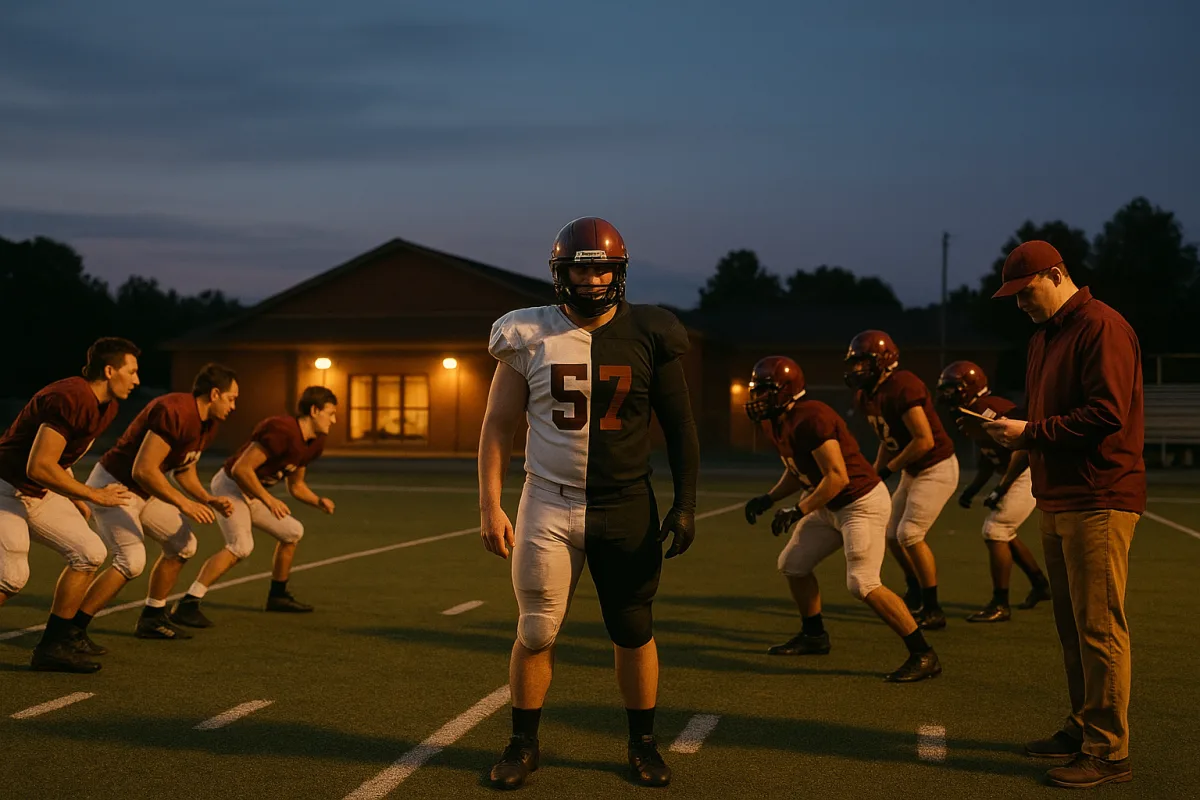
The number Jacksonville is managing is not a snap count
The Travis Hunter conversation has been framed as a question of whether the Jaguars are using the No. 2 overall pick enough. That is understandable, but it skips the important part: 10 percent on offense and 60 percent on defense are not pieces of one clean 70 percent workload. [1]
They are percentages of separate games happening at the same time. Jacksonville’s offense has one number of snaps, Jacksonville’s defense has another, and Hunter can appear in either, both, or neither on a given possession.
That distinction matters because a two-way player’s strain is not measured by adding percentages. A cornerback playing 60 percent of 60 defensive snaps has played 36 defensive snaps. Ten percent of 70 offensive snaps adds seven offensive plays, for 43 total from scrimmage.
That would be a meaningful workload, but it still would not make Hunter an every-down player. More importantly, it does not show when those plays occurred. Seven offensive snaps spread through four quarters are different from seven snaps inserted between defensive series.
The Jaguars’ official Jags A.M. program described Hunter’s defensive role as part of a broader corner rotation involving Montaric Brown, Jarrian Jones and Jourdan Lewis. Coen said the staff trusts multiple corners to communicate and make plays within the system. [4]
That is the framework around Hunter’s 60 percent. It was not necessarily an indictment of his talent, nor proof that Jacksonville has abandoned the two-way plan. It showed that the defense still viewed certain down-and-distance, coverage and personnel situations as rotation snaps.
Snap share tells us where a player is used, not whether he changed a game
Snap percentage is an opportunity measure. It answers a basic question: how often was a player on the field when his side of the ball ran a play? It does not answer whether he won his matchup.
A receiver can play 10 percent of the offensive snaps and still be decisive with one explosive catch, a conversion against man coverage or a red-zone touchdown. A corner can play 60 percent and have a quiet day because opponents never test him.
The opposite can happen, too. A player may log a high snap share while making little impact because the calls did not isolate his strength, the quarterback went elsewhere, or the player was asked to execute low-visibility assignments.
That is why the Jaguars’ discussion should not be reduced to a demand for 100 percent of defensive snaps plus a larger offensive menu. More plays only help if the coaching staff can keep Hunter in assignments he executes quickly and confidently.
Coen called the situation a “balancing act” and said Jacksonville was looking for different ways to involve Hunter after offensive struggles. He also said the team would look at giving him more work against the Patriots. [1]
That is a reasonable answer because “more” can mean several different things. It could mean more receiver snaps, more defensive snaps, a more stable role in a particular personnel grouping, or merely a few designed offensive opportunities.
What it cannot responsibly be described as is a confirmed Week 3 schematic overhaul. Public reporting has not established Hunter’s exact Week 3 offense or defense snap counts, and Jacksonville has not disclosed a detailed package plan built around increased offensive usage.
Why a two-way snap is more expensive than it looks
The physical cost of a snap is obvious. A receiver runs routes, blocks or clears space. A cornerback backpedals, changes direction, carries vertical routes and tackles. But the operational cost is what shapes Jacksonville’s decision.
Every offensive role requires a player to know the formation, motion, route adjustment, protection rules and sight adjustments against coverage. Every defensive role requires coverage checks, leverage rules, motion responses and communication before the snap.
Those are separate languages, even when the player is standing on the same grass. The hard part is not merely conditioning. It is being mentally clean after a defensive series, during a short offensive substitution window, against an opponent changing its picture.
For Hunter, an expanded receiver role would require the Jaguars to decide which concepts travel best. The simplest path is usually a limited package with clear alignment and a narrow menu of route responsibilities, rather than asking a rookie to own the whole call sheet.
That can mean isolated routes outside, motion into space, quick-game concepts, screens or selected third-down looks. None of those ideas has been confirmed as Jacksonville’s Week 3 plan, but they illustrate why “increase his snaps” is not a single tactical instruction.
The same applies on defense. A cornerback’s percentage can rise through more base-defense participation, nickel usage, specific matchup assignments or simply fewer rotation series. Each choice changes who comes off the field, not just Hunter’s personal line on the stat sheet.
Early 2026 rotation data showed Brown at 76.9 percent of Jacksonville’s defensive snaps, Jarrian Jones at 67.26 percent, Jourdan Lewis at 53.10 percent and Hunter at roughly 58 percent. [2] Those figures point to a shared secondary workload, not one missing starter.
Jacksonville’s rotation is a personnel decision, not a referendum on draft status
The easy narrative is that the second overall pick should never leave the field. That is not how a functioning secondary necessarily operates, particularly when coaches are still determining which combinations handle communication best.
Coen’s comments on Jaguars.com were revealing on that point. He did not describe Hunter as being held back by draft status or protected from responsibility. He described a group of corners the staff believed could communicate and execute. [4]
Communication is not filler language for defensive backs. It determines who follows motion, who carries a route through a switch release, who replaces a blitzer and who has outside or inside leverage when an offense changes its formation.
A talented corner can lose a rep before the ball is snapped if the coverage adjustment is late. For a player splitting meeting time and practice repetitions across two positions, that is the cost Jacksonville must weigh most carefully.
The Jaguars’ internal calculation also comes after Hunter’s 2025 season ended with a right knee LCL injury that required surgery. [2] There is no public evidence tying that injury to two-way usage, and no documented Hunter-specific fatigue study supports making that leap.
Still, injury history affects planning in a practical sense. It does not prove that extra snaps are dangerous, but it gives coaches another reason to increase workload in stages rather than treating a player’s college résumé as an automatic NFL prescription.
The Patriots game was about defining a usable role
The sensible Week 3 question was not whether Hunter needed a headline-making total. It was whether Jacksonville could identify a repeatable offensive job that fit alongside his defensive development without degrading either responsibility.
Jacksonville’s own programming argued for a defense-first priority, noting that Hunter had been limited offensively late in training camp as the club sought to get him more defensive repetitions. [4] That is a developmental sequence, not necessarily a permanent position choice.
The team’s reported season plan still involved Hunter as a two-way player, but modern NFL history shows how unusual that remains. The Chargers’ Scott Matlock played 37 percent of offensive snaps and 22 percent of defensive snaps in 2024. [7]
Patrick Ricard’s 2019 work for Baltimore offers another reference point, with 342 offensive snaps and 140 defensive snaps. [2] Those examples are useful precisely because they are unusual, and because both roles were shaped by specific personnel needs.
Hunter is a different kind of athlete and prospect from Matlock or Ricard. But the basic roster math remains the same: playing both ways means competing for practice time, meeting time and recovery with players who have one full-time job.
Jacksonville also has a significant organizational investment in getting that answer right. Hunter signed a fully guaranteed four-year, $46.65 million contract, including a $30.57 million signing bonus paid up front, according to contract reporting. [6]
That contract does not obligate the Jaguars to chase a particular snap percentage. It obligates them to develop a player who can become consistently valuable. The most productive route may be a stable defensive foundation with offense added only where it creates an advantage.
What to watch when the next usage data arrives
When verified Week 3 numbers become available, start with offensive and defensive totals separately. A larger offensive share paired with a reduced defensive share would indicate role redistribution, not necessarily an increase in Hunter’s total workload.
Then examine the game context. Did Hunter’s offensive snaps arrive in normal downs, third downs, red-zone situations or late-game catch-up mode? Did he line up outside, in the slot, in motion or only in a specialty package?
On defense, the meaningful question is which personnel package he joined. If his share rises because he remains in against three-receiver sets, Jacksonville may be trusting him with a more central coverage role. If it rises only in selected looks, the rotation remains intact.
Finally, do not let one target total settle the argument. A receiver can be open without a throw, and a corner can play sound coverage without a pass breakup. Snap counts establish opportunity, but tape still determines whether the role actually worked.
Coen’s public message was modest: Jacksonville intended to look at giving Hunter more. [1] Until the Jaguars provide verified Week 3 participation data and a clearer explanation of the packages involved, that is the proper scale of the story.
Frequently Asked Questions
How are the Jaguars using Travis Hunter on offense and defense?
In Week 2 of the 2026 season, Travis Hunter played about 10 percent of the Jaguars’ offensive snaps and 60 percent of their defensive snaps, primarily as part of a cornerback rotation. The team uses him in a limited offensive role while maintaining a significant presence on defense, with his defensive snaps shared among other corners like Montaric Brown, Jarrian Jones, and Jourdan Lewis.
What is the snap distribution for Travis Hunter with the Jaguars?
Hunter’s snap distribution is measured separately on offense and defense. For example, in Week 2, he played 10 percent of offensive snaps and 60 percent of defensive snaps, which translates to roughly 7 offensive plays and 36 defensive plays. These percentages do not combine into a single workload figure because offense and defense operate on different snap counts.
Why is Travis Hunter not playing every snap on offense and defense?
Playing every snap on both sides of the ball is physically and mentally demanding. The Jaguars balance Hunter’s roles to manage the complexity of learning and executing two different sets of responsibilities, including offensive route concepts and defensive coverage schemes. This rotation helps reduce fatigue and allows the team to maintain effective communication and execution on defense.
What challenges does Travis Hunter face as a two-way player?
Hunter must manage the physical toll of playing both offense and defense, but more importantly, he faces the mental challenge of mastering two distinct playbooks and communication systems. Each role requires different knowledge of formations, adjustments, and responsibilities, making it difficult to expand his playing time without simplifying his assignments.
How does the Jaguars' strategy affect Travis Hunter's playing time?
The Jaguars approach Hunter’s usage as a "balancing act," aiming to increase his offensive involvement without compromising his defensive effectiveness. They consider factors like situational matchups, communication needs, and practice reps, and prefer to gradually add offensive snaps through limited, clear roles rather than a full two-way workload. This strategy shapes how many snaps and in what capacity Hunter plays each week.
How we researched this
This article was assembled from 1 video source, 1 published article, 8 cited references.
Nothing here is based on hands-on testing. Where a figure or finding appears, it belongs to the source cited beside it, and the writing says so rather than implying otherwise. Every source is listed below so you can check it.
Sources
How Will Jags' Respond in Week 3 vs. Patriots? | Jags A.M. | Jacksonville Jaguars — Jacksonville Jaguars
Liam Coen: We're gonna look at giving Travis Hunter some more this week — Pro Football Talk
Liam Coen: We're gonna look at giving Travis Hunter some more this week - NBC Sports
Changes coming to Travis Hunter's playing time? What Jaguars' Coen said - AOL
Chargers Player Makes Unique NFL History Playing Both Offense and Defense
Watch Jaguars' Travis Hunter Usage and Team Strategy on Youtube
Related Articles
San Francisco 49ers Week 4 Preview and Player Updates
Get the San Francisco 49ers Week 4 preview with injury updates and analysis on handling Denver's pressure defense.
Denver Broncos Week 2 Comeback Win Over Jaguars Analysis
Detailed analysis of the Denver Broncos' Week 2 comeback win over the Jaguars, focusing on offensive adjustments and key player performances.
Dallas Cowboys Team Updates and Media Insights for Week 6
Get the latest Dallas Cowboys team updates, injury status, and media insights ahead of Week 6 against Green Bay Packers.
San Francisco 49ers Key Player Performances and Dominance
Explore the San Francisco 49ers' 2026 dominance with key player performances from Brock Purdy, Mike Evans, and their adaptive defense.